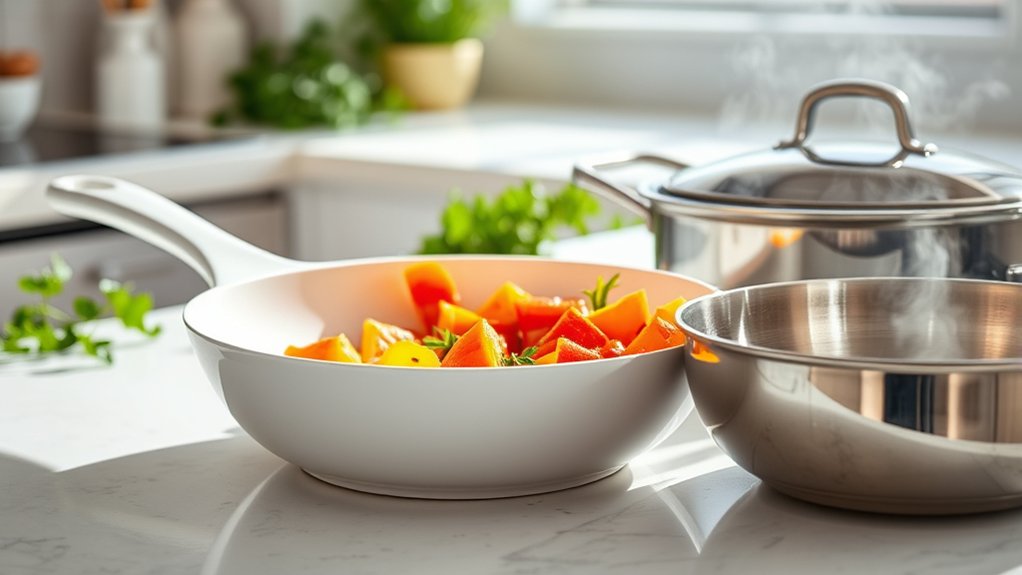
7 Ways Ceramic Cookware Is Better Than Stainless Steel
You’ll love ceramic cookware because it’s safer and non-toxic, making it a top choice compared to stainless steel, which can leach metals into your food.
Ceramic cookware offers a superior non-stick surface, so cooking and cleaning become easier with less oil needed for healthier meals. Its even heating ensures perfect results every time, enhancing your cooking experience.
Additionally, ceramic cookware resists scratches and stains, making it more durable and long-lasting than stainless steel.
Its stylish design brightens your kitchen, seamlessly blending form with function. Keep exploring to discover more reasons why ceramic cookware outshines stainless steel in every way.
Key Takeaways
- Ceramic cookware is free from toxic chemicals like PTFE and PFOA, making it safer and healthier than stainless steel. Its non-stick surface requires less oil, promoting healthier cooking and easier cleaning compared to stainless steel.
- Ceramic heats evenly and retains heat better, ensuring consistent cooking without hot spots unlike stainless steel. The durable ceramic surface resists scratches, stains, and discoloration, maintaining appearance longer than stainless steel.
- Ceramic cookware offers modern, vibrant aesthetics that enhance kitchen style more than traditional stainless steel designs.
Why Ceramic Cookware Is Safer and More Non-Toxic Than Stainless Steel
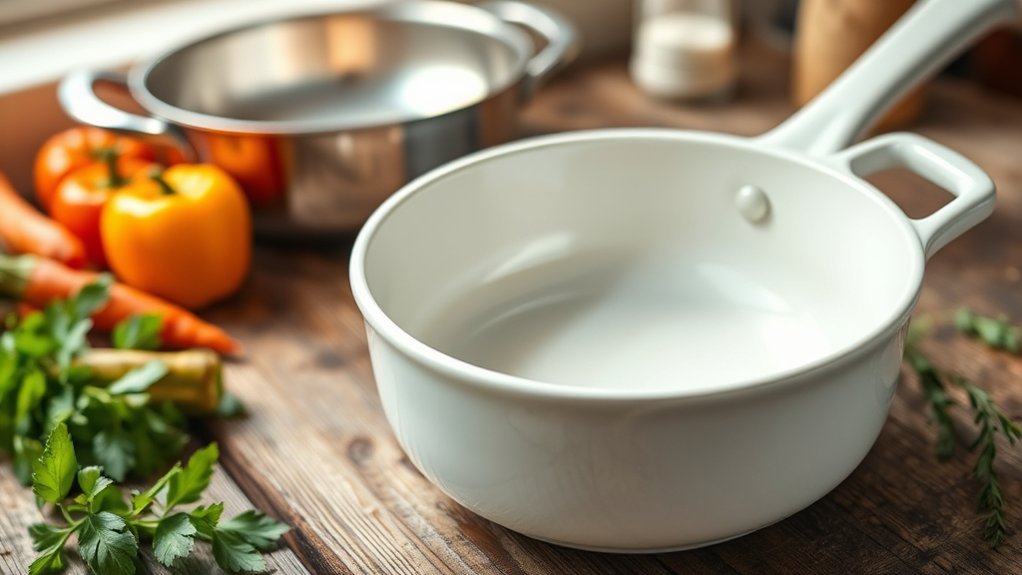
Although stainless steel is popular in many kitchens, ceramic cookware offers a safer and more non-toxic alternative. When you cook with ceramic, you avoid exposure to harmful chemicals that can leach from some stainless steel alloys, especially if the surface is scratched or damaged.
Ceramic cookware is free from PTFE and PFOA, substances often found in non-stick coatings, which can release toxic fumes at high temperatures. You also won’t have to worry about heavy metals like nickel or chromium contaminating your food, common concerns with certain stainless steel options.
Plus, ceramic’s natural, inert surface means it won’t react with acidic or alkaline ingredients, keeping your meals pure and healthy. Choosing ceramic means prioritizing your health without compromising your cooking.
How Ceramic Cookware’s Non-Stick Surface Makes Cooking Easier
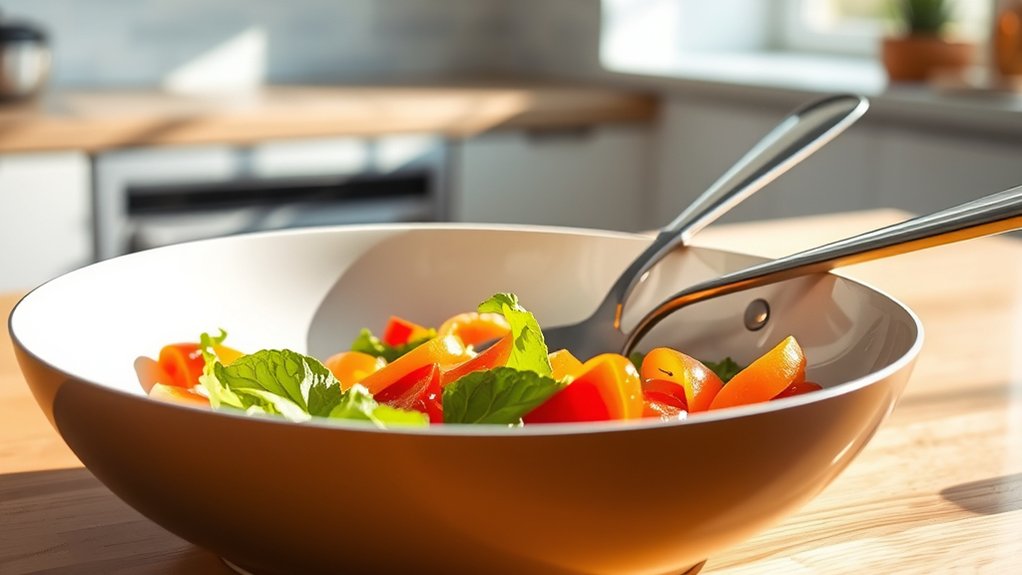
You’ll notice that food slides right off ceramic cookware without sticking, making cooking much less frustrating. This effortless release means you can use less oil or butter, promoting healthier meals.
Plus, cleanup becomes a breeze since residue doesn’t cling to the surface.
Effortless Food Release
When you cook with ceramic cookware, food slides off the surface effortlessly, cutting down on sticking and scrubbing time. This non-stick quality means you don’t have to use excessive oils or fats to prevent food from clinging, making your meals healthier. Whether you’re flipping pancakes or sautéing vegetables, ceramic’s smooth coating ensures each bite lifts cleanly from the pan.
You’ll find it easier to maintain the integrity and appearance of delicate dishes like fish or eggs since they won’t tear or break apart. Plus, the consistent release allows you to focus more on cooking and less on managing stuck-on food. Overall, ceramic cookware’s effortless food release makes your cooking experience smoother, more enjoyable, and less frustrating every time you step into the kitchen.
Simplified Cleanup Process
Thanks to ceramic cookware’s smooth, non-stick surface, cleaning up after cooking becomes a quick and hassle-free task. You won’t need to scrub stubborn food residues or soak pans for hours. Most ceramic pots and pans wipe clean with just a soft sponge and warm soapy water.
Plus, ceramic coatings resist staining and discoloration, keeping your cookware looking fresh longer. Unlike stainless steel, which often traps burnt bits requiring abrasive cleaning, ceramic surfaces prevent food from sticking in the first place. This means you save time and effort in the kitchen, letting you focus on enjoying your meal rather than dreading cleanup.
With ceramic cookware, you’ll find that washing up is simpler, faster, and less stressful every single time.
Why Ceramic Cookware Heats More Evenly for Better Results
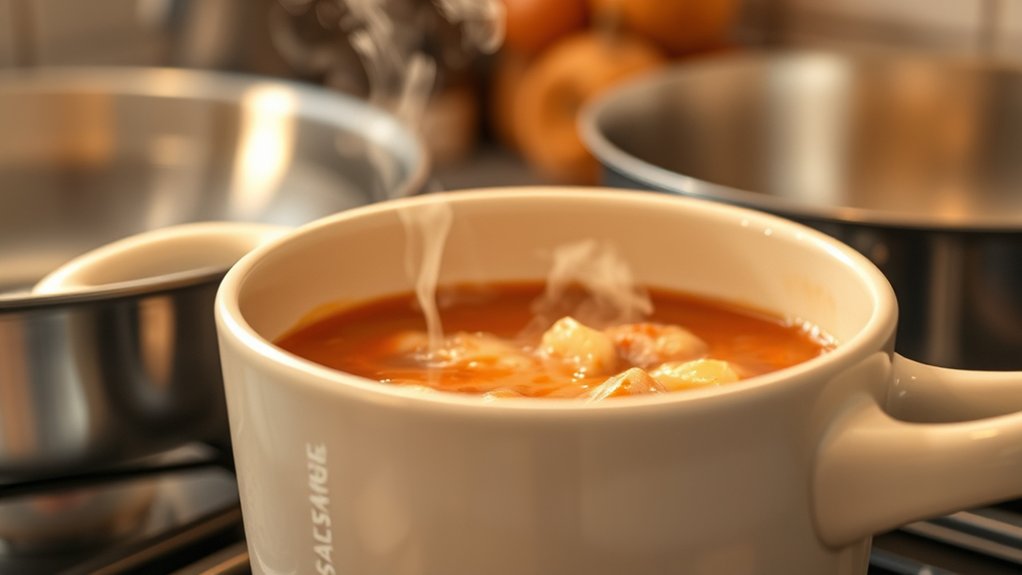
Because ceramic cookware distributes heat evenly across its surface, you’ll experience fewer hot spots that can burn or undercook your food. This consistent heat means your meals cook uniformly, enhancing flavor and texture.
Unlike stainless steel, which can have uneven heat zones, ceramic’s smooth surface spreads warmth steadily, saving you from constant stirring or flipping.
| Feature | Ceramic Cookware | Stainless Steel Cookware |
|---|---|---|
| Heat Distribution | Even and consistent | Uneven, prone to hot spots |
| Cooking Performance | Uniform cooking, better results | Inconsistent cooking |
| Energy Efficiency | Heats quickly and retains heat well | Takes longer to heat |
| Maintenance | Easy to clean, less food sticking | Requires more care |
Choosing ceramic means better control and improved cooking every time.
Why You Need Less Oil With Ceramic Cookware for Healthier Meals
Although many cookware types require generous amounts of oil to prevent sticking, ceramic cookware’s non-stick surface lets you use much less. This means you can cook your meals with minimal oil, cutting down on unnecessary fats and calories. You’ll find that foods slide easily across the ceramic surface without burning or sticking, so you don’t have to rely on heavy oils or butter.
Using less oil not only supports heart health but also preserves the natural flavors of your ingredients. Plus, it helps you maintain a balanced diet without sacrificing taste or texture. When you choose ceramic cookware, you’re making a smart, health-conscious decision that lets you prepare delicious meals with less added fat.
How Ceramic Cookware Makes Cleaning Fast and Simple
When you cook with ceramic cookware, cleaning up becomes a quick and effortless task. The nonstick ceramic surface prevents food from sticking, so you won’t waste time scrubbing stubborn residue. After cooking, simply soak the pan briefly in warm, soapy water, then wipe it clean with a soft sponge.
You won’t need harsh detergents or abrasive pads that could damage the coating. Because ceramic cookware resists staining and odors, it stays fresh and ready for your next meal without lingering smells or discoloration. This easy cleanup lets you spend less time in the kitchen and more time enjoying your food.
With ceramic cookware, you get a hassle-free cleaning experience that fits perfectly into your busy lifestyle.
Why Ceramic Cookware Is More Scratch-Resistant and Durable
You’ll appreciate ceramic cookware’s superior surface hardness, which helps prevent scratches during daily use. This strength gives it long-lasting wear resistance, so your pans stay in great shape for years.
When you choose ceramic, you’re investing in durability that stands up to regular cooking.
Superior Surface Hardness
Because ceramic cookware features a hardened surface, it resists scratches better than many other materials. When you use ceramic pots and pans, you don’t have to worry as much about metal utensils or abrasive cleaning tools leaving marks. This superior surface hardness means your cookware maintains its smooth finish longer, preserving both appearance and functionality.
Unlike stainless steel, which can develop visible scratches and dents over time, ceramic’s durable coating provides a tough barrier against everyday wear. You’ll find that this scratch resistance helps ceramic cookware stay looking new, even with regular use. So, if you want durable, scratch-resistant cookware that keeps its sleek look, ceramic is a smart choice to add to your kitchen collection.
Long-Lasting Wear Resistance
The scratch resistance of ceramic cookware goes hand in hand with its long-lasting wear resistance, making it a durable choice for your kitchen. Unlike stainless steel, ceramic surfaces are engineered to withstand everyday use without showing signs of wear quickly. You won’t have to worry about scratches from metal utensils or abrasive cleaning tools, as ceramic coatings maintain their integrity over time.
This durability means your cookware stays looking new longer and performs consistently, saving you money on replacements. Plus, ceramic’s natural hardness resists chipping and cracking, so you can cook with confidence. When you invest in ceramic cookware, you’re choosing a material that stands up to daily use while maintaining its smooth, non-stick surface, giving you reliable, long-lasting performance.
How Ceramic Cookware Adds Style to Every Kitchen
When you choose ceramic cookware, you instantly elevate your kitchen’s aesthetic with its sleek, colorful designs and smooth finishes. Unlike stainless steel, ceramic comes in various vibrant hues and patterns that complement any kitchen décor, from modern minimalism to rustic charm. You’ll find ceramic pieces that not only perform well but also act as stylish statement pieces on your stovetop or countertop.
Their glossy surfaces reflect light beautifully, making your kitchen feel brighter and more inviting. Plus, ceramic cookware’s clean lines and contemporary look add a touch of sophistication without overwhelming your space. By incorporating ceramic cookware, you effortlessly blend function with fashion, turning everyday cooking into a visually pleasing experience that reflects your personal style.
Frequently Asked Questions
Can Ceramic Cookware Be Used on Induction Cooktops?
Ceramic cookware usually won’t work on induction cooktops because it lacks the magnetic base needed. You’ll need cookware with a magnetic layer or use an induction interface disk to make ceramic compatible with induction cooking.
How Does Ceramic Cookware Perform at High Temperatures?
Ceramic cookware copes calmly with consistent high heat, but it can crack if temperatures climb too quickly. You’ll want to avoid abrupt adjustments and use moderate, manageable heat to maintain its marvelous, long-lasting quality.
Is Ceramic Cookware Dishwasher Safe?
Yes, you can put ceramic cookware in the dishwasher, but you’ll want to hand wash it to keep the coating intact longer.
Dishwashers can be harsh, causing potential chipping or dullness over time.
What Is the Average Lifespan of Ceramic Cookware?
You can expect ceramic cookware to last around 3 to 5 years with regular use.
If you handle it carefully and avoid metal utensils, it can stay non-stick and durable much longer.
Are Ceramic Cookware Sets More Expensive Than Stainless Steel?
You might think ceramic cookware costs a fortune, but it’s not always pricier than stainless steel. You’ll find affordable sets and high-end options in both, so you can pick what fits your budget and style perfectly.
Conclusion
Choosing ceramic cookware is like painting your kitchen with ease and health in every stroke. You’ll enjoy safer, non-toxic cooking with even heat that brings out the best in your meals. Less oil means healthier bites, and the non-stick surface makes cleanup a breeze.
Plus, its durability and stylish look brighten your kitchen. With ceramic, you’re not just cooking—you’re crafting a masterpiece every time. Why settle for less when you can have it all?
In conclusion, ceramic cookware offers superior benefits over stainless steel by providing a safer, healthier, and more enjoyable cooking experience. Its non-toxic nature, even heat distribution, and easy cleanup make it the ideal choice for any kitchen. Choose ceramic cookware for a durable, stylish, and efficient way to elevate your meals and kitchen ambiance.