What Is Cookware and How Is It Used?
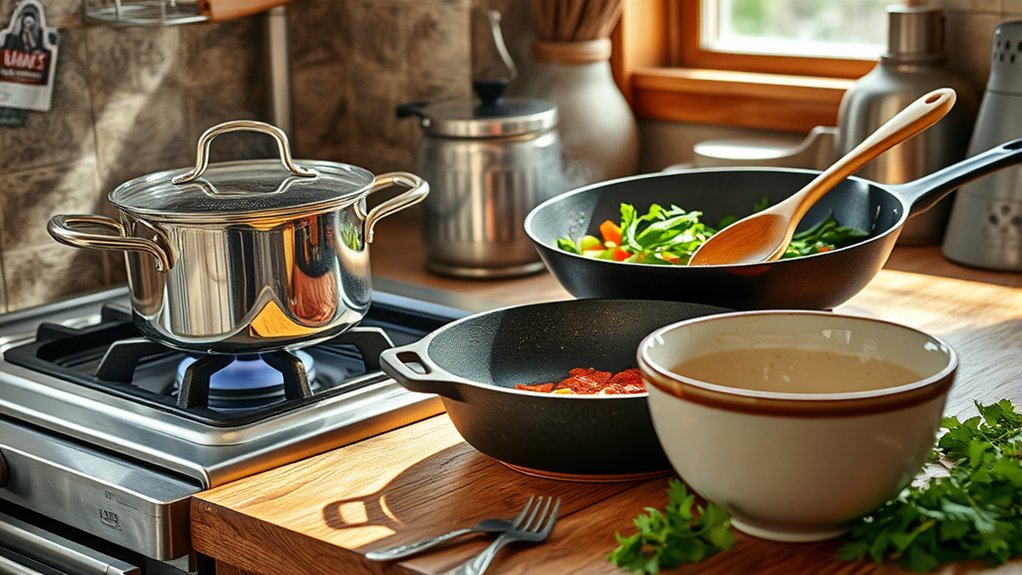
Cookware includes essential kitchen items like pots, pans, skillets, and more, all designed to help you prepare a wide variety of dishes. Whether you are boiling, frying, or roasting, the right cookware makes cooking easier and more efficient.
Choosing the best cookware depends on factors such as your cooking style, stove type, and material preferences.
For example, nonstick cookware is perfect for delicate foods, while cast iron is ideal for excellent heat retention.
Proper use and care are crucial to ensure your cookware lasts longer and performs well.
Keep exploring to discover how to select and maintain the best pieces for your kitchen needs.
Key Takeaways
- Cookware includes pots, pans, skillets, and baking sheets used for boiling, frying, roasting, and simmering various foods. Different materials like stainless steel, cast iron, and nonstick affect cooking performance, heat distribution, and food safety.
- Choosing cookware depends on cooking style, stove type, and maintenance preferences for optimal results and durability. Proper use involves safe handling, avoiding overheating, and matching cookware to specific cooking tasks to prevent damage.
- Regular cleaning and correct storage extend cookware lifespan and maintain cooking efficiency and safety.
What Cookware Includes: Essential Tools and Why They Matter
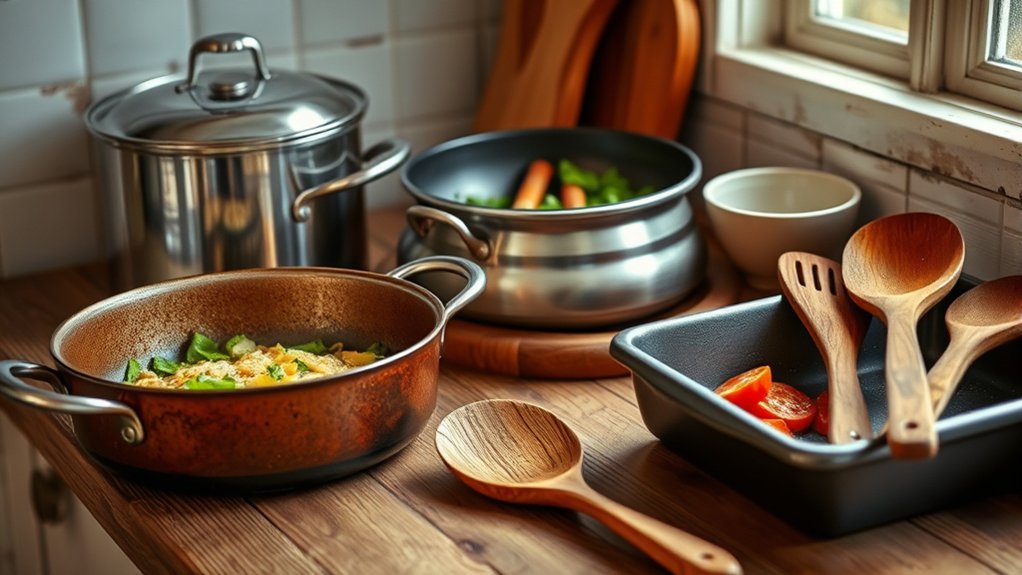
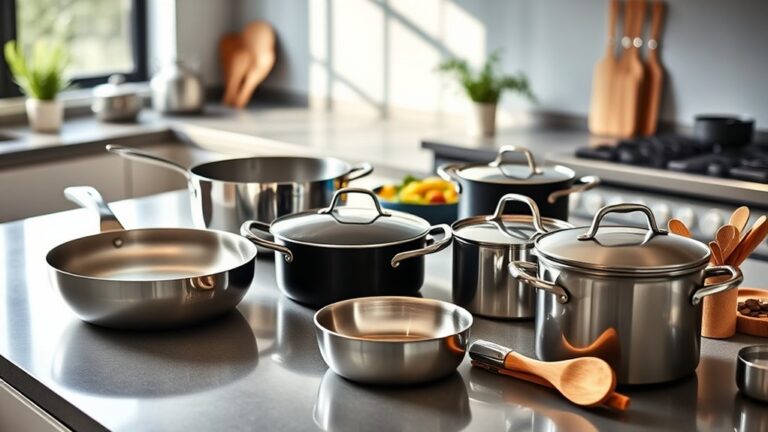
Although cookware comes in many shapes and materials, it all serves a clear purpose: helping you prepare meals efficiently and safely. When you think about cookware, you’re looking at essentials like pots, pans, baking sheets, and Dutch ovens. Each tool plays a specific role, whether it’s boiling, frying, roasting, or simmering.
You’ll also find skillets, saucepans, and stockpots, all designed for different cooking methods and portions. Having the right cookware means you can handle a variety of recipes without frustration. These tools matter because they influence how evenly your food cooks and how easy cleanup will be.
Investing in a basic set ensures you’re ready to tackle almost any meal your kitchen demands.
How Different Cookware Materials Affect Cooking
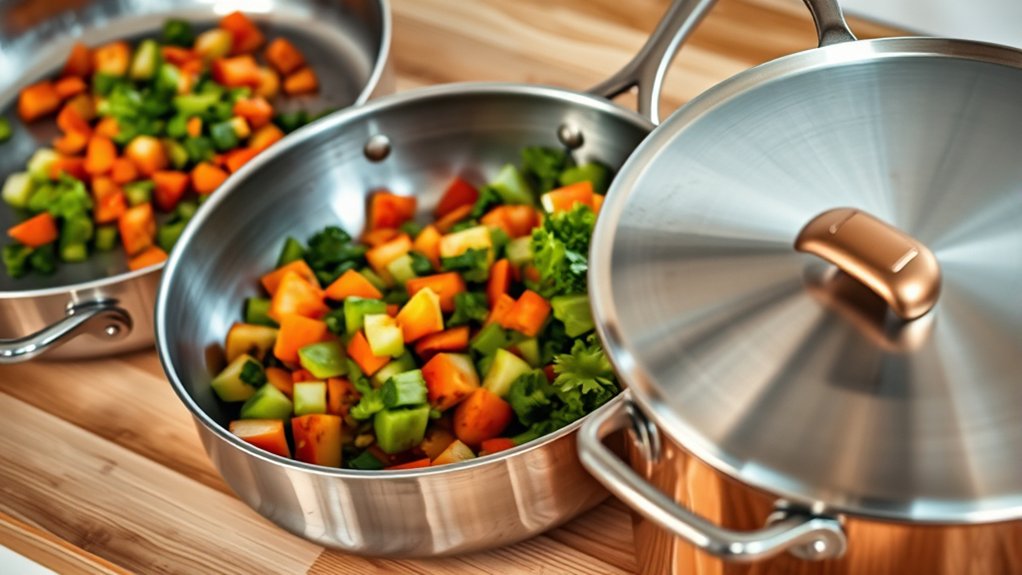
You’ll notice that cookware materials affect how quickly and evenly heat spreads during cooking. Some materials last longer and need less upkeep, while others require careful maintenance.
Also, the surface can react differently with your food, influencing flavor and safety.
Heat Conductivity Comparison
When you choose cookware, the material’s heat conductivity plays a crucial role in how evenly and quickly your food cooks. Copper stands out with excellent heat conductivity, allowing you to control temperature changes instantly. Aluminum also heats up quickly and distributes heat evenly, making it a popular choice.
Stainless steel, however, has lower heat conductivity, so it often includes an aluminum or copper core to improve performance. Cast iron heats slowly but retains heat well, which helps maintain steady cooking temperatures. Meanwhile, ceramic and glass conduct heat more slowly, requiring you to adjust cooking times accordingly.
Understanding these differences helps you pick the right cookware for your cooking style, ensuring your meals cook evenly and taste better every time.
Durability and Maintenance
Since cookware materials vary widely, their durability and maintenance requirements can substantially impact your cooking experience. For instance, cast iron is incredibly durable but needs seasoning and careful drying to prevent rust. Stainless steel resists dents and corrosion, making it low-maintenance, though it might require more effort to clean stubborn food residues.
Nonstick pans offer easy cleanup but can scratch easily, so you’ll want to avoid metal utensils and harsh scrubbing. Aluminum is lightweight and conducts heat well but can warp if exposed to high heat and may discolor over time. Copper is durable yet demands regular polishing to maintain its shine.
Understanding these differences helps you choose cookware that fits your lifestyle and guarantees your pots and pans last longer with proper care.
Cooking Surface Reactivity
How does your choice of cookware affect the flavors and safety of your meals? Different materials react uniquely with the food you cook, influencing taste and chemical interactions. For example, aluminum is highly reactive, which can alter acidic foods like tomatoes, potentially affecting flavor and color.
Stainless steel, on the other hand, is non-reactive, preserving your dish’s natural taste. Cast iron can enhance flavor through seasoning but may release small amounts of iron into your food, which is generally safe and sometimes beneficial. Non-stick surfaces prevent food from sticking but can degrade at high heat, releasing harmful fumes.
Understanding how your cookware material interacts with ingredients helps you choose the right pan, ensuring your meals are both delicious and safe.
Choosing the Right Cookware for Your Kitchen
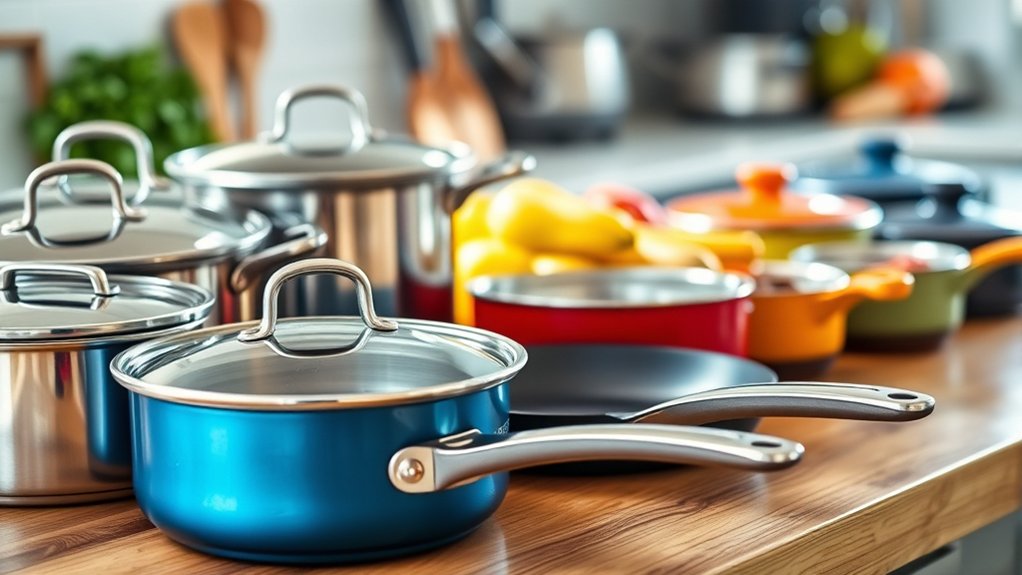
Although selecting cookware might seem straightforward, choosing the right pieces for your kitchen requires careful consideration of your cooking style, material preferences, and budget. Start by evaluating what types of meals you cook most often. If you frequently prepare hearty stews or soups, a heavy-duty stockpot might be essential.
Think about the materials you prefer—stainless steel offers durability, while cast iron provides excellent heat retention. Don’t overlook your stove type, as some cookware works better on induction or gas. Set a budget but prioritize quality over quantity; a few versatile, well-made pieces serve you better than numerous low-quality items.
Finally, consider maintenance—some cookware demands more care. By aligning these factors, you’ll build a functional, efficient kitchen setup tailored to your needs.
When to Use Nonstick vs Stainless Steel Cookware
When should you reach for nonstick cookware, and when is stainless steel the better choice? Use nonstick pans for delicate foods like eggs or pancakes that might stick easily. They require less oil and clean up quickly.
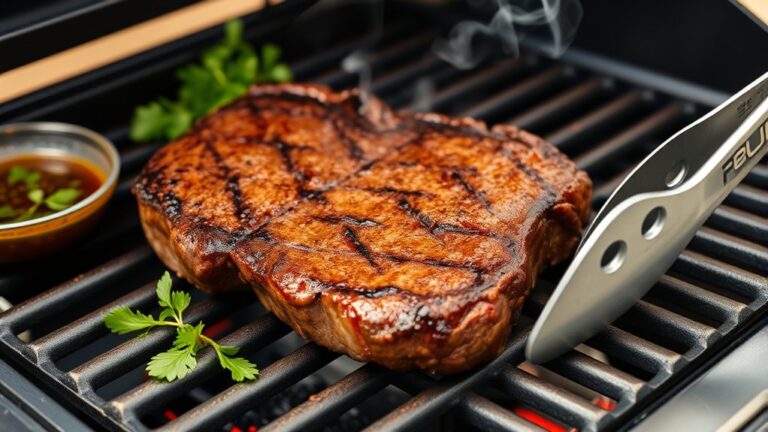
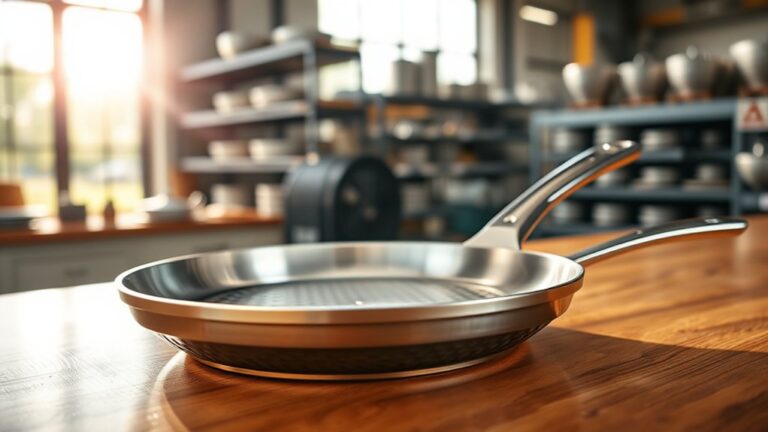
Stainless steel shines when you want to sear meats or create fond for sauces, thanks to its durability and heat retention. It also works well at high temperatures.
| Feature | Nonstick Cookware | Stainless Steel Cookware |
|---|---|---|
| Best For | Delicate, low-fat cooking | Searing, browning, deglazing |
| Heat Tolerance | Low to medium | High |
| Maintenance | Gentle cleaning required | Dishwasher safe, durable |
Choose based on your cooking needs and heat preferences.
How to Pick Cookware for Different Cooking Methods
Since each cooking method demands specific heat levels and techniques, you’ll want to choose cookware that matches those needs to get the best results.
Here’s how to pick the right cookware for your cooking style:
- Searing and frying: Use stainless steel or cast iron for high heat retention and even browning.
- Simmering and slow cooking: Opt for heavy-bottomed pots like enameled cast iron or stainless steel to maintain steady heat.
- Boiling and steaming: Lightweight stainless steel or aluminum pots work best for quick, efficient heating.
- Delicate cooking (like eggs or pancakes): Nonstick pans prevent sticking and make flipping easier.
Matching your cookware to the method ensures *ideal* heat control, better flavor, and a more enjoyable cooking experience.
Understanding Common Types of Bakeware
Choosing the right cookware sets the stage for successful cooking, but baking requires its own set of tools designed to handle different temperatures and textures. When you bake, you’ll often use pans like cake pans, cookie sheets, and loaf pans. Cake pans come in various shapes and sizes, perfect for everything from layered cakes to cheesecakes.
Cookie sheets are flat with shallow edges, allowing heat to circulate for even baking. Muffin tins help you make perfectly portioned cupcakes or muffins, while loaf pans are ideal for bread and pound cakes. Glass and ceramic bakeware retain heat well, making them great for casseroles or pies.
Knowing these common types helps you pick the right one and guarantees your baked goods come out just right.
Why Cast Iron Cookware Is a Kitchen Favorite
Although cast iron cookware requires some care, you’ll find it’s worth the effort for its unmatched durability and heat retention. When you use cast iron, you benefit from:
- Even Heating – Cast iron distributes heat uniformly, preventing hot spots and ensuring your food cooks evenly.
- Versatility – You can use it on the stovetop, in the oven, or even over a campfire.
- Non-stick Surface – Properly seasoned cast iron develops a natural non-stick coating, reducing the need for excess oil.
- Longevity – With proper maintenance, cast iron can last for generations, making it an eco-friendly choice.
Pressure Cookers vs Slow Cookers: What’s the Difference?
While cast iron shines in many cooking scenarios, sometimes you need appliances that handle cooking times and methods differently. Pressure cookers speed up cooking by using high steam pressure, making them perfect when you want meals ready quickly. They’re great for tenderizing tough cuts of meat or cooking beans fast.
Slow cookers, on the other hand, cook food gently at low temperatures over several hours. They’re ideal for hands-off cooking, letting flavors develop slowly while you focus on other tasks. You’ll use a pressure cooker when time is tight, and a slow cooker when you want convenience and depth of flavor without constant attention.
Understanding these differences helps you pick the right tool for your meal and schedule.
Caring for and Maintaining Your Cookware
To keep your cookware in top shape, you’ll want to follow the right cleaning tips and storage methods. Taking simple steps can prevent wear and tear, extending the life of your pots and pans.
Let’s explore how to care for your cookware properly.
Cleaning Tips and Techniques
When you want your cookware to last and perform well, proper cleaning is essential. You should clean your pots and pans promptly after use to prevent food from hardening and sticking. Avoid abrasive scrubbers that can damage non-stick surfaces or delicate finishes.
Instead, use soft sponges or cloths. Here are four key tips to keep your cookware in top shape:
- Hand wash most cookware with mild detergent and warm water, even if it’s labeled dishwasher-safe.
- Soak stubborn residue in warm, soapy water before gently scrubbing.
- For stainless steel, use a paste of baking soda and water to remove stains without scratching.
- Dry cookware thoroughly to prevent rust, especially cast iron and carbon steel.
Following these steps helps maintain your cookware’s performance and appearance.
Proper Storage Methods
Proper cleaning sets the foundation for extending your cookware’s lifespan, but how you store your pots and pans plays an equally important role. To keep your cookware in top shape, store items with care to avoid scratches and dents. Use soft liners or cloth between stacked pans to protect surfaces.
Hang lightweight pots and pans on hooks to save space and prevent damage. Make sure your cookware is completely dry before storing it to avoid rust and mold. Store lids separately or upside down on pots to save space and prevent warping.
Keep your cookware in a dry, cool place, away from direct sunlight or heat sources. By following these simple storage methods, you’ll maintain your cookware’s performance and appearance for years to come.
Preventing Wear and Tear
Although cookware is designed to withstand daily use, you can considerably extend its life by handling it with care and performing regular maintenance. To prevent wear and tear, follow these key steps:
- Clean cookware promptly using non-abrasive sponges and mild detergents to avoid surface damage. Avoid overheating empty pans, as excessive heat can warp or degrade materials. Use wooden, silicone, or plastic utensils to protect non-stick and delicate surfaces from scratches.
- Store cookware properly by stacking with protective layers or hanging to prevent dents and chips.
Common Cookware Mistakes to Avoid When Cooking and Maintaining
If you want your cookware to last and perform well, you need to steer clear of common mistakes that many home cooks make. First, avoid overheating nonstick pans; high heat can damage the coating and release harmful fumes. Don’t use metal utensils on delicate surfaces—they scratch and reduce effectiveness.
Also, never put hot cookware directly into cold water, as sudden temperature changes can warp or crack it. When cleaning, skip abrasive scrubbers that wear down finishes; opt for soft sponges instead. Avoid stacking pans without protection to prevent scratches.
Finally, don’t ignore manufacturer instructions—each material has specific care guidelines. By steering clear of these errors, you’ll keep your cookware in great shape, ensuring better cooking results and longer usability.
Using Cookware Safely to Prevent Accidents
Taking care of your cookware goes hand in hand with using it safely to avoid accidents in the kitchen. You want to keep yourself and others safe by following simple but essential steps. Here are four key tips to help you use your cookware safely:
Using cookware safely is essential to prevent kitchen accidents and protect yourself and others.
- Always use oven mitts or pot holders when handling hot cookware to prevent burns.
- Keep handles turned inward on the stove to avoid knocking pots over accidentally.
- Avoid overcrowding pans to ensure even cooking and reduce spills or splatters.
- Regularly check for cracks or loose handles that could cause cookware to break or tip unexpectedly.
How to Match Cookware to Your Stove Type
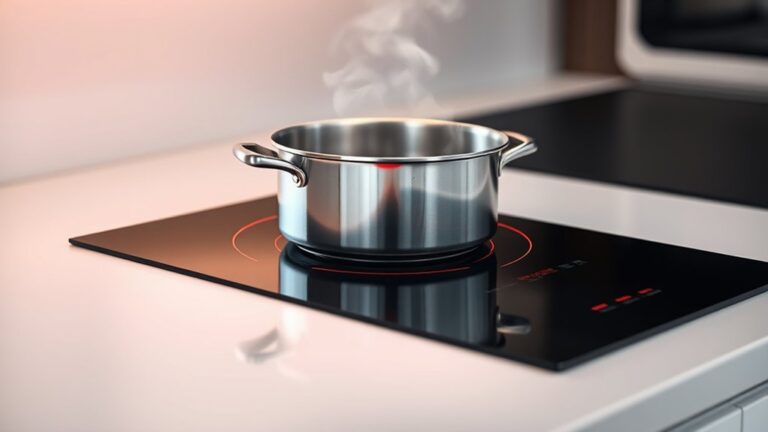
When you select cookware that suits your stove type, you’ll cook more efficiently and protect your kitchen equipment. Each stove requires specific materials for ideal heat transfer and safety. For example, induction stoves need magnetic cookware, while gas stoves work well with most materials.
| Stove Type | Best Cookware Materials |
|---|---|
| Gas | Stainless steel, cast iron |
| Electric | Stainless steel, aluminum |
| Induction | Magnetic stainless steel, cast iron |
| Ceramic/Glass | Flat-bottomed stainless steel, aluminum |
Make sure your cookware’s base matches your stove’s heating method. For induction, test with a magnet—if it sticks, the cookware works. Flat bottoms improve contact on electric and ceramic stoves, ensuring even cooking.
Budget-Friendly Cookware Options That Perform Well
Choosing the right cookware for your stove doesn’t have to break the bank. You can find budget-friendly options that still deliver great performance without sacrificing quality.
Here are four affordable cookware types to contemplate:
- Aluminum Cookware – Lightweight and excellent at conducting heat, aluminum is a practical choice for everyday cooking.
- Nonstick Pans – Great for low-fat cooking and easy cleanup, these pans save time and energy.
- Stainless Steel Sets – Durable and versatile, stainless steel resists rust and works well on most stove types.
- Cast Iron Skillets – Although heavier, cast iron provides excellent heat retention and can last for decades with proper care.
Frequently Asked Questions
How Does Cookware Impact the Nutritional Value of Food?
Cookware impacts nutrition by affecting heat distribution and cooking time, which can preserve or destroy vitamins. You’ll want non-toxic, heat-efficient materials to retain nutrients while avoiding harmful chemical leaching into your food.
Can Cookware Influence Cooking Times Significantly?
Just like a knight’s armor, your cookware’s material and thickness can speed up or slow down cooking times. Using a heavy cast iron skillet heats evenly, letting you cook faster and more efficiently.
What Are the Environmental Impacts of Different Cookware Materials?
You’ll find that aluminum and non-stick pans often have higher environmental costs due to mining and chemical coatings, while cast iron and stainless steel last longer and recycle better, reducing your overall environmental impact.
Are There Any Cookware Options Suitable for Outdoor Cooking?
You might think outdoor cooking limits your options, but you’re wrong. Cast iron skillets, stainless steel pots, and lightweight titanium gear work great. They’re durable, heat evenly, and survive open flames without warping or damage.
How Does Cookware Design Affect Heat Distribution?
Cookware design affects heat distribution by using materials like aluminum or copper that conduct heat well. Thicker bases prevent hot spots, so you’ll cook food evenly and avoid burning or undercooking parts of your meal.
Conclusion
Now that you know what cookware includes and how to choose the right pieces, remember: “a stitch in time saves nine.” Taking care of your cookware and using it properly avoids future hassle and expense.
Whether you’re picking nonstick for easy meals or stainless steel for searing, matching your cookware to your cooking style and stove ensures great results every time. With smart choices, you’ll cook safely and enjoy every meal.
In conclusion, understanding cookware and how to use it effectively is key to enhancing your cooking experience. Proper care and selection of cookware not only improve safety but also help you create delicious dishes with ease. Use the right cookware to get the best performance from your kitchen tools every day.