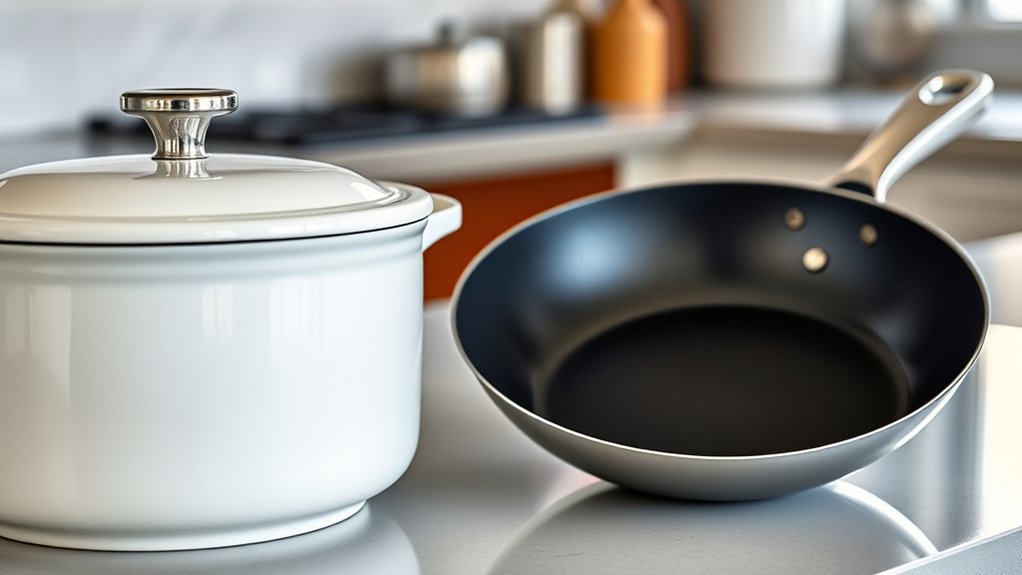
Does Ceramic Cookware Have Teflon?
You won’t find Teflon in ceramic cookware because it uses a natural, mineral-based coating instead of synthetic chemicals like PTFE. Ceramic cookware is popular for those seeking a non-stick surface without the concerns associated with Teflon coatings.
This type of cookware relies on silica and other minerals to create a durable, non-stick surface that’s free from toxic substances often linked to Teflon.
While both ceramic and Teflon-coated pans need careful use to avoid damage, ceramic cookware offers a safer, chemical-free alternative that tolerates higher heat.
Ceramic pans provide an excellent option for health-conscious cooks who want to avoid synthetic chemicals in their kitchen tools.
Keep exploring to understand how these differences affect your cooking experience and care needs.
Key Takeaways
- Ceramic cookware does not contain Teflon or polytetrafluoroethylene (PTFE) coatings.
- Ceramic coatings are mineral-based, primarily made from silica, not synthetic polymers like Teflon.
- Ceramic cookware offers a chemical-free alternative to Teflon non-stick pans.
- Teflon is only unsafe if overheated beyond recommended temperatures, unlike ceramic coatings.
- Both ceramic and Teflon coatings require proper use to avoid damage and maintain non-stick properties.
What Is Ceramic Cookware Made Of?
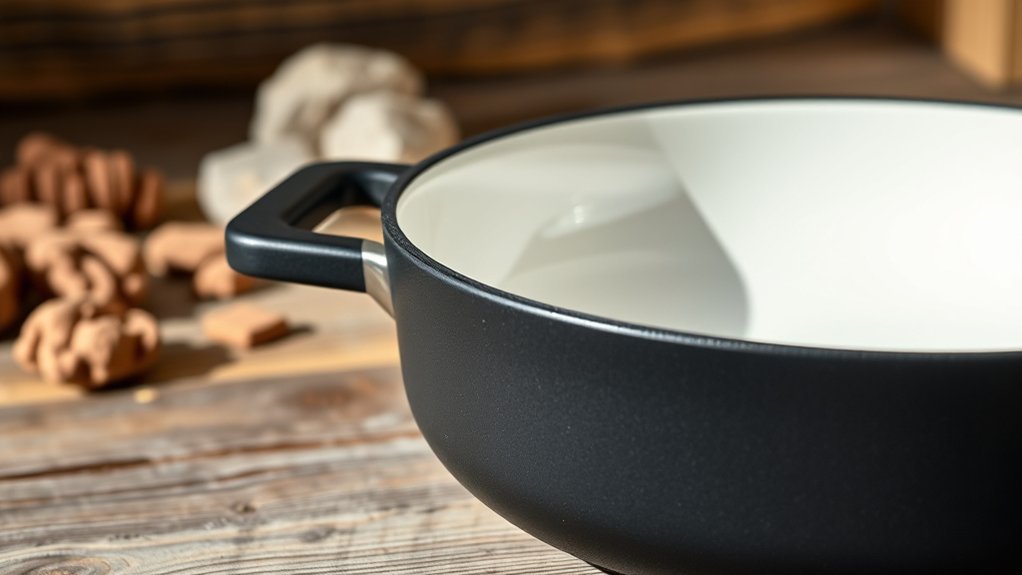
Although ceramic cookware might seem like a single material, it’s actually made from a blend of natural minerals like clay, sand, and water, which are shaped and fired at high temperatures. You’ll find that this process creates a hard, durable surface that can withstand heat well.
When you use ceramic cookware, you’re relying on this solid mineral base, often coated with a smooth ceramic glaze. This glaze gives the cookware its non-stick properties without synthetic chemicals. You’ll notice the colors and finishes can vary because manufacturers adjust the mineral mix and firing process.
Does Ceramic Cookware Contain Teflon?
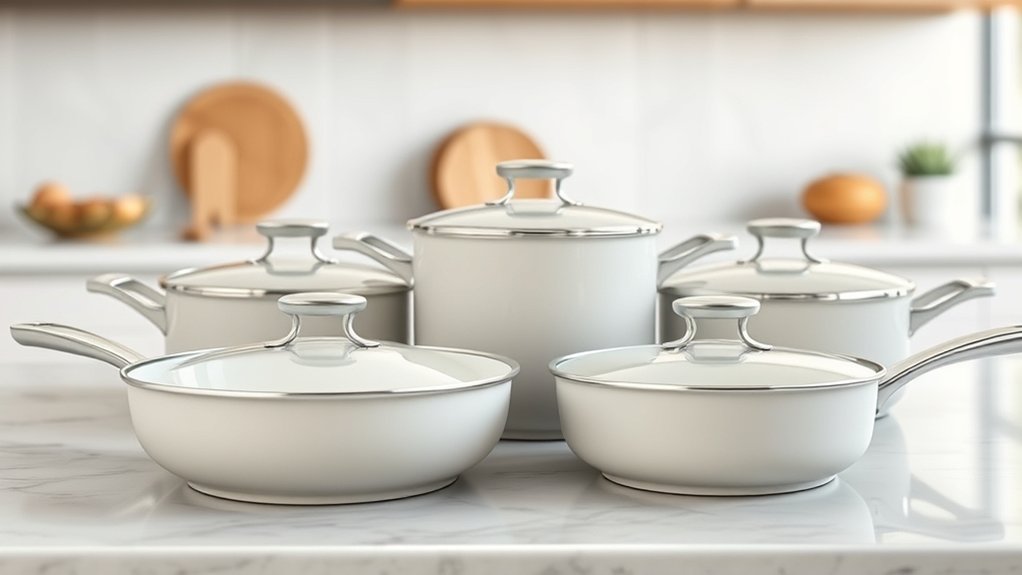
Since ceramic cookware relies on a mineral-based glaze for its non-stick surface, it doesn’t contain Teflon or any other synthetic chemicals. When you use ceramic pots or pans, you’re working with a coating made primarily from silica, derived from sand, that creates a smooth, non-stick layer without needing polytetrafluoroethylene (PTFE), which is the chemical name for Teflon.
This means you avoid the concerns linked to Teflon coatings when cooking at high temperatures. However, keep in mind that the durability of ceramic coatings can vary, so you’ll want to handle them carefully to maintain their non-stick properties.
In short, if you’re looking to avoid Teflon entirely, ceramic cookware offers a clear alternative with a natural, chemical-free surface.
Why Teflon Worries Many Home Cooks
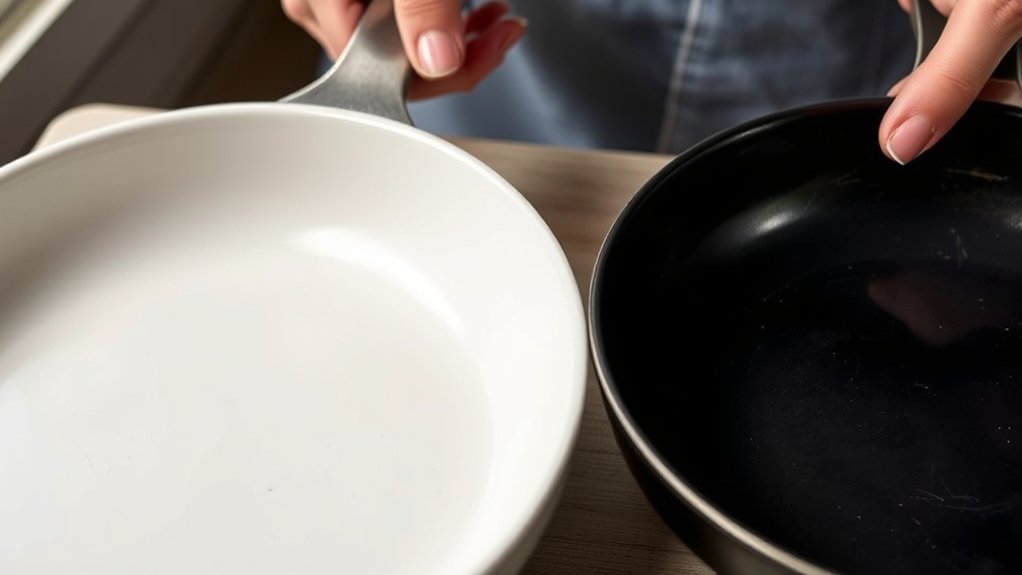
When you cook with Teflon-coated pans, you might worry about the chemicals released at high temperatures. These fumes can cause flu-like symptoms, known as “Teflon flu,” and raise concerns about long-term health risks. You also face the risk of damaging the non-stick surface if you overheat or scratch it, which means your pan won’t last as long.
These worries make many home cooks rethink their cookware choices.
| Concern | What Happens | How It Affects You |
|---|---|---|
| Chemical Fumes | Released above 500°F | Respiratory irritation |
| Surface Damage | Scratching or overheating | Loss of non-stick quality |
| Health Risks | Linked to PFOA (historically) | Anxiety over safety |
| Durability | Coating wears off over time | Need to replace frequently |
Key Differences Between Ceramic and Teflon Cookware
You’ll notice ceramic and Teflon cookware differ mainly in their nonstick surface materials, heat resistance, and overall safety. Understanding these differences helps you choose the best option for your cooking needs.
Let’s look closely at what sets them apart.
Nonstick Surface Composition
Although both ceramic and Teflon cookware offer nonstick surfaces, their compositions differ markedly. When you use Teflon cookware, you’re dealing with a synthetic polymer called polytetrafluoroethylene (PTFE). This material creates a smooth, slick coating that prevents food from sticking, making cleanup easy.
In contrast, ceramic cookware features a coating made from inorganic minerals, primarily silica, which is baked onto the pan. This ceramic layer provides natural nonstick properties without synthetic chemicals. You’ll notice ceramic surfaces are usually thicker and less flexible than Teflon.
While Teflon relies on a chemical polymer, ceramic’s nonstick effect comes from its hard, glass-like finish. Understanding these differences helps you choose cookware that fits your cooking style and safety preferences.
Heat Resistance Levels
Because heat tolerance directly affects cookware performance and safety, it’s essential to understand how ceramic and Teflon differ in this area. Ceramic cookware can typically withstand higher temperatures, often up to 450°F or more, without degrading. This makes it suitable for searing and oven use at moderate temperatures.
On the other hand, Teflon-coated pans usually have a lower heat resistance, around 350°F to 400°F. Heating Teflon beyond this range risks breaking down the coating, releasing harmful fumes. So, when you cook with Teflon, you need to avoid very high heat.
Ceramic’s higher heat tolerance gives you more flexibility, but be cautious not to exceed the manufacturer’s guidelines to maintain performance and longevity. Understanding these limits helps you choose the right cookware for your cooking style.
Safety And Durability
Knowing how ceramic and Teflon handle heat sets the stage for understanding their safety and durability differences. When cooking, you want cookware that won’t release harmful chemicals or degrade quickly. Ceramic cookware is free from PTFE and PFOA, making it a safer choice if you worry about chemical exposure.
Plus, its hard surface resists scratches better than Teflon. On the other hand, Teflon is non-stick but can flake or emit toxic fumes if overheated.
Consider these points when choosing:
- Ceramic withstands higher temperatures safely
- Teflon coatings can degrade faster with metal utensils
- Ceramic’s surface is more scratch-resistant
- Teflon requires careful temperature control
- Ceramic often lasts longer with proper care
Your safety and cookware longevity depend on these factors.
How Ceramic Cookware Coatings Work Without Teflon
You’ll find that ceramic cookware achieves its nonstick surface through a unique mineral-based coating rather than Teflon. This composition not only prevents food from sticking but also promotes even heat distribution.
Understanding these features helps you see why ceramic cookware offers a different cooking experience.
Nonstick Properties Explained
How do ceramic coatings achieve their nonstick qualities without relying on Teflon? They use a different approach based on their unique surface properties. Ceramic coatings create a smooth, hard layer that minimizes food adhesion by reducing surface roughness and preventing chemical bonds with food particles.
This means you can cook with less oil and clean up easily.
Here’s how ceramic nonstick surfaces work for you:
- Form a dense, glass-like barrier that resists sticking
- Maintain a smooth texture to reduce friction with food
- Resist high temperatures without breaking down
- Avoid harmful chemicals like PFOA and PTFE found in Teflon
- Offer durability through natural hardness and heat resistance
This explains why ceramic cookware gives you effective nonstick performance without Teflon’s polymers.
Ceramic Material Composition
Ceramic cookware achieves its nonstick properties through a unique blend of natural minerals and inorganic materials rather than synthetic chemicals like Teflon. When you cook with ceramic-coated pans, you’re relying on a silica-based gel derived from sand, which forms a hard, smooth surface after baking at high temperatures. This coating is free from PTFE and PFOA, the chemicals found in traditional nonstick coatings.
Because of this mineral composition, ceramic coatings resist sticking by creating a slick, durable barrier that withstands heat without breaking down. When applied correctly, this layer offers you excellent food release and easy cleanup, all while avoiding the potential health concerns tied to Teflon. So, the ceramic’s natural mineral makeup is key to its safe, effective nonstick performance.
Heat Distribution Benefits
Although ceramic coatings don’t rely on Teflon, they still deliver impressive heat distribution that helps your food cook evenly. The ceramic layer spreads heat efficiently across the surface, preventing hot spots that can burn your meals. This even heat transfer means you’ll get consistent results whether you’re simmering sauces or searing meats.
Plus, ceramic coatings retain heat well, so your cookware stays warm longer after you turn off the stove.
Here’s why ceramic cookware excels in heat distribution:
- Conducts heat uniformly without relying on synthetic chemicals
- Reduces the risk of uneven cooking and burning
- Maintains stable temperatures for better control
- Enhances energy efficiency by retaining heat
- Works well on various heat sources, including induction
You’ll enjoy better cooking performance without Teflon.
Health Benefits of Choosing Ceramic Cookware
When you switch to ceramic cookware, you reduce your exposure to harmful chemicals commonly found in traditional non-stick pans. Ceramic coatings are made from natural materials like sand and don’t contain PFOA, PTFE, or other toxic substances linked to health risks. This means you can cook with peace of mind, knowing your food isn’t coming into contact with potentially dangerous fumes or residues.
Additionally, ceramic cookware often requires less oil or butter, helping you prepare healthier meals with lower fat content. Because ceramic surfaces are non-reactive, they won’t leach metals or chemicals into your food, preserving its natural flavor and nutritional value. Choosing ceramic cookware promotes a safer, cleaner cooking experience that supports your well-being every day.
Common Myths and Misconceptions About Ceramic and Teflon Cookware
While many people trust ceramic and Teflon cookware, several myths cloud their true qualities and safety. You might hear that ceramic is completely non-stick or that Teflon releases dangerous fumes at normal cooking temperatures. It’s important to separate fact from fiction so you can make informed choices.
Here are some common misconceptions you should know:
- Ceramic cookware doesn’t always have a non-stick surface as durable as Teflon.
- Teflon-coated pans are unsafe only if overheated beyond recommended temperatures.
- Ceramic coatings can chip or wear down over time like any surface.
- Both types require proper use to avoid damage; they’re not indestructible.
- “Chemical-free” claims about ceramic often overlook the synthetic materials involved.
Understanding these will help you pick cookware that fits your needs and lifestyle.
How to Care for Ceramic Cookware to Preserve Its Surface
To keep your ceramic cookware performing well, you need to handle it with care and follow specific maintenance steps. Always avoid using metal utensils, as they can scratch the ceramic surface. Instead, opt for wooden, silicone, or plastic tools.
After cooking, let the cookware cool down before washing it to prevent thermal shock, which can damage the coating. Use warm water, mild dish soap, and a soft sponge for cleaning; avoid abrasive cleaners or scouring pads. If food sticks, soak the pan briefly to loosen residues.
Store your ceramic cookware carefully, stacking with a soft cloth or paper towel between pieces to prevent scratches. By following these simple steps, you’ll extend the life of your ceramic cookware and keep its non-stick surface intact.
Choosing Between Ceramic and Teflon Cookware: When to Use Each
Taking good care of your ceramic cookware helps maintain its performance, but you might wonder how it compares to Teflon options and which one suits your cooking needs better. You’ll want to use ceramic cookware when you prefer a chemical-free, scratch-resistant surface ideal for medium-heat cooking.
Teflon cookware works best for low-fat cooking and easy food release, especially with delicate items like eggs or pancakes.
Consider these points when choosing between them:
- Ceramic tolerates higher heat without releasing fumes.
- Teflon offers superior non-stick performance initially.
- Ceramic is generally more durable against scratches.
- Teflon requires gentle utensils to avoid damage.
- Both need proper care to maintain non-stick qualities.
Choose based on your cooking style and maintenance preferences.
Frequently Asked Questions
Can Ceramic Cookware Be Used on Induction Cooktops?
You can use ceramic cookware on induction cooktops only if it has a magnetic base. Without that, it won’t heat properly.
Always check the manufacturer’s details to guarantee compatibility before buying or using it.
Is Ceramic Cookware Dishwasher Safe?
Think of ceramic cookware as a fragile artist’s canvas—it’s dishwasher safe but you shouldn’t rely on the harsh cycle.
You’ll keep its beauty longer by hand-washing gently, preserving the glaze and performance with care.
How Long Does Ceramic Cookware Typically Last?
You can expect ceramic cookware to last around 1 to 5 years, depending on usage and care.
If you avoid high heat and harsh abrasives, you’ll keep it in good shape much longer.
Can Ceramic Cookware Withstand High Oven Temperatures?
Yes, you can use ceramic cookware in high oven temperatures, but check the manufacturer’s guidelines first. Most ceramic cookware withstands up to 450°F or more, so you won’t have to worry about damage during baking or roasting.
Are There Any Environmental Concerns With Ceramic Cookware Production?
You might think ceramic cookware is entirely eco-friendly, but its production can involve mining and energy-intensive processes that impact the environment.
Still, it’s generally less harmful than Teflon-coated options, so it’s a greener choice overall.
Conclusion
When choosing cookware, think of ceramic and Teflon like two different tools in your kitchen toolbox. Ceramic offers a natural, non-toxic surface that’s gentle yet effective, while Teflon provides slick convenience but with potential concerns.
You’ll want to pick ceramic if you prioritize health and durability, and Teflon for easy food release. Caring for your ceramic cookware properly will keep it performing like new, making your cooking experience smooth and enjoyable.
In conclusion, ceramic cookware does not have Teflon, making it a safer and more eco-friendly option. Choosing ceramic over Teflon can enhance your kitchen safety and provide long-lasting performance.