10 Easy Steps to Start a Charcoal Grill With Lighter Fluid
Set your charcoal grill on a stable, well-ventilated surface away from flammables to ensure safety while grilling. Proper preparation is key when you want to start a charcoal grill with lighter fluid quickly and efficiently.
Gather essential safety gear like heat-resistant gloves and a fire extinguisher before you begin.
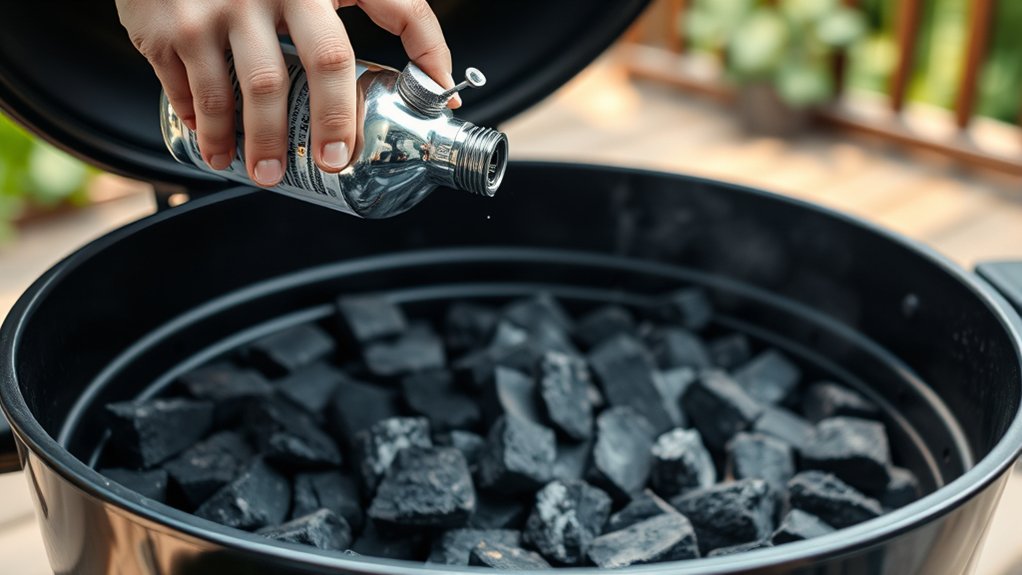
Arrange the charcoal in a pyramid shape, which helps the flames spread evenly. Pour lighter fluid evenly from 6-8 inches above the coals, allowing the fluid to soak in without flooding the charcoal. Wait about 5 minutes to let the lighter fluid absorb properly.
Light the charcoal carefully in multiple spots to ignite the fire evenly. Let the coals burn until they are covered with gray ash, which usually takes about 15-20 minutes.
Once ready, spread the coals evenly across the grill surface.
Adjust the grill vents to control the heat according to your cooking needs. Always keep a close eye on the grill and never leave it unattended while lit.
Keep following these steps to master fire safety and improve your grilling techniques.
Key Takeaways
- Place the grill on a stable, heat-resistant surface away from flammable materials and ensure safety gear is ready.
- Arrange charcoal in a mound with gaps, pour lighter fluid evenly from 6-8 inches above, and let it soak for 1-2 minutes.
- Light multiple spots around the charcoal with a long match, avoiding leaning over the grill, and keep safety tools nearby.
- Wait 15-20 minutes for coals to be covered in light gray ash before spreading evenly for cooking.
- Adjust grill vents to control airflow and temperature, and close vents after cooking to smother coals safely.
Set Up Your Charcoal Grill and Choose a Safe Location
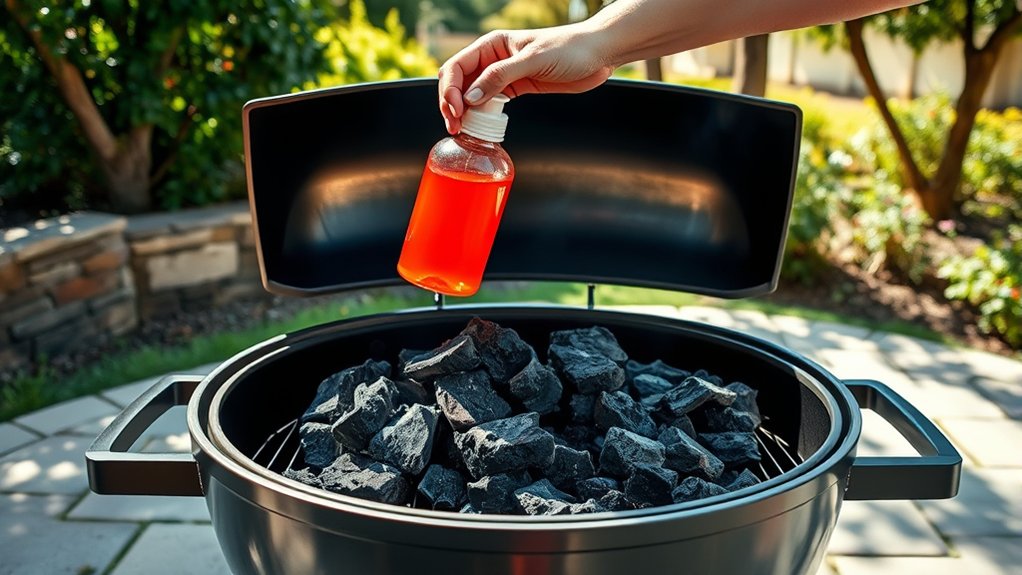
Before you light your grill, make sure you set it up on a flat, stable surface away from flammable materials like dry leaves or wooden structures. This prevents accidents and guarantees your grill stays steady while cooking. Choose a location with good ventilation to avoid smoke buildup around your home or guests.
Keep the grill at least 10 feet from your house, deck railings, and overhanging branches. If you’re using a portable charcoal grill, place it on a heat-resistant surface to protect your patio or lawn. Also, clear the area around your grill to give yourself enough space to move safely while handling hot coals.
Setting up your grill properly creates a safer and more enjoyable grilling experience from start to finish.
Gather Tools and Safety Gear Before You Start
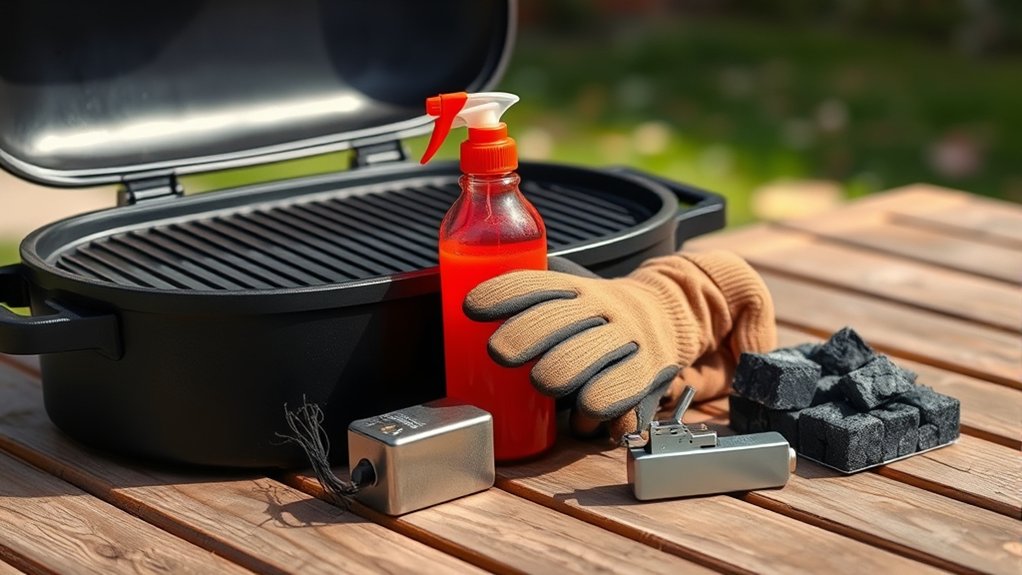
Although lighting a charcoal grill is straightforward, gathering the right tools and safety gear guarantees the process goes smoothly and safely. Before you start, make sure you have everything on hand to prevent interruptions and stay protected.
Here’s what you need:
- Long-handled lighter or matches – Keeps your hands away from flames when igniting.
- Heat-resistant gloves – Protects your hands from burns and hot surfaces.
- Lighter fluid – Essential for easy ignition, but use only as directed.
- Fire extinguisher or bucket of water – For quick response in case of emergencies.
Having these ready assures you can light your grill efficiently while prioritizing safety every step of the way.
How to Arrange Charcoal for Better Airflow
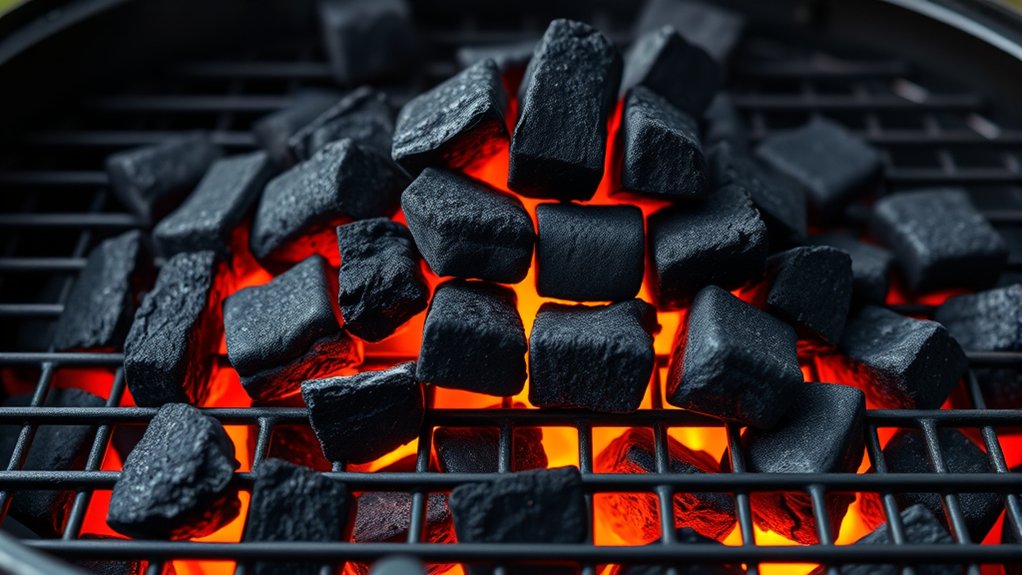
When you arrange your charcoal correctly, you’ll guarantee better airflow, which helps the fire burn hotter and longer. Start by piling the charcoal briquettes into a mound or pyramid shape in the center of your grill. This arrangement allows oxygen to circulate freely around the coals, fueling the flames.
Avoid spreading the charcoal flat, as this can suffocate the fire and cause uneven heat. For even better airflow, leave small gaps between the briquettes so air can flow through. If you want a two-zone fire, stack more charcoal on one side for high heat and fewer on the other for indirect cooking.
Properly arranged charcoal ensures your grill heats efficiently, so you get consistent heat and better control over your cooking.
Apply Lighter Fluid Safely and Evenly
You’ll want to pour lighter fluid evenly over the charcoal to guarantee a consistent burn. Be careful not to use too much, and never add fluid once the coals are lit.
Taking these safety steps helps you avoid flare-ups and keeps your grilling experience smooth.
Proper Fluid Distribution
Because proper fluid distribution prevents flare-ups and guarantees even lighting, you need to apply lighter fluid carefully and evenly across the charcoal. Uneven application can cause hot spots or slow ignition.
Here’s how to get it right:
- Hold the bottle 6-8 inches above the charcoal for controlled spraying.
- Pour the fluid steadily and evenly over the coals, avoiding puddles.
- Cover all areas you plan to ignite, focusing on the top layer for quick ignition.
- Let the fluid soak in for about 1-2 minutes before lighting, ensuring the charcoal absorbs it thoroughly.
Safety Precautions
How can you guarantee your grilling experience stays safe while using lighter fluid? First, always apply the fluid outdoors and away from open flames or sparks. Pour it slowly and evenly over the charcoal, avoiding puddles that can create flare-ups.
Never add lighter fluid to coals that are already hot or burning, as this can cause dangerous flare-ups. Use only the recommended amount—too much fluid increases fire risk. After applying, wait at least 30 seconds to let the fluid soak in before lighting.
Keep the lighter fluid container tightly closed and stored safely, away from heat sources. By following these precautions, you minimize fire hazards and assure a safe, enjoyable grilling session every time you start your charcoal grill.
Wait the Recommended Time Before Lighting
Although it might be tempting to light the charcoal immediately after applying lighter fluid, you should wait the recommended time to let the fluid soak in properly. This pause ensures the charcoal ignites evenly and reduces flare-ups.
Here’s why you should wait:
- The lighter fluid penetrates the charcoal, promoting a consistent burn.
- It allows excess fluid to evaporate, preventing dangerous flare-ups.
- The charcoal reaches perfect dryness for better ignition.
- You minimize the risk of sudden, intense flames that can cause injury.
Typically, waiting about 5 minutes is ideal. Use this time to double-check your setup and keep safety tools handy.
Patience here makes your grilling safer and more effective.
Light the Charcoal Using a Long Match or Lighter
Once you’ve waited the recommended time, light the charcoal using a long match or lighter to keep your hands safely away from the flames. Hold the match or lighter close to the edge of the charcoal pile where you applied the lighter fluid. Light several spots around the grill to guarantee even ignition.
Avoid leaning directly over the grill to prevent any accidental burns from sudden flare-ups. If the flames don’t catch immediately, give it a few seconds and try lighting another spot. Stay patient and cautious—rushing can be dangerous.
Make certain you have a safe place to set down the match or lighter once you’re done. This step sets the foundation for a well-lit grill, so take your time and prioritize safety.
Let the Coals Burn Until They’re Covered in Ash
After lighting the charcoal, give the coals time to catch fire and burn steadily. You’ll know they’re ready when they’re covered in a light gray ash, signaling they’ve reached the ideal cooking temperature.
Here’s what to do next:
- Watch the coals closely, allowing them to burn for about 15-20 minutes.
- Avoid disturbing the pile to help maintain the heat and let the ash develop evenly.
- Use tongs or a poker to gently check if the coals are glowing red beneath the ash.
- Be patient and resist the urge to add food too soon; cooking now will be even and consistent.
Letting the coals fully ash over guarantees your grill is hot and ready for perfect results.
Spread the Coals for Even Cooking Heat
To guarantee your food cooks evenly, spread the coals out across the grill’s base once they’re covered in ash. Use long-handled tongs or a heat-resistant tool to carefully distribute the hot coals in a single, even layer. Avoid piling them up in one spot, which can cause uneven heat and burnt food.
If you want zones for different cooking temperatures, create a denser area of coals on one side and a thinner layer on the other for indirect heat. Keep safety in mind—don’t touch the glowing coals directly. Distributing the coals properly ensures consistent heat, so your burgers, veggies, or steaks cook perfectly every time.
Once spread, you’re ready to start grilling your meal with confidence.
Add More Charcoal and Adjust Grill Vents
Once the initial coals are burning well, add more charcoal to keep the heat steady. You’ll also want to adjust the grill vents to control airflow and regulate the temperature.
Getting this balance right helps you cook your food evenly and efficiently.
Adding Charcoal Properly
When you notice the initial layer of charcoal burning steadily, you can add more briquettes to maintain consistent heat. Here’s how to add charcoal properly:
- Use tongs to carefully place fresh briquettes on top of the glowing coals. Avoid piling too many at once; add small amounts gradually to keep even heat. Spread the new charcoal evenly for balanced cooking temperature across the grill.
- Wait a few minutes for the new briquettes to ignite before adjusting the grill grate.
Adding charcoal this way helps you sustain the fire without smothering it. Remember, letting the coals catch fully ensures better control and avoids flare-ups. This method keeps your grill ready for continuous cooking without interruptions.
Regulating Grill Airflow
Although adding charcoal keeps your fire going, controlling the airflow through the grill vents is just as important for maintaining the right temperature. When you want a hotter fire, open the bottom vents to let more oxygen in, fueling the flames. To cool things down, partially close the vents to reduce airflow.
Don’t forget the top vents—they let smoke and heat escape, so adjusting them helps balance heat and smoke flavor. If your coals start dying out, add more charcoal carefully, spreading it evenly for consistent heat. Keep an eye on the vents throughout cooking; small tweaks can make a big difference in how your food cooks.
Mastering these airflow controls gives you full command over the grill’s temperature and cooking results.
Follow Safety Tips During and After Grilling
Because grilling involves open flames and hot coals, you need to stay vigilant to prevent accidents and injuries. Always keep a fire extinguisher or bucket of sand nearby in case flames get out of control. When you’re done cooking, close the grill vents and lid to smother the coals and let them cool completely before handling.
Don’t leave the grill unattended, especially with kids or pets around. Here are four key safety tips to follow:
- Never add lighter fluid to hot or warm coals to avoid flare-ups.
- Use long-handled tools to keep your hands safe from heat.
- Keep the grill stable on a flat surface to prevent tipping.
- Dispose of ashes only after they’re fully cooled to avoid fires.
Following these steps helps you grill safely and enjoy your cookout worry-free.
Frequently Asked Questions
Can I Use Alternative Fire Starters Instead of Lighter Fluid?
Yes, you can use alternative fire starters like natural fire starter cubes, newspaper, or wood shavings. They’re safer and less chemical-heavy than lighter fluid, helping you ignite your charcoal grill easily without harmful fumes or taste changes.
These options provide a more eco-friendly way to start your fire. Plus, they reduce the risk of chemical residues affecting your food.
Using natural materials can also make the process more enjoyable and sustainable.
How Do I Clean My Charcoal Grill After Use?
You clean your charcoal grill by letting the coals cool, then removing ashes. Scrub grates with a grill brush, wash with soapy water, rinse, and dry.
Regular cleaning keeps your grill ready and rust-free.
What Types of Charcoal Are Best for Grilling?
Charcoal briquettes and lump charcoal are your best friends for grilling. Briquettes burn steadily like a metronome, while lump charcoal burns hotter and faster, giving your food that smoky, juicy flavor you crave every time.
How Long Does Charcoal Typically Burn During Cooking?
Charcoal typically burns for about 45 minutes to an hour during cooking. You’ll get steady heat for that time, but it depends on the charcoal type, airflow, and how often you add more fuel to keep the fire going.
Can I Grill Indoors With a Charcoal Grill Safely?
You wouldn’t swim in your living room pool, right? You shouldn’t grill with charcoal indoors either—it’s unsafe. Carbon monoxide builds up quickly.
Always grill outside where fresh air keeps things safe and your cooking delicious.
Conclusion
Congrats, grill master—you’re now armed with lighter fluid and a plan! Just remember, starting a charcoal grill isn’t rocket science, but it *can* feel like a fiery audition for a disaster movie.
Follow these steps, don’t douse your shoes in lighter fluid, and try not to set off the smoke alarm. With a little patience and caution, you’ll soon be flipping burgers instead of firefighting.
Happy grilling—may your coals burn and your eyebrows stay intact! By mastering these 10 easy steps to start a charcoal grill with lighter fluid, you’ll enjoy a safe and delicious cookout every time.