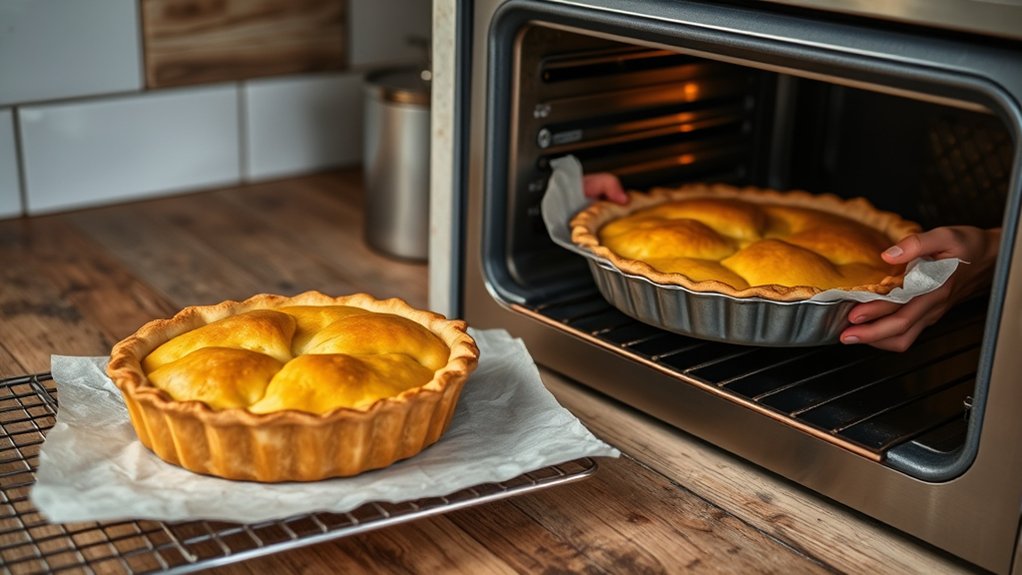
How to Reheat Pie in the Oven in 10 Easy Steps
To reheat pie in the oven, start by letting it reach room temperature. This step ensures even warming and prevents the crust from becoming soggy.
Preheat your oven to 350°F (325°F for delicate pies) for the best results.
Remove any plastic wrap or coverings and place the pie on a baking sheet.
Cover it loosely with foil to retain moisture during reheating.
Position the pie on the middle rack of the oven.
Warm the pie for 15–25 minutes until the filling bubbles and the crust crisps to perfection.
Once heated, let it rest briefly before serving.
Keep reading for tips on reheating different pie types and advice on proper storage.
Key Takeaways
- Preheat the oven to 350°F (325°F for delicate pies) for even and controlled reheating.
- Remove any plastic wrap and let the pie reach room temperature before reheating.
- Place the pie on a baking sheet and cover loosely with foil to maintain moisture and crispness.
- Reheat fruit pies for 20-25 minutes, cream pies for 15-18 minutes, and deep-dish pies for 25-30 minutes.
- Check the pie’s internal temperature reaches 135°F–140°F and let it rest for 5 minutes before serving.
Why Reheating Pie in the Oven Works Best
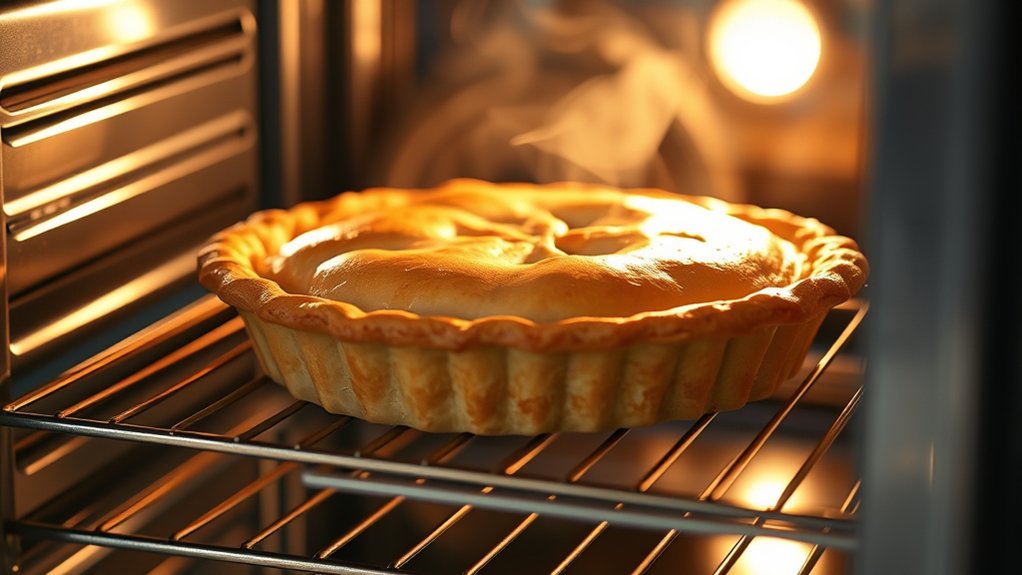
Although you might be tempted to use a microwave for convenience, reheating pie in the oven works best because it guarantees even heat distribution and preserves the crust’s crispness. When you use the oven, the heat surrounds the pie, warming it gradually and preventing sogginess. Microwaves often make the crust chewy or soggy due to uneven heating and trapped moisture.
Using the oven also helps maintain the pie’s original texture and flavor, so every bite tastes just as good as when it was fresh. Plus, the oven allows the filling to heat thoroughly without drying out. By reheating pie this way, you enjoy a perfect balance of a flaky crust and warm, luscious filling, enhancing your overall eating experience.
Preheat Your Oven and Choose the Right Temperature
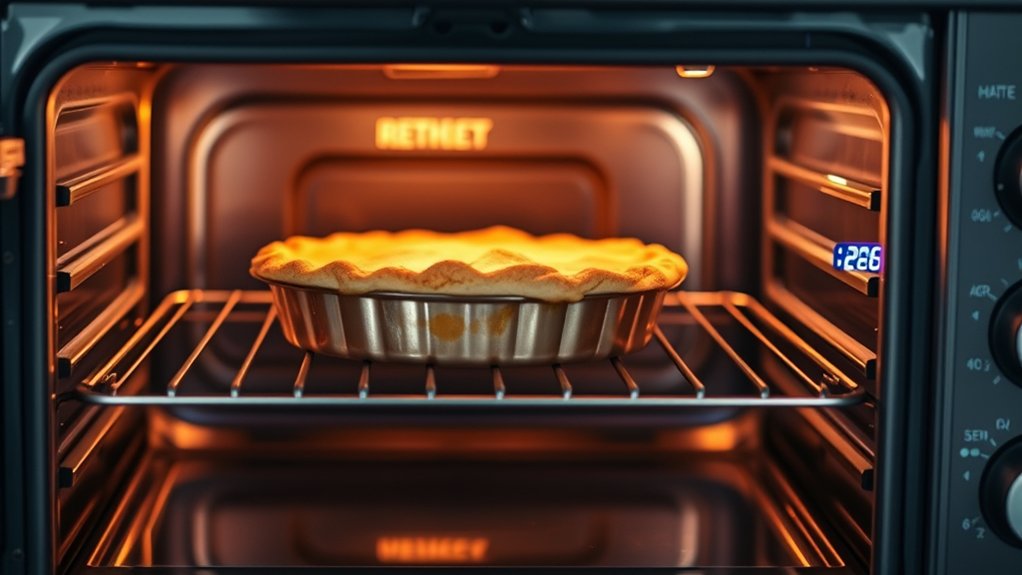
Before you pop your pie in, make sure to preheat your oven to the right temperature—usually around 350°F. This helps the pie heat evenly without drying out or burning.
Taking a few extra minutes to preheat guarantees your pie reheats perfectly every time.
Optimal Oven Temperature
When you reheat pie, setting the right oven temperature guarantees it warms evenly without drying out. Aim for a moderate heat that revives the filling and crisps the crust without burning it. Too high a temperature risks scorching the edges, while too low leaves the pie lukewarm inside.
Keep these temperature tips in mind:
- Set your oven between 325°F and 350°F for best results.
- Use 325°F for delicate fruit pies to avoid drying.
- Choose 350°F for denser pies like pumpkin or pecan.
- Avoid exceeding 350°F to prevent crust over-browning.
This temperature range ensures your pie heats through evenly, maintaining its delicious texture and flavor every time.
Preheating Tips and Tricks
Since a properly preheated oven guarantees even heat distribution, you’ll want to give it enough time to reach the ideal temperature before placing your pie inside. Start by setting your oven to the recommended temperature, usually between 325°F and 350°F for reheating pie. Avoid opening the door frequently, as this causes temperature drops and uneven heating.
Use an oven thermometer if you want to be extra precise. If your oven has a convection setting, consider using it to circulate heat more evenly, but lower the temperature by about 25°F to prevent burning. Always place the pie on a middle rack to allow air to circulate around it.
Following these tips assures your pie reheats evenly, maintaining its flaky crust and warm filling.
Prepare Your Pie to Keep It Flaky and Fresh
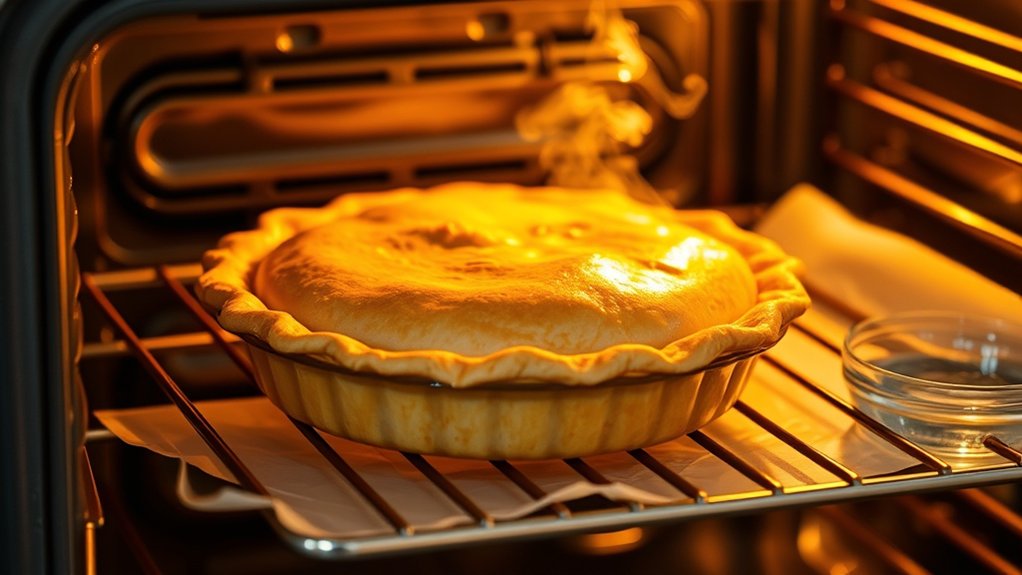
To keep your pie flaky and fresh, you’ll want to handle it gently and avoid sogginess. Start by letting the pie come to room temperature if it’s been refrigerated. This prevents condensation from making the crust soggy when reheated.
Handle your pie gently and bring it to room temperature to keep the crust flaky and avoid sogginess.
Before placing it in the oven, remove any plastic wrap or packaging that could melt or trap moisture. If your pie has a crumb or nut topping, sprinkle a little extra sugar to refresh the texture. Finally, place your pie on a baking sheet to catch any drips and assure even heating.
Keep these tips in mind:
- Avoid cutting the pie before reheating
- Use a sharp knife if slicing after reheating
- Handle the pie with care to prevent crust cracks
- Don’t add extra liquid or toppings before reheating
Cover Your Pie With Foil or Parchment to Lock Moisture
Although reheating pie without covering might seem quicker, wrapping it with foil or parchment paper helps lock in moisture and prevents the crust from drying out. When you cover your pie loosely with foil, you create a barrier that traps steam, keeping the filling juicy and the crust tender. If you prefer, use parchment paper to avoid direct contact between the foil and the pie’s surface, which can sometimes stick or affect texture.
Just make sure the cover isn’t wrapped too tightly—allow a little room for air circulation to prevent sogginess. This simple step guarantees your reheated pie retains its delicious flavor and texture, giving you a satisfying slice every time without sacrificing quality.
Position Your Pie Correctly in the Oven
Place your pie in the center of the oven to guarantee it heats evenly on all sides. Make sure to elevate it on a rack rather than placing it directly on the oven floor.
This setup helps air circulate and prevents the crust from getting soggy.
Centering for Even Heat
When you position your pie in the oven, centering it guarantees the heat distributes evenly around the crust and filling. Placing the pie right in the middle ensures no part cooks faster or slower than others, preventing burnt edges or underheated centers.
To achieve perfect centering, follow these tips:
- Open the oven door fully to avoid jostling the pie.
- Use the middle rack for the most consistent heat.
- Place the pie on a flat baking sheet for stability.
- Avoid crowding the oven with other dishes that block airflow.
Elevate Pie on Rack
Since proper air circulation is key to reheating your pie evenly, you’ll want to elevate it on a rack rather than setting it directly on the oven floor or a solid pan. Place your pie on the middle oven rack to allow hot air to flow evenly around it. This prevents soggy bottoms and assures the crust warms up just right.
Avoid using a baking sheet underneath unless it’s a wire rack, as solid surfaces can block heat circulation. If you’re worried about drips, position a foil-lined tray on the rack below your pie to catch any spills. Elevating your pie this way helps maintain its texture and flavor, giving you a perfectly reheated slice every time.
Reheat Times for Different Pie Types and Sizes
How long you reheat your pie depends largely on its type and size. Fruit pies usually need less time than dense cream or custard pies. Smaller slices heat faster, while whole pies require a longer, gentler approach to avoid drying out.
Here’s a quick guide to help you:
- Small fruit pie slices: 10-12 minutes at 350°F
- Whole fruit pies: 20-25 minutes at 350°F
- Cream or custard pies: 15-18 minutes at 325°F
- Deep-dish or thick pies: 25-30 minutes at 350°F
Adjust times slightly based on your oven’s quirks and the pie’s thickness. This way, you’ll reheat your pie evenly without overcooking or sogginess.
How to Check If Your Pie Is Perfectly Heated
Although reheating times provide a helpful guideline, you’ll want to check your pie carefully to guarantee it’s heated through without becoming overcooked. Start by inserting a knife or skewer into the center of the pie. If it feels hot to the touch or the filling bubbles gently, your pie is ready.
For fruit pies, look for bubbling juices around the edges—this indicates the filling is heated. Avoid relying solely on the crust’s appearance; it might brown before the inside is warm. If you have a food thermometer, aim for an internal temperature of about 135°F to 140°F for the perfect balance of warmth without drying out.
Checking carefully helps you enjoy a pie that’s both hot and delicious.
Rest Your Pie After Reheating for Best Flavor
After reheating your pie, let it rest for several minutes before cutting into it. This pause allows the heat to distribute evenly, preventing burns and ensuring every bite tastes just right. Resting your pie also helps the filling set, making it easier to slice without the filling spilling out.
During this time, you’ll notice several benefits:
- The crust firms up, regaining its flakiness
- The filling thickens to the perfect consistency
- Flavors meld and intensify for a richer taste
- The pie cools slightly for safer, more enjoyable eating
Give your pie this simple moment of patience, and you’ll enjoy a perfectly reheated slice every time.
How to Reheat Fruit, Pumpkin, and Savory Pies Differently
Because fruit, pumpkin, and savory pies each have unique fillings and textures, you’ll need to modify your reheating approach to keep them tasting their best. Fruit pies benefit from moderate heat to soften the filling without making the crust soggy.
Pumpkin pies require gentle warming to preserve their creamy texture. Savory pies need thorough reheating to ensure the filling is hot and safe to eat without drying out.
| Pie Type | Best Reheating Method |
|---|---|
| Fruit Pie | 350°F for 15-20 mins, cover loosely |
| Pumpkin Pie | 325°F for 10-15 mins, tent with foil |
| Savory Pie | 375°F for 20-25 mins, uncovered |
| All Pies | Let rest 5 mins before serving |
| Crust Tips | Avoid microwave to keep crispiness |
Storing Leftover Pie Before and After Reheating
You’ll want to store your leftover pie properly to keep it fresh and tasty. Wrap it tightly with plastic wrap or foil and refrigerate it within two hours of serving.
Proper Pie Storage
When storing leftover pie, keeping it fresh and safe to eat depends on how you handle it before and after reheating. First, let the pie cool completely to prevent condensation, which can make the crust soggy. Then, cover it tightly with plastic wrap or aluminum foil to lock in moisture and protect it from absorbing fridge odors.
After reheating, avoid leaving the pie out too long to maintain freshness.
Remember these key tips for proper pie storage:
- Cool pie fully before wrapping
- Use airtight containers or wraps
- Store in the refrigerator promptly
- Reheat only the portion you plan to eat
Following these steps helps you enjoy your pie safely and deliciously every time.
Storage Duration Tips
Although leftover pie can be stored safely for several days, knowing how long to keep it before and after reheating is essential to maintain its quality and avoid spoilage. You should refrigerate leftover pie within two hours of serving and consume it within 3 to 4 days.
After reheating, it’s best to eat the pie right away since reheated pie doesn’t store well and can lose texture or flavor.
| Storage Stage | Recommended Duration |
|---|---|
| Before Reheating | 3 to 4 days in fridge |
| After Reheating | Eat immediately |
| Freezing Leftover Pie | Up to 2 months |
| Thawed Pie Storage | 1 to 2 days in fridge |
Follow these tips to enjoy your pie safely and deliciously.
Frequently Asked Questions
Can I Reheat Pie in a Microwave Instead of an Oven?
Yes, you can reheat pie in a microwave, but it might make the crust soggy. To keep it crispier, heat in short bursts and let it rest between.
The oven usually gives better results.
Is It Safe to Reheat Cream or Custard Pies?
You shouldn’t reheat cream or custard pies because they can spoil easily and cause foodborne illness.
Instead, enjoy them chilled or at room temperature to keep them safe and delicious without risking your health.
How Long Can Reheated Pie Be Stored Afterward?
You can store reheated pie in the fridge for up to 2 days. Make sure to cool it quickly, cover it well, and avoid reheating more than once to keep it safe and tasty.
Can I Freeze Pie Before Reheating It Later?
You can freeze pie before reheating it later, just like tucking a letter away in a safe box. Wrap it tightly to avoid freezer burn, then thaw and reheat to enjoy that fresh-baked taste again.
Will Reheating Affect the Nutritional Value of the Pie?
Reheating pie won’t considerably affect its nutritional value. You might lose a tiny bit of vitamins from heat, but overall, the calories, fats, and sugars stay the same.
Just avoid overheating to keep it tasty!
Conclusion
Now that you know how to reheat pie in the oven perfectly, why settle for soggy crusts or uneven warmth? By preheating, covering your pie, and checking it carefully, you’ll enjoy that fresh-baked taste every time.
Whether it’s fruit, pumpkin, or savory, these simple steps keep your pie flaky and delicious. So, next time you’re craving a warm slice, you’ve got the foolproof method to make it just right! Use these tips to reheat pie in the oven and savor every bite with a perfectly heated crust and filling.