7 Tips to Keep Your Charcoal Grill Going for Hours
To keep your charcoal grill going for hours, start by choosing natural hardwood lump charcoal. This type of charcoal burns longer and hotter, making it ideal for extended grilling sessions. Using the right charcoal ensures better heat control and flavor.
Light your coals evenly with a chimney starter to get them burning efficiently.
Arrange the coals to create two heat zones—one hot for searing and one cooler for slow cooking. This setup gives you more versatility while grilling.
Manage airflow by adjusting the grill vents to control temperature and oxygen flow precisely.
Keep your grill clean to guarantee consistent heat distribution throughout your cooking.
Add unlit charcoal gradually to maintain the fire without smothering it.
Master these tactics to enjoy consistently great grilling sessions. By following these tips, you’ll uncover more ways to optimize your cooking experience and make the most of your charcoal grill.
Key Takeaways
- Use natural hardwood lump charcoal for longer, hotter, and cleaner burns without additives.
- Arrange coals to create two heat zones: a hot searing side and a cooler indirect side.
- Control airflow by adjusting bottom and top vents to maintain steady temperatures and prevent smothering.
- Add unlit charcoal gradually on one side to prolong the fire without disrupting oxygen flow.
- Clean ashes and debris regularly to ensure optimal airflow and consistent charcoal burn.
Choose the Right Charcoal for Long-Lasting Heat
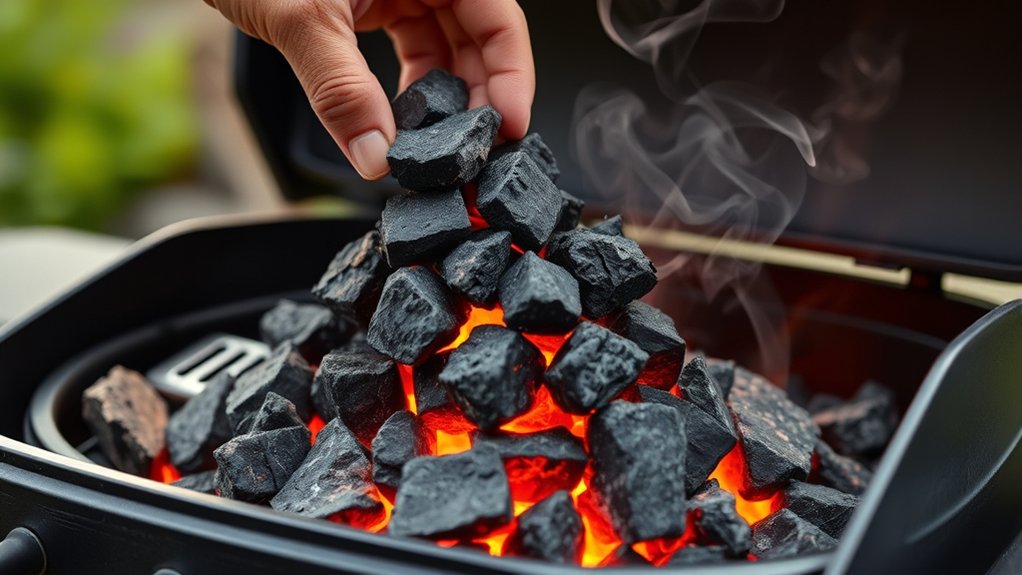
When you want your charcoal grill to burn steadily for hours, choosing the right charcoal is essential. You’ll want to pick hardwood lump charcoal if you’re aiming for long-lasting, consistent heat. It lights quickly, burns hotter, and produces less ash compared to briquettes.
However, briquettes are uniform in size and burn evenly, making them a solid choice if you prefer predictable heat over a longer period. Avoid quick-light charcoal; the additives can affect your food’s flavor and don’t last as long. Also, look for charcoal made from natural hardwood without fillers or chemicals—that guarantees a cleaner, longer burn.
Arrange Your Coals to Maximize Airflow and Burn Time
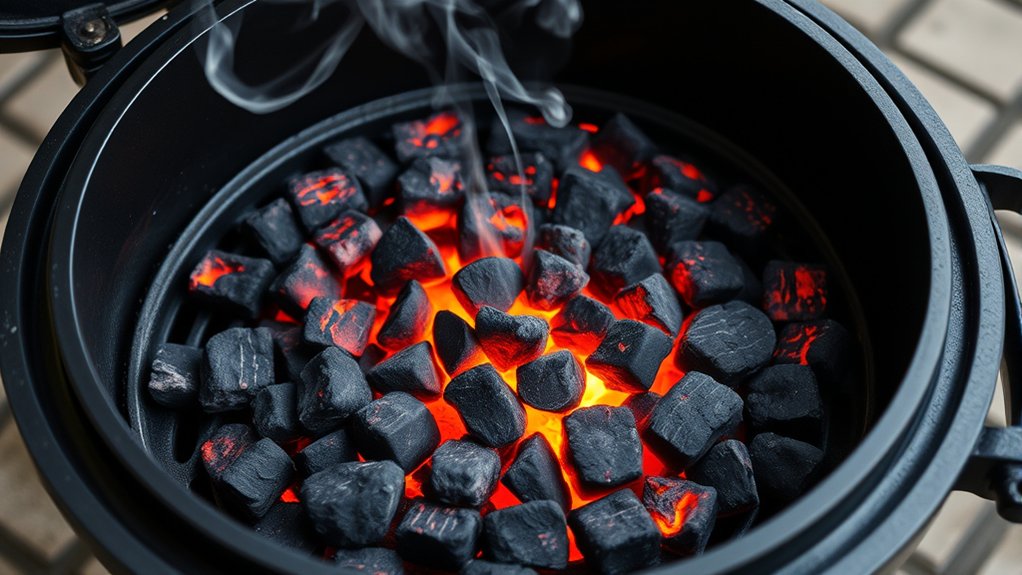
To keep your charcoal burning longer, arrange your coals to allow maximum airflow. Use your grill’s vents wisely to control oxygen flow and maintain steady heat.
Building a two-zone fire lets you cook with both direct and indirect heat for better temperature management.
Optimize Coal Placement
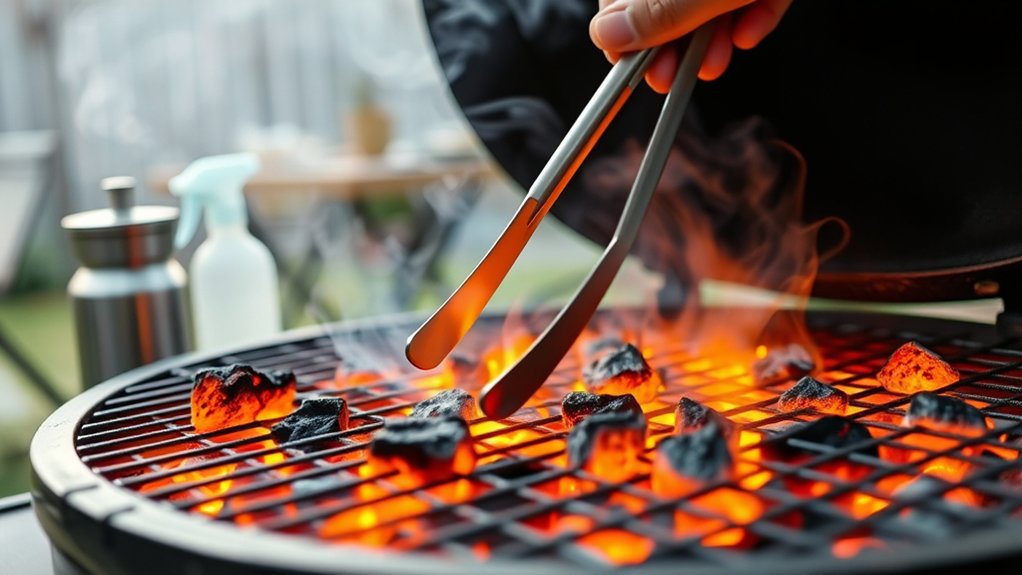
Although it might seem simple, how you arrange your coals directly affects airflow and burn time, so optimizing their placement can keep your grill hot for hours. Start by creating a solid base with evenly spread coals for consistent heat. Next, pile some coals into a mound on one side to create a hot zone for searing.
Leave small gaps between coals to allow oxygen flow without letting ashes smother the fire. Finally, stack coals loosely rather than tightly packed to maintain airflow and prolong burn time.
- Evenly spread base layer
- Mound coals for hot zone
- Leave gaps for airflow
- Stack loosely, not tightly
This setup balances heat and oxygen, letting you grill longer without constant fuel adjustments.
Use Ventilation Effectively
Optimizing coal placement sets the stage, but controlling airflow through your grill’s vents truly dictates how long and well your fire burns. Open the bottom vents to let oxygen fuel your coals, increasing heat and burn time. Adjust the top vent to regulate smoke and maintain proper airflow; closing it too much can smother the fire, while opening it fully might cause the coals to burn out quickly.
Arrange your coals loosely to allow air to circulate between them, avoiding tight piles that restrict oxygen. Keep an eye on the vents throughout cooking—small tweaks can extend your fire’s life. By mastering ventilation, you’ll keep consistent temperatures and enjoy longer grilling sessions without constantly adding charcoal.
Build a Two-Zone Fire
When you build a two-zone fire, you create distinct areas of direct and indirect heat that give you greater control over cooking. This setup lets you sear over intense flames and then move food to cooler spots for slower cooking or resting.
To arrange your coals effectively:
- Pile coals on one side of the grill, forming a dense, hot zone for direct heat.
- Leave the opposite side bare or with a thin layer of coals for indirect heat.
- Make sure coals are spread evenly to maximize airflow, helping them burn longer.
- Adjust vents to control oxygen flow, maintaining steady temperatures in each zone.
This method maximizes burn time and airflow, making your charcoal grill versatile and efficient.
Keep Your Charcoal Grill Clean to Avoid Heat Loss
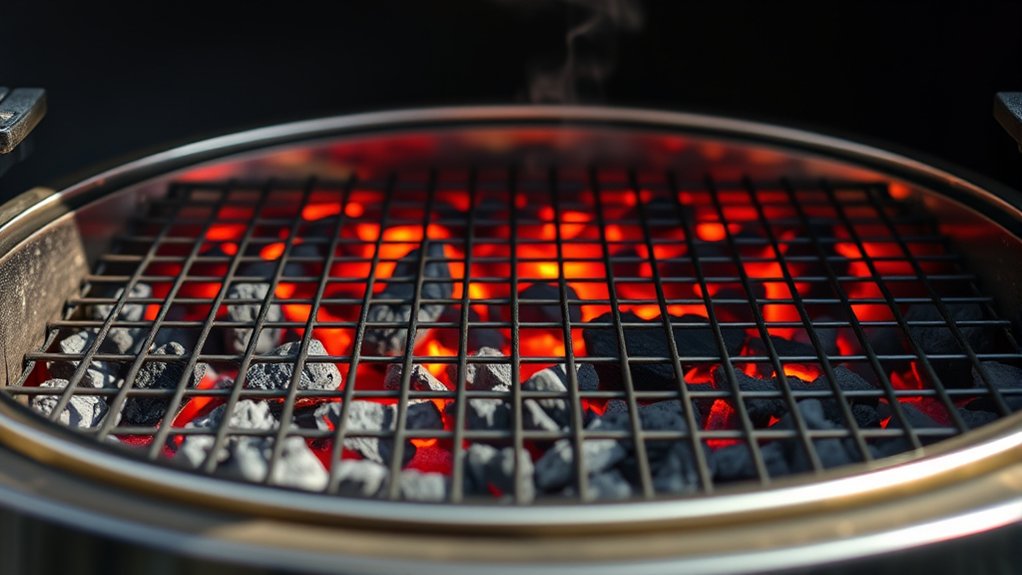
To keep your charcoal grill burning efficiently, you need to clean it regularly. Ash and grease buildup block airflow, causing uneven heat and temperature drops. After each use, remove ashes from the bottom grate to maintain proper ventilation.
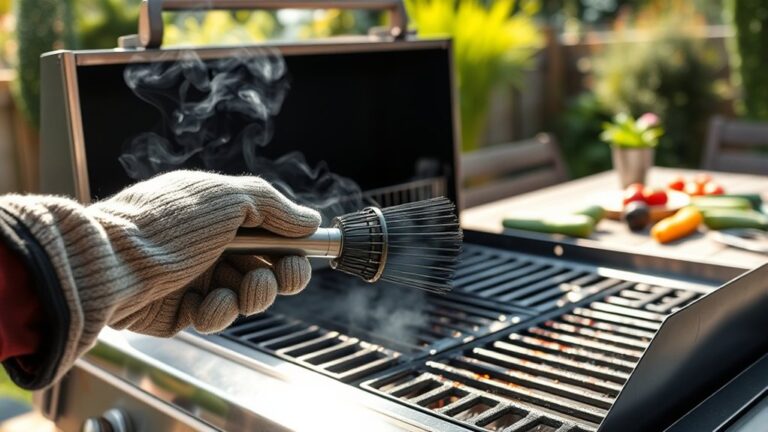
Scrape leftover food debris off the cooking grates with a grill brush to prevent flare-ups and sticking. Wipe down the interior walls to avoid grease fires that can damage your grill and waste fuel. Don’t forget to inspect and clean the air vents to ensure they open fully for ideal oxygen flow.
A clean grill helps maintain consistent heat, making your charcoal last longer and your cooking more reliable. Staying on top of cleaning saves you time and keeps your grilling experience smooth.
Keep Coals Hot Using a Charcoal Chimney
Although lighting charcoal can be tricky, using a charcoal chimney makes it much easier to get your coals hot quickly and evenly. This tool funnels heat and air perfectly, jumpstarting the fire without lighter fluid. Here’s how to keep coals hot using a chimney:
- Fill the chimney with charcoal up to the top for a full, steady burn.
- Place newspaper or fire starters under the chimney’s base and light them evenly.
- Wait 10-15 minutes until you see glowing red coals at the chimney’s top.
- Pour the hot coals directly into your grill’s charcoal grate for consistent heat distribution.
Using a chimney keeps your coals hotter longer, so you can focus on grilling without worrying about uneven temperatures.
Add More Charcoal Without Killing the Fire
Even as your coals start to fade, you can keep the fire alive by adding fresh charcoal carefully. Start by spreading the existing hot coals evenly to maintain consistent heat. Then, add a small pile of unlit charcoal on one side of the grill, rather than dumping it all at once.
This method allows the new charcoal to gradually ignite from the hot coals without smothering the flames. Avoid piling fresh charcoal directly onto glowing embers, which can cut off oxygen and kill the fire. If you want quicker ignition, lightly sprinkle a bit of lighter fluid on the new charcoal, but never pour it on burning coals.
Adjust Grill Vents to Control Temperature
When you adjust the grill vents, you control the flow of oxygen feeding the fire, which directly affects the temperature. Opening the vents lets more air in, making the coals burn hotter and faster. Closing them restricts oxygen, cooling the fire down and extending burn time.
Here’s how to manage your vents effectively:
Here’s how to manage your vents effectively for optimal heat control and longer-lasting charcoal.
- Open both bottom and top vents fully for a high, intense heat.
- Partially close the bottom vents to slow the burn without smothering the fire.
- Keep the top vents slightly open to allow smoke and gases to escape.
- Adjust vents gradually, giving the fire time to respond.
Mastering vent control keeps your grill temperature steady and your charcoal lasting longer.
Cook Smarter by Using Heat Zones
You can cook smarter by setting up two heat zones on your grill—one for direct heat and one for indirect heat. This lets you manage temperature more efficiently and handle different foods at once.
Understanding how to create and use these zones will keep your charcoal burning longer and your food cooking perfectly.
Understanding Direct Versus Indirect
Although grilling over direct heat cooks food quickly and sears it with a delicious crust, mastering indirect heat allows you to cook larger or tougher cuts evenly without burning. When you understand these two methods, you control your grill’s temperature and timing like a pro.
Here’s how to visualize the difference:
- Direct heat: Flames and coals are directly under the food, perfect for burgers, steaks, and quick-cooking veggies.
- Indirect heat: Coals are arranged away from the food, creating a gentler heat for slow cooking.
- Direct heat chars and crisps the surface fast.
- Indirect heat cooks through without flare-ups or burning.
Use both methods wisely, and you’ll enjoy perfectly grilled meals every time.
Setting Up Two Zones
How can you manage different cooking needs on one grill? Setting up two zones lets you cook smarter by creating distinct heat areas. Arrange your charcoal on one side of the grill for a hot direct heat zone, and leave the other side empty to serve as a cooler indirect heat zone.
This setup gives you the flexibility to sear meats quickly over high heat and then move them to the cooler side to finish cooking without burning. You can also use the indirect zone to keep food warm while you prepare more. By mastering two zones, you’ll handle various foods and cooking times more efficiently, ensuring everything cooks perfectly without constantly adjusting the coals or lid.
It’s a simple trick that makes long grilling sessions much easier.
Managing Temperature Efficiently
Mastering two heat zones sets the stage for controlling your grill’s temperature more efficiently. By dividing your charcoal grill into a hot zone and a cooler zone, you can cook different foods perfectly and manage flare-ups with ease.
Here’s how to maximize this setup:
- Direct heat: Place charcoal on one side for searing steaks or quick-cooking items.
- Indirect heat: Use the empty side to slow-cook larger cuts or keep food warm.
- Adjust vents: Open vents to increase oxygen flow and boost heat; close slightly to lower temperature.
- Move food as needed: Shift items between zones to avoid burning or to finish cooking gently.
With these steps, you’ll cook smarter, control temperatures precisely, and keep your charcoal grill going longer.
Frequently Asked Questions
How Do Weather Conditions Affect Charcoal Grill Performance?
Wind can make your charcoal burn faster, while cold weather slows it down. Rain dampens the coals, making lighting tough. You’ll need to adjust airflow and add more charcoal to keep steady heat in tough conditions.
Can I Use Lighter Fluid Safely on a Hot Grill?
You wouldn’t want to pour lighter fluid on a hot grill—it’s risky and can cause flare-ups or burns.
Instead, wait until the coals are cool before adding fluid, or use a chimney starter for safer ignition.
What Is the Best Way to Store Unused Charcoal?
You should store unused charcoal in a cool, dry place, preferably in an airtight container or sealed bag. This keeps moisture out, prevents clumping, and guarantees your charcoal lights easily the next time you grill.
How Long Should I Let the Grill Cool Before Cleaning?
You should let your grill cool for at least 30 to 60 minutes before cleaning.
This guarantees the charcoal and grill are cool enough to handle safely, preventing burns and making cleaning much easier for you.
Are There Health Risks Associated With Charcoal Grilling?
Charcoal grilling can be a double-edged sword; you’ll face health risks like carcinogens from smoke and charred meat. But if you grill carefully—avoid flare-ups and cook evenly—you’ll enjoy tasty, safer meals every time.
Conclusion
With these tips, your charcoal grill becomes a trusty companion, glowing like a steadfast heartbeat through every cookout. By choosing the right charcoal, arranging coals wisely, and managing airflow, you keep the flames dancing longer—turning moments into memories.
Remember, a well-tended fire is like a well-told story: it draws people close, warms the soul, and leaves a lasting glow. Keep your grill alive, and let the good times burn bright. With the right charcoal grill care and charcoal management, you can enjoy hours of flavorful, smoky goodness every time.