How Long Do You Cook Bacon on the Grill Step by Step?
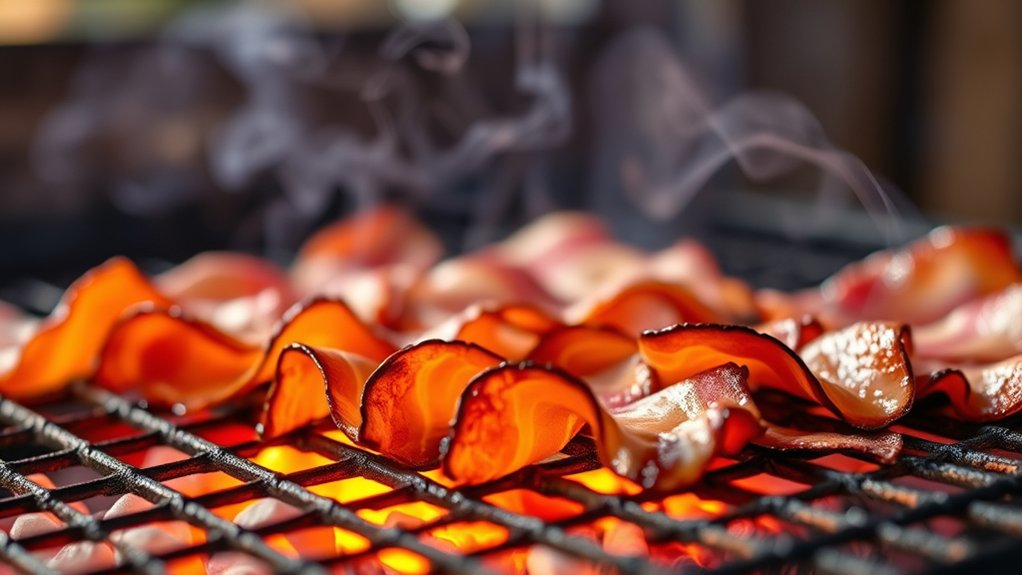
Grilling bacon is a delicious way to enjoy this classic breakfast favorite with a smoky twist. To cook bacon on the grill, start by preheating your grill to medium heat, which provides the perfect temperature for even cooking without burning.
You’ll want to grill your bacon over medium heat for about 8 to 12 minutes, flipping every few minutes to guarantee even cooking and avoid curling or burning.
Begin with a cold, clean grill that has been lightly oiled to prevent sticking. Arrange thick-cut or center-cut bacon in a single layer for best results.
Use indirect heat and place a drip pan underneath to catch the fat as it renders.
Watch the bacon carefully, looking for crisp edges without making it brittle. Remove the bacon once it’s firm yet still slightly flexible to achieve the perfect texture.
Keep following these tips to master grilling bacon every time.
Key Takeaways
- Preheat grill to medium heat and set up for indirect cooking with a drip pan beneath the grates.
- Place thick-cut bacon strips on a cold grill perpendicularly to grates to reduce curling.
- Cook bacon for 8-12 minutes, flipping every few minutes for even cooking and monitoring closely.
- Look for no pink spots, even browning, and edges crisp but not brittle to check doneness.
- Remove bacon promptly once desired crispness and color are achieved to avoid overcooking.
How to Prepare Your Grill for Bacon
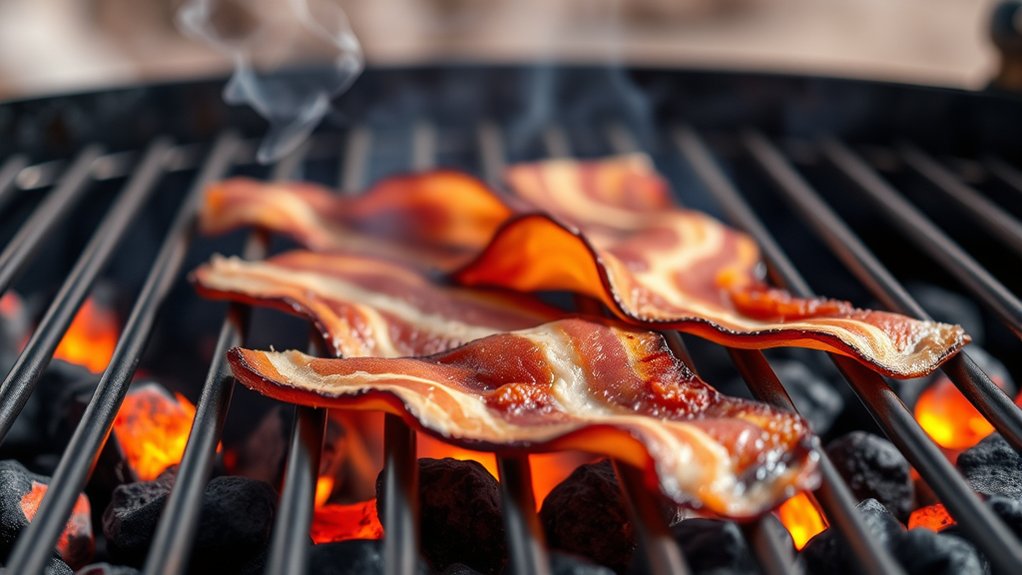
Before you start cooking bacon on the grill, you’ll want to prepare it properly to guarantee even cooking and prevent flare-ups. First, clean your grill grates thoroughly to remove any leftover residue. This helps avoid sticking and burning.
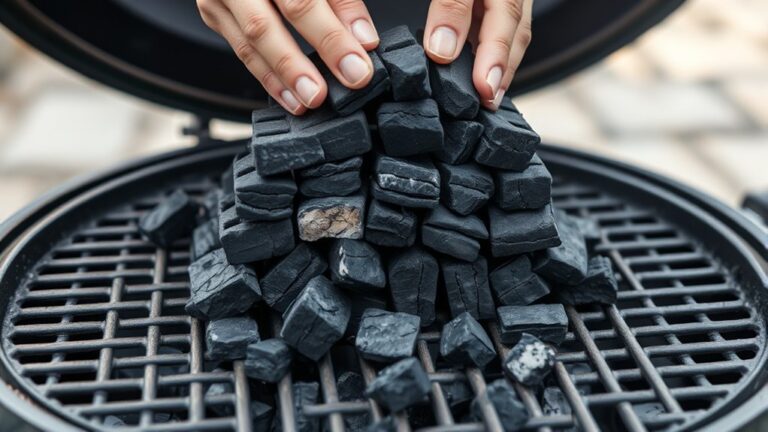
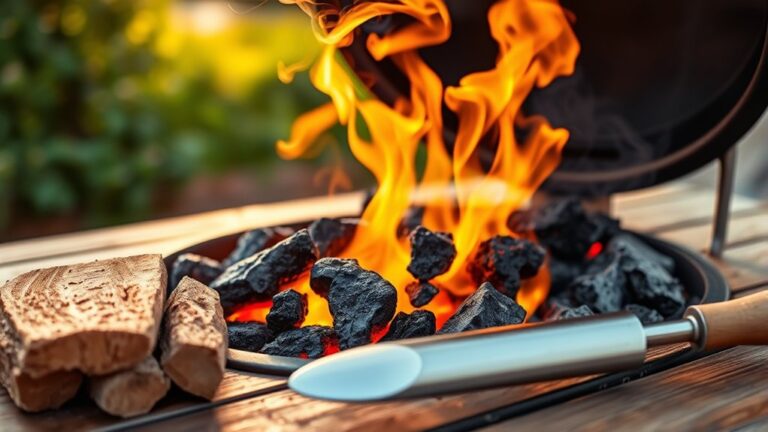
Next, set your grill for indirect heat by turning on burners on one side only or arranging charcoal to one side. This way, you can cook the bacon slowly without flames licking it. You’ll also want to oil the grates lightly using a paper towel dipped in oil to prevent sticking.
Finally, have a drip pan ready beneath the grates to catch grease and minimize flare-ups. Taking these steps ensures your bacon cooks evenly and safely on the grill.
How Long Should You Cook Bacon on the Grill?
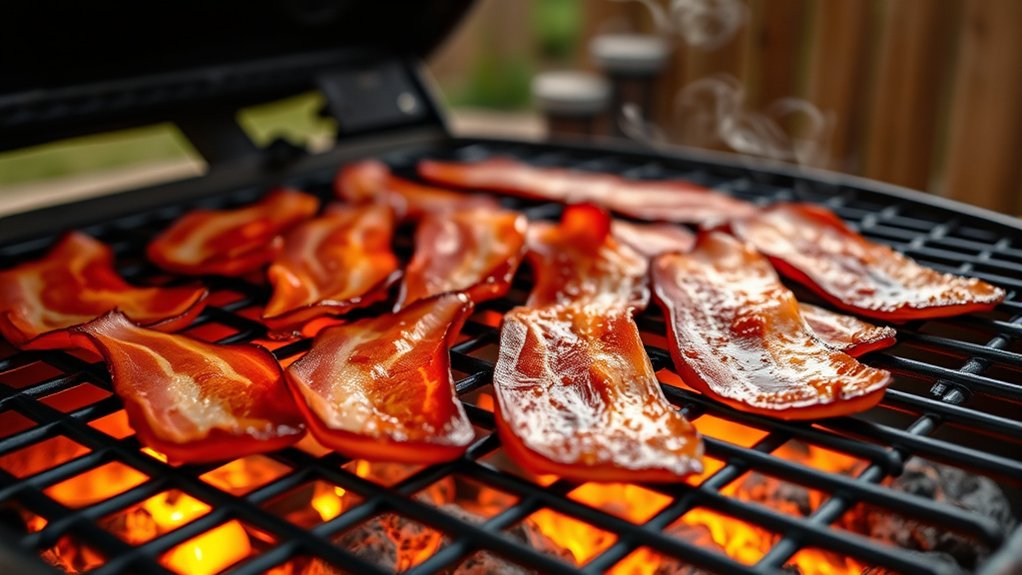
When cooking bacon on the grill, you’ll want to keep a close eye on the time to guarantee it crisps perfectly without burning. Typically, bacon takes about 8 to 12 minutes to cook on a medium heat grill. Lay the strips evenly, and flip them every few minutes to ensure both sides cook evenly.
Thinner bacon might cook faster, so start checking around the 6-minute mark. If your grill runs hotter, reduce the cooking time slightly or move the bacon to a cooler spot. Keep the lid open to monitor progress and prevent flare-ups caused by dripping fat.
Once the bacon reaches your desired crispness, remove it promptly to avoid overcooking. Using a grill-safe tray can also help control cooking time and reduce flare-ups.
Which Bacon Works Best for Grilling?
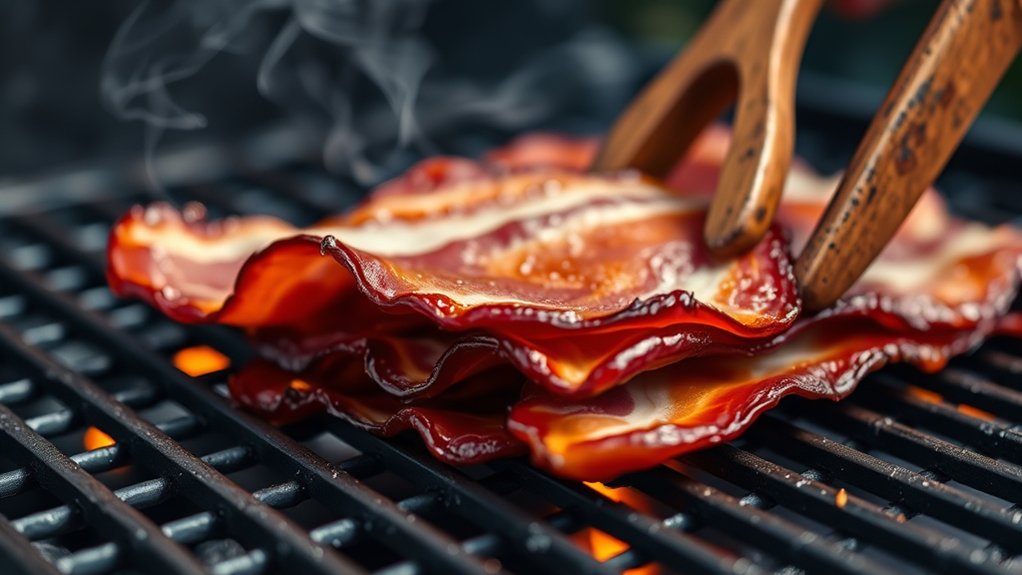
Although you can grill most types of bacon, thick-cut bacon works best because it holds up well to the heat and won’t curl or burn as easily. When you choose thick-cut bacon, you get a perfect balance of crispy edges and tender meat without worrying about it falling apart on the grill. Avoid thin slices since they cook too quickly and can become overly crispy or burn.
You might also consider center-cut bacon; it’s leaner and grills evenly, giving you a less greasy result. Additionally, smoked bacon adds a rich, smoky flavor that complements grilling. Ultimately, pick bacon that’s fresh, well-marbled, and thick enough to handle the grill’s direct heat for the best results every time.
How to Prevent Bacon From Curling and Sticking
To keep your bacon flat and prevent sticking, start by placing it on a cold grill before heating. Using a bacon press helps hold the slices down evenly, while choosing thick-cut bacon reduces curling.
These simple steps make grilling bacon easier and more enjoyable.
Use a Bacon Press
If you want perfectly flat bacon strips that cook evenly, using a bacon press can make all the difference. This handy tool applies steady pressure, preventing the bacon from curling up as it cooks. When the bacon curls, it tends to cook unevenly, with some parts crispier than others.
The bacon press keeps the strips in contact with the grill, ensuring consistent heat distribution. It also helps prevent the bacon from sticking by pressing it firmly against the grill surface, reducing the chances of edges lifting and sticking.
Simply place the bacon strips on the grill, then set the bacon press on top. Leave it there throughout cooking, and you’ll get beautifully flat, evenly cooked bacon every time.
Start With Cold Grill
Using a bacon press helps keep your strips flat, but starting with a cold grill plays a big role in preventing curling and sticking from the very beginning. When you place bacon on a hot grill, the sudden heat causes the fat and muscle fibers to contract quickly, leading to curling.
By beginning with a cold grill, you let the bacon warm up gradually, reducing this effect. Plus, a cold grill surface allows the bacon’s fat to render slowly, creating a natural non-stick layer.
Make sure to place the bacon strips evenly spaced and resist moving them around too much early on. This approach guarantees your bacon cooks evenly, stays flat, and releases easily, giving you perfect, crispy strips every time.
Opt for Thick Slices
Although thin bacon strips cook faster, opting for thick slices gives you better control over curling and sticking on the grill. Thick slices are less likely to shrink and deform as they cook, which helps them stay flat and even. When bacon curls, it can cook unevenly and stick to the grates, making flipping tricky.
Using thick-cut bacon also means the meat holds together better, reducing the chance of small pieces falling through the grill. To maximize success, place the thick bacon perpendicular to the grates and use a grill basket or foil if needed. This approach helps you achieve crispy, evenly cooked bacon with less hassle and mess.
Using Foil or a Grill Pan to Cook Bacon on the Grill
When you want to grill bacon without the mess of flare-ups or losing strips through the grates, foil or a grill pan offers a practical solution. Lay a sheet of heavy-duty foil on the grill or place a grill-safe pan directly on the grates. Arrange your bacon strips in a single layer, making sure they don’t overlap.
The foil or pan catches the grease, preventing flare-ups and making cleanup easier. You’ll still get that smoky flavor, but with better control over cooking. Keep the grill at medium heat and monitor the bacon closely to avoid burning.
Using foil or a grill pan lets you enjoy perfectly cooked bacon without worrying about sticking or falling through the grill.
How to Adjust Cooking Time for Thick vs. Thin Bacon
Since bacon thickness affects cooking time greatly, you’ll need to modify how long you grill it to get the perfect crispness. Thin bacon cooks faster and crisps up quickly, while thick-cut bacon takes more time for the fat to render fully without burning.
Here’s how to modify your grilling time:
- For thin bacon, grill for about 5-7 minutes over medium heat.
- For thick bacon, extend grilling to 10-12 minutes on medium-low heat.
- Monitor the bacon closely as thick slices may need occasional temperature adjustments.
- Remember, thicker bacon benefits from slower cooking to avoid a burnt exterior and undercooked center.
Adjusting time this way ensures your bacon comes out evenly cooked and delicious every time.
How to Flip and Monitor Bacon for Even Cooking
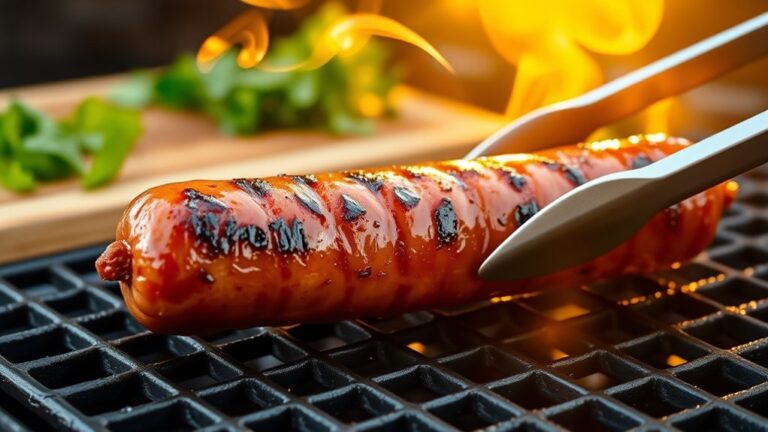
Adjusting cooking time based on bacon thickness is just the start; flipping and monitoring the strips guarantees they cook evenly and reach the right level of crispness. Begin by placing the bacon strips on the grill perpendicular to the grates to prevent curling. After about 3-4 minutes, use tongs to flip each strip carefully.
Keep an eye on the heat to avoid flare-ups that can burn the bacon. Flip the strips every few minutes, ensuring both sides brown evenly. Watch for any spots cooking faster and adjust their position on the grill accordingly.
Stay attentive throughout the process, as bacon can go from perfectly crisp to burnt quickly. This careful flipping and monitoring help you achieve consistently delicious grilled bacon every time.
How to Tell When Bacon Is Perfectly Cooked on the Grill
You’ll know your bacon is perfectly cooked when it turns a rich golden brown with crispy edges. Pay attention to the texture—it should feel firm but not brittle when you lift it from the grill.
These visual and tactile cues help you avoid undercooking or burning your bacon.
Visual Cues For Doneness
When grilling bacon, knowing the visual cues for doneness helps you achieve that perfect balance of crispy and tender every time. Keep an eye on the color, edges, and fat rendering to guide you.
Here are four visual cues to watch for:
- Golden Brown Color: Bacon should turn a rich golden brown, signaling it’s cooked through.
- Rendered Fat: The fat should look translucent and have melted down considerably.
- Slight Curling: Strips will curl slightly but remain mostly flat on the grill.
- No Pink Areas: Confirm there are no raw pink spots left on the meat.
Texture And Crispiness Indicators
Visual cues give you a solid idea of when your bacon is cooked, but texture and crispiness tell the full story. When you pick up a strip with tongs, it should feel firm but still slightly flexible—not floppy or too rigid. The edges should be crisp without crumbling instantly.
If it bends a little before cracking, you’ve hit that perfect balance. Listen for a gentle snap as you bite into it; that’s a sure sign your bacon is crispy but not burnt. Avoid overcooking, which leads to brittleness and a burnt taste.
Frequently Asked Questions
Can I Grill Bacon With Other Foods Simultaneously?
Yes, you can grill bacon with other foods simultaneously. Just keep bacon on a separate tray or foil to avoid flare-ups and cross-contamination.
Watch closely since bacon cooks faster than most other foods on the grill.
How Should I Store Leftover Grilled Bacon?
Wrap your leftover grilled bacon like a cozy blanket in foil or airtight containers. Pop it in the fridge within two hours to keep its smoky charm fresh.
Reheat gently, and you’ll savor every crispy bite again.
Is It Safe to Grill Bacon Indoors?
You shouldn’t grill bacon indoors because it creates a lot of smoke and grease splatter, which can be hazardous.
Instead, use a stovetop or oven where you can control ventilation safely and avoid fire risks.
What Sauces Pair Well With Grilled Bacon?
You’ll love pairing grilled bacon with smoky barbecue sauce, tangy maple glaze, or spicy sriracha mayo. These sauces enhance bacon’s crispy, savory flavor, giving your dish a deliciously bold kick you won’t want to miss.
Can I Use Frozen Bacon Directly on the Grill?
You can grill frozen bacon, but it’s best to thaw it first for even cooking. If you don’t, expect longer cook times and uneven crispiness.
Defrosting helps you get that perfect, crispy texture every time.
Conclusion
Grilling bacon might seem tricky, but it’s actually a breeze once you get the hang of it. While bacon crisps quickly over hot flames, patience keeps it from burning. You’ll love how the smoky grill transforms familiar strips into something extraordinary.
So, don’t rush—flip carefully, watch closely, and enjoy the contrast of sizzling heat and slow perfection. In the end, that crispy, flavorful bacon will make your grill time totally worth it. Remember, cooking bacon on the grill calls for attention to timing and temperature to get that perfect balance.
How long do you cook bacon on the grill? Typically, it takes about 10-15 minutes over medium heat, flipping occasionally for even crispiness. Mastering this timing will ensure your bacon is delicious every time you grill.