How Long Does a Grill Take to Heat Up Step by Step
You can expect your grill to take between 10 and 30 minutes to heat up, depending on the type of grill you are using. Knowing how long does a grill take to heat up is essential for planning your cooking time and achieving the best results.
Gas grills usually ignite and warm up fastest in about 10–15 minutes, while charcoal takes longer—about 15–30 minutes to turn white-hot.
Electric grills heat in roughly 5–10 minutes. Keep the lid closed and use quality fuel to speed things up.
Understanding these steps helps you get the perfect cooking temperature faster and manage heat more efficiently.
Key Takeaways
- Gas grills typically take 10–15 minutes to heat up, while charcoal briquettes need 15–30 minutes to become fully white-hot.
- Electric grills preheat faster, usually within 5–10 minutes, reaching consistent temperatures via internal heating elements.
- Keep the lid closed during preheating to trap heat and speed up the warming process efficiently.
- Use visual cues like glowing gas burners or grayish-white charcoal and a hand test to gauge proper grilling temperature.
- Adjust airflow vents to control temperature, starting with fully open vents for preheating and fine-tuning for cooking zones.
How Long Does a Grill Take to Heat Up?
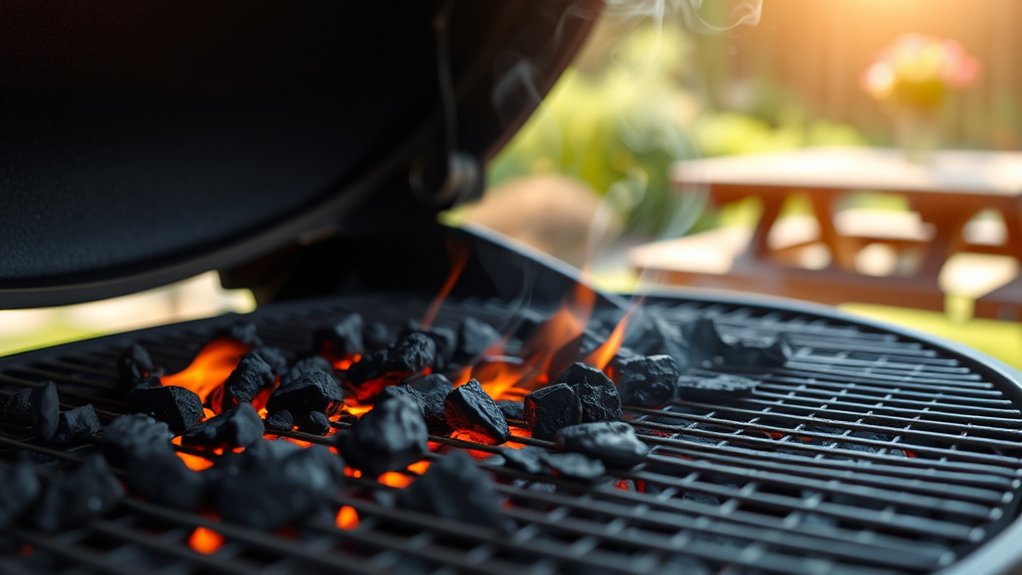
Although the exact time can vary, your grill typically takes about 10 to 15 minutes to heat up properly. You’ll want to give it enough time to reach the ideal cooking temperature, ensuring even heat distribution. Factors like grill size, fuel type, and outdoor temperature can slightly affect this time.
If you’re using charcoal, expect a bit longer as the briquettes need to become fully white-hot. Gas grills usually heat faster, but you still need to wait for the burners to reach the right temperature. Avoid rushing the process; starting to cook too soon can lead to unevenly cooked food and flare-ups.
Once your grill reaches the desired heat, you’re ready to start grilling your favorite meals safely and effectively.
How Gas Grills Heat Up Step by Step
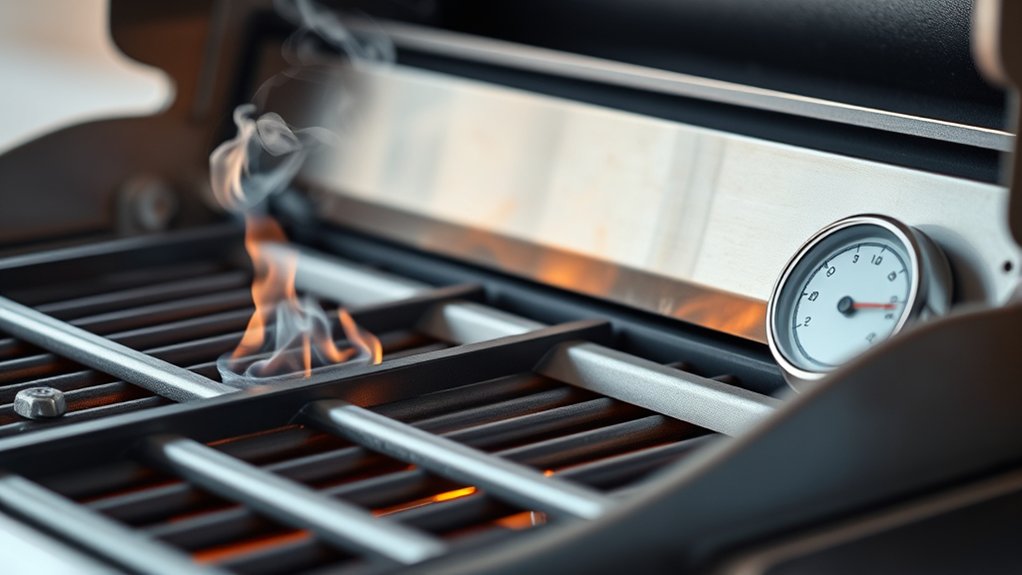
When you turn on your gas grill, the ignition sparks to light the gas and create the initial flame. That flame then heats the burners, which spread the heat evenly across the grill surface.
Understanding this process helps you know exactly when your grill is ready for cooking.
Ignition and Flame Development
How exactly does a gas grill ignite and develop its flame? When you turn the gas knob, propane or natural gas flows through the burner tubes. As you press the ignition button or use a match, a spark or flame lights the gas at the burner ports.
You’ll see small blue flames spreading evenly along the burners. This flame development is vital—it signals that gas is burning properly and safely. If the flames look yellow or flicker wildly, you might need to check for clogs or gas flow issues.
Once the flames establish, they’ll steadily grow, producing the heat required for cooking. This ignition phase only takes seconds but sets the stage for your grill to heat efficiently.
Burner Heating Process
Once your grill’s flames are steady, the burners start absorbing and radiating heat to warm the cooking surface. This process is essential for getting your grill ready to cook evenly. Here’s how it happens step by step:
- Heat Absorption: The metal burners absorb the heat generated by the flames.
- Heat Transfer: Burners transfer this heat to the grill grates above.
- Grate Heating: The grates heat up, creating a hot surface to sear your food.
- Temperature Stabilization: The temperature evens out across the grill for consistent cooking.
How Charcoal Grills Reach Cooking Temperature
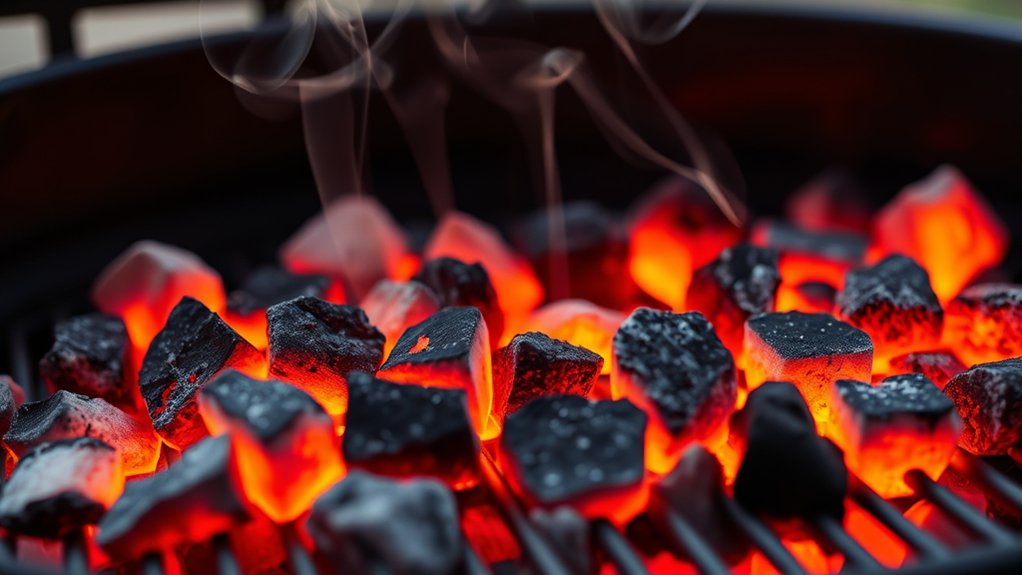
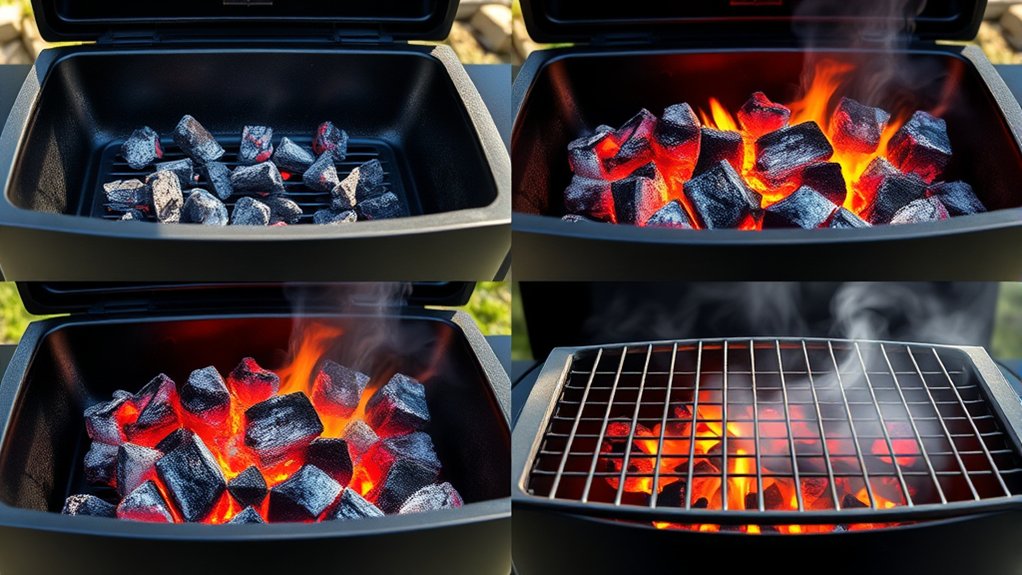
Though it may take a bit longer than gas grills, charcoal grills develop a unique heat by igniting briquettes or lump charcoal until they glow red and ash over. You start by arranging the charcoal in a pile or chimney starter, then light it with matches or a fire starter.
As the coals heat, they’ll turn grayish-white with ash, signaling they’re ready for cooking. This process usually takes about 15 to 30 minutes, depending on the charcoal type and airflow. You can control the temperature by adjusting the grill’s vents, allowing more or less oxygen to fuel the fire.
Once the coals reach a consistent glowing state, spread them evenly or bank them for direct or indirect cooking, ensuring your grill is prepped perfectly.
How Electric Grills Heat Up Compared to Gas and Charcoal
When you fire up an electric grill, it heats through an internal heating element that warms up steadily. Unlike gas grills that ignite instantly or charcoal grills that need time for the coals to ash over, electric grills take a bit longer to reach their cooking temperature.
Understanding these differences helps you plan your grilling time better.
Electric Grill Heating Process
Because electric grills rely on heating elements powered by electricity, they heat up differently than gas or charcoal grills. You’ll notice they warm up steadily and predictably, without the flare-ups or smoke you get from other types.
Here’s how the electric grill heating process works:
- Power On: When you switch it on, electricity flows to the heating elements.
- Element Heating: The elements convert electricity into heat, warming the grill surface evenly.
- Temperature Rise: The grill’s thermostat monitors and maintains your set temperature.
- Ready to Cook: Once the desired temperature is reached, the grill stays consistent, giving you control over your cooking.
This reliable process means you won’t wait long, usually around 5 to 10 minutes, for your electric grill to be ready.
Gas vs. Charcoal Warm-Up
Electric grills heat up quickly and evenly thanks to their controlled electric elements, but gas and charcoal grills bring a different approach to warming up. When you fire up a gas grill, it usually takes about 10 to 15 minutes to reach the ideal temperature. You’ll light the burners, and the flames will heat the grates almost immediately, giving you consistent heat distribution.
Charcoal grills, on the other hand, require a bit more patience. You’ll need to ignite the charcoal and wait 20 to 30 minutes for the coals to turn gray and ashy, signaling they’re ready. Unlike electric grills, both gas and charcoal rely on combustion, which means heat can vary more widely, and you’ll need to adjust vents or burners to control temperature effectively.
Factors That Affect Grill Heating Time
Several factors influence how quickly your grill reaches the desired temperature. Knowing these can help you plan your cooking better and avoid unnecessary waiting.
- Grill Type: Gas grills heat faster than charcoal because they ignite instantly and maintain consistent heat.
- Fuel Quality: Fresh charcoal or a full propane tank guarantees steady heat, speeding up the warm-up time.
- Weather Conditions: Wind and cold temperatures can slow heating by dissipating heat away from the grill.
- Grill Size and Material: Larger grills take longer to heat, and materials like stainless steel retain heat better than thin metal.
How to Tell When Your Grill Is Properly Heated
Understanding the factors that affect your grill’s heating time helps you anticipate when it will be ready. To tell if your grill is properly heated, look for visual and tactile cues. For gas grills, the burners should glow red, and you’ll notice consistent heat across the grates.
For charcoal grills, the coals turn grayish-white with a glowing red center. You can also use the hand test: hold your hand about five inches above the grill grate—if you can keep it there for 2-4 seconds, the grill is hot enough for high-heat cooking. Additionally, an infrared thermometer can give you an accurate surface temperature reading.
When your grill reaches about 400-450°F, it’s ready for most grilling tasks.
How to Speed Up Your Grill’s Heating Time
If you want to cut down on wait time, there are a few simple steps you can take to speed up your grill’s heating process. By preparing your grill and fuel source efficiently, you’ll be ready to cook in no time.
- Preheat with the lid closed: Keeping the lid shut traps heat and raises the temperature faster.
- Use quality charcoal or propane: High-quality fuel ignites quicker and burns hotter.
- Clean the grill grates: Removing leftover residue improves airflow and heat transfer.
- Arrange coals or burners properly: Position your heat source evenly to avoid cold spots and promote faster heating.
These tips help you get your grill hot quickly, letting you enjoy your meal without the long wait.
How to Maintain Consistent Heat During Grilling
To keep your grill’s heat steady, check the temperature often and adjust the airflow as needed. Creating different heat zones lets you cook various foods perfectly at once.
These simple steps help you maintain control and achieve great results every time.
Monitor Grill Temperature Regularly
While grilling, you’ll want to keep a close eye on the temperature to guarantee your food cooks evenly and doesn’t burn. Consistent monitoring helps you catch any fluctuations early and make timely adjustments.
Here’s how you can stay on top of your grill’s heat:
- Use a reliable grill thermometer to check the internal temperature frequently.
- Keep the lid closed as much as possible to maintain stable heat.
- Position the thermometer in different spots to detect hot or cool zones.
- Note the temperature changes and adjust cooking time accordingly.
Adjust Airflow For Control
Although managing grill temperature can seem tricky, adjusting the airflow gives you precise control over the heat. Your grill’s vents regulate oxygen flow, which directly affects how hot the fire burns. Opening the vents increases oxygen, making the coals burn hotter and faster.
Closing them restricts oxygen, cooling the fire down. To maintain consistent heat, start by opening both the bottom and top vents fully during preheating. Once you reach your target temperature, fine-tune the vents—partially close the bottom vents to slow the burn without suffocating the fire, and adjust the top vents to control smoke and airflow.
Keep an eye on your grill’s thermometer and tweak the vents gradually; small changes can have a big impact on temperature stability.
Use Heat Zones Strategically
When you set up distinct heat zones on your grill, you gain better control over cooking temperatures and can manage different foods simultaneously. This method helps maintain consistent heat and prevents overcooking or undercooking.
Here’s how you can use heat zones strategically:
- Create a direct heat zone for searing meats quickly at high temperatures.
- Set up an indirect heat zone to cook delicate items slowly without burning.
- Use the cooler zone to keep cooked food warm without drying it out.
- Move food between zones to control cooking speed and finish items perfectly.
Common Grill Heating Mistakes and How to Avoid Them
If you want your grill to reach the right temperature quickly and safely, you need to avoid some common heating mistakes. First, don’t open the lid repeatedly while waiting for it to heat up; this lets heat escape and prolongs preheating time. Also, avoid lighting the grill without properly cleaning the grates, as leftover debris can cause uneven heating.
Don’t rush the process by turning the burners to maximum right away; gradual heating prevents damage and ensures consistent temperature. Another mistake is neglecting to check fuel levels—running out mid-preheat disrupts your cooking plans. Finally, don’t forget to preheat with the lid closed to trap heat efficiently.
How Grill Size and Design Affect Heating Time
Avoiding common heating mistakes sets the stage for efficient grilling, but your grill’s size and design also play a big role in how quickly it heats up. Smaller grills heat faster since there’s less space to warm, while larger grills take more time to reach the right temperature. The design impacts airflow and heat retention, influencing heating speed and consistency.
Consider these factors:
- Grill Size: Smaller surface area means faster heat-up.
- Material: Cast iron grills retain heat better, speeding up warming.
- Lid Design: A tight-fitting lid traps heat, reducing heat-up time.
- Burner Layout: Efficient burner placement ensures even and quicker heating.
Knowing these helps you choose or adjust your grill for ideal heating times.
How Weather Conditions Influence Grill Heating
Although your grill’s size and design set the foundation, weather conditions can considerably affect how quickly it heats up. When it’s windy, your grill loses heat faster as the breeze blows away the warm air around it, so you’ll notice it takes longer to reach the desired temperature. On cold days, the grill works harder to heat up because the surrounding air cools the surface, slowing the process.
Rain or high humidity can also impact heating by cooling the grill exterior and causing moisture buildup, which reduces efficiency. To counter these effects, try positioning your grill in a sheltered spot or use a windbreak. Monitoring the weather helps you adjust your grilling time and expectations accordingly for the best results.
Frequently Asked Questions
What Safety Precautions Should I Take When Heating My Grill?
You should keep your grill in a well-ventilated area, check for gas leaks, and never leave it unattended.
Wear heat-resistant gloves, keep a fire extinguisher nearby, and make sure children and pets stay away while heating your grill.
How Do I Clean My Grill After Each Use?
You should let your grill cool slightly, then use a grill brush to scrub the grates. Wipe down surfaces with a damp cloth, empty the drip tray, and clean any removable parts to keep it ready for next time.
What Types of Fuel Are Best for Different Grill Types?
You’ll want charcoal for a smoky flavor on charcoal grills, propane for quick, easy heat on gas grills, and wood pellets for a rich, smoky taste on pellet grills.
Each fuel suits its grill type perfectly.
Can I Grill Indoors With an Electric Grill Safely?
Yes, you can grill indoors safely with an electric grill. Just guarantee good ventilation, follow the manufacturer’s instructions, and keep the grill on a stable, heat-resistant surface to avoid accidents or fire hazards while cooking.
How Do I Troubleshoot Uneven Heating on My Grill?
You troubleshoot uneven heating by cleaning your grill grates, checking burner flames, and adjusting vents for airflow. Preheat longer, move food around, and consider using a heat diffuser.
Replace faulty parts if needed.
Conclusion
Now that you know how your grill heats up, you’re ready to master the perfect cookout every time. Whether you’re firing up a gas, charcoal, or electric grill, understanding the process helps you avoid the frustration of waiting forever—like watching paint dry on a summer day.
Keep an eye on factors like weather and grill size to maintain steady heat. With these tips, you’ll have your grill blazing in no time! Mastering how long a grill takes to heat up ensures your cooking is efficient and enjoyable every time.