7 Steps to Prepare Filet Mignon for the Grill
To prepare filet mignon for the grill, start by choosing a fresh, firm steak about 1.5 to 2 inches thick with good marbling. Selecting the right cut is essential for a tender and flavorful filet mignon.
Letting the steak sit uncovered at room temperature for 30 to 60 minutes helps it cook evenly.
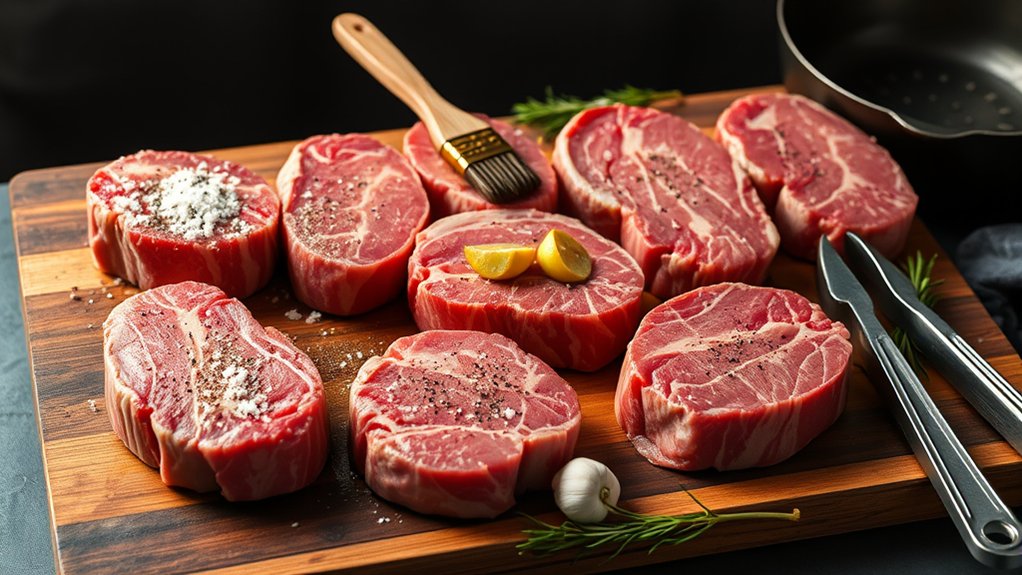
Season it just before grilling with salt, pepper, and light herbs to enhance the natural flavors.
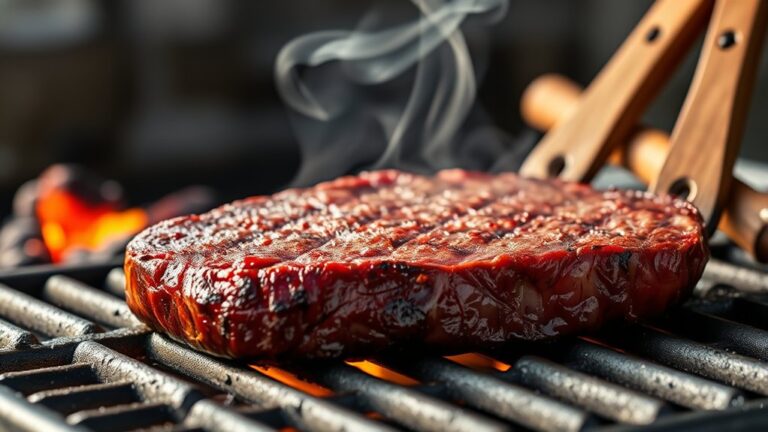
Preheat your grill to high, then sear the steak for 2–3 minutes per side to develop a perfect crust.
After searing, cook over indirect heat to your preferred doneness.
Finally, rest the steak 5–10 minutes before serving to keep it juicy and tender. This step ensures the juices redistribute throughout the meat.
Keep exploring to discover how each step perfects your steak.
Key Takeaways
- Select a 1.5 to 2-inch thick, firm, cherry-red filet mignon with moderate marbling and USDA Prime or Choice grade.
- Let the steak reach room temperature by resting uncovered for 30 to 60 minutes before grilling.
- Season evenly with kosher salt, black pepper, garlic powder, and herbs just before grilling for balanced flavor.
- Preheat the grill to 450-500°F, sear each side for 2-3 minutes, then cook over indirect heat to desired doneness.
- Rest the steak tented with foil for 5 to 10 minutes before slicing to lock in juices and enhance tenderness.
How to Choose the Best Filet Mignon for Grilling
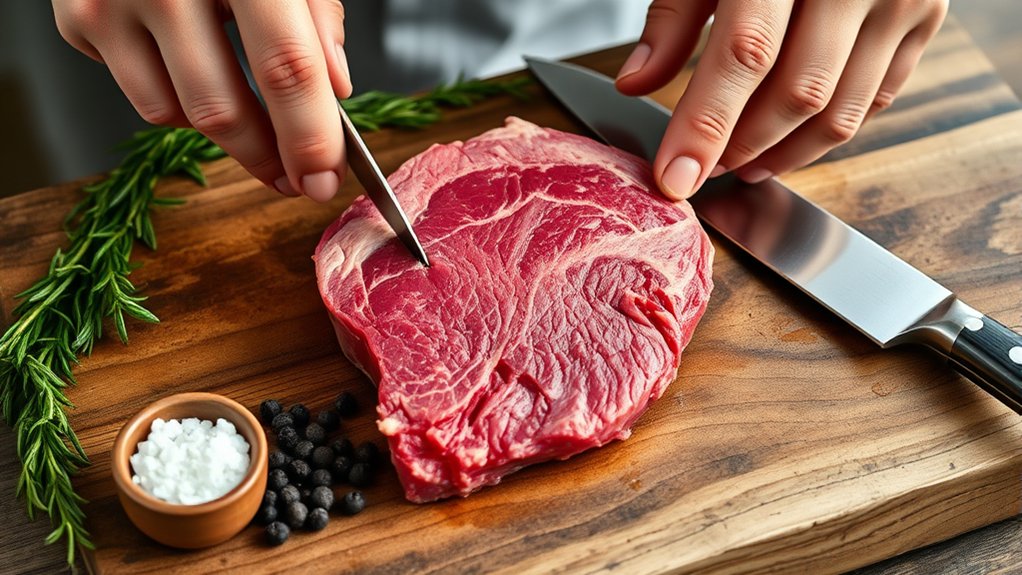
How do you pick the perfect filet mignon for grilling? Start by looking for cuts with a bright, cherry-red color—this indicates freshness. You want a steak that’s about 1.5 to 2 inches thick to guarantee even cooking and a juicy interior.
Check the marbling: fine white streaks of fat running through the meat add flavor and tenderness, so choose steaks with moderate marbling but avoid excessive fat. Make sure the meat feels firm yet springy to the touch, not mushy. Also, pick steaks with a clean cut and minimal discoloration around the edges.
Finally, select USDA Prime or Choice grades if possible; these grades assure better quality and flavor. Following these tips helps you grill a filet mignon that’s tender and flavorful every time.
Bring Filet Mignon to Room Temperature Before Grilling
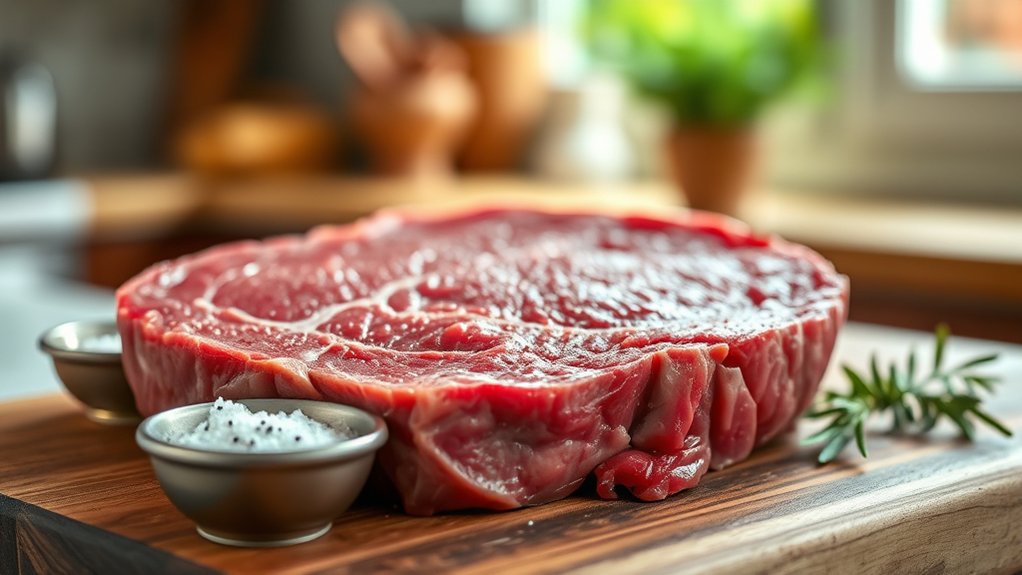
Before you fire up the grill, let your filet mignon sit out for about 30 to 60 minutes to reach room temperature. This step helps the meat cook more evenly, preventing the outside from overcooking while the center stays underdone. When the steak is closer to room temperature, heat penetrates more uniformly, ensuring a juicy, tender result.
Place the filet on a plate or cutting board, uncovered, in a cool, dry spot. Avoid letting it sit out too long—over two hours can risk bacterial growth. By taking this simple step, you’ll set yourself up for perfectly grilled filet mignon that’s cooked through just right, making every bite delicious and satisfying.
Season Filet Mignon to Boost Its Natural Flavor
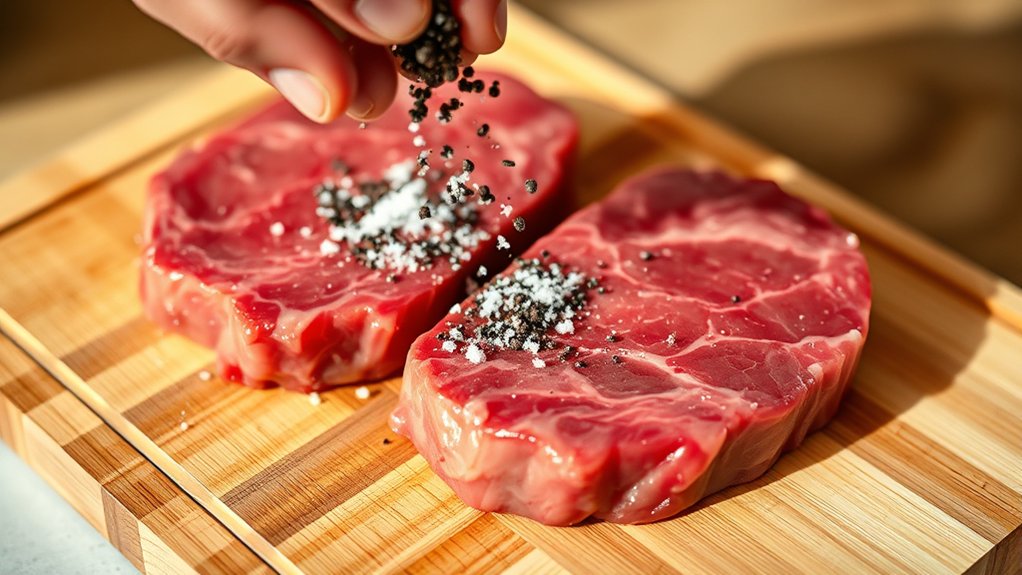
You’ll want to pick the right seasoning to enhance the filet’s natural taste without overpowering it. Timing matters too—seasoning just before grilling locks in the best flavor.
Make sure you apply the seasoning evenly for a consistent, delicious crust.
Choosing The Right Seasoning
Although filet mignon has a naturally tender and mild flavor, choosing the right seasoning can elevate its taste without overpowering it. You want to enhance its richness with simple, complementary flavors. Salt and freshly ground black pepper form the classic base.
Garlic powder adds a subtle depth, while fresh herbs like rosemary or thyme bring a fragrant touch. Avoid heavy spices that compete with the steak’s delicate nature.
| Seasoning | Effect on Flavor |
|---|---|
| Kosher Salt | Enhances natural beefy taste |
| Black Pepper | Adds mild heat and aroma |
| Garlic Powder | Introduces subtle savory notes |
| Rosemary | Provides fresh, piney aroma |
| Thyme | Offers earthy, herbal accents |
Stick to these, and your filet mignon will shine on the grill.
Timing For Optimal Flavor
When should you season your filet mignon to get the best flavor? Ideally, season it at least 40 minutes before grilling or right before placing it on the grill. If you season too early, the salt will draw out moisture, making the surface wet, which can interfere with searing.
However, letting it rest after seasoning allows the salt to penetrate, enhancing the meat’s natural flavor. If you don’t have time, seasoning right before grilling still works well to add a flavorful crust. Avoid seasoning hours in advance unless you plan to refrigerate the steak uncovered, allowing the surface to dry and the seasoning to absorb fully.
Timing your seasoning correctly guarantees your filet mignon tastes juicy and perfectly seasoned.
Applying Seasoning Evenly
How can you guarantee every bite of your filet mignon bursts with flavor? Start by applying seasoning evenly. Hold the steak above a clean surface and sprinkle seasonings from edge to edge, ensuring no spot is missed.
Use your fingers to gently pat the seasoning into the meat for better adhesion.
Here’s a quick guide to seasoning:
| Seasoning Type | Amount per Side | Best Use |
|---|---|---|
| Salt | ½ tsp | Enhances natural flavor |
| Black Pepper | ¼ tsp | Adds mild heat |
| Garlic Powder | ⅛ tsp | Introduces subtle aroma |
| Herbs (Rosemary or Thyme) | Small pinch | Boosts savory notes |
Even coverage helps the flavors meld perfectly during grilling, giving you a juicy, tasty filet every time.
Preheat the Grill for Perfect Filet Mignon Searing
Before you place your filet mignon on the grill, make sure to preheat it thoroughly to achieve that perfect sear. A hot grill creates a caramelized crust that locks in juices and enhances flavor. Turn your grill to high heat and let it warm up for at least 15 minutes.
If you’re using a gas grill, close the lid while preheating to maintain consistent temperature. For charcoal grills, wait until the coals are covered with white ash before grilling. Use a grill thermometer to verify the surface reaches about 450-500°F.
Proper preheating prevents sticking and helps cook the steak evenly. Once the grill is hot and ready, you can confidently move on to searing your filet mignon.
Sear the Filet Mignon on High Heat to Lock in Juices
You’ll want to sear your filet mignon on high heat to quickly lock in its natural juices. Timing is essential—too long, and you risk drying it out; too short, and you won’t get that perfect crust.
Use quick, confident techniques to seal the flavors before moving on to the next step.
Importance Of High Heat
When you sear filet mignon on high heat, you lock in its natural juices and create a flavorful crust that enhances every bite. High heat causes the Maillard reaction, which browns the meat’s surface, giving it that rich, savory flavor you’re aiming for. Without sufficient heat, the steak won’t develop that appealing caramelized exterior, making it taste bland.
Plus, high heat helps form a barrier that keeps moisture inside, so your filet stays tender and juicy. Make sure your grill or pan is fully preheated before placing the steak. This guarantees the surface cooks quickly, preventing the meat from drying out.
Timing The Sear Perfectly
Although high heat is essential, nailing the timing of your sear is what truly locks in the juices of your filet mignon. Start by ensuring your grill or pan is preheated to a very high temperature. Place the steak down and resist moving it around; let it sear undisturbed for about 2 to 3 minutes per side.
This short, intense contact creates a flavorful crust while sealing the moisture inside. Over-searing can dry out the meat, so keep your timing tight. Use a timer if needed, and remember that thickness affects sear time—thicker cuts might need slightly longer.
Once both sides have a rich, caramelized crust, you’re ready to move on to the next step without losing those precious juices.
Techniques To Retain Juices
Nailing the sear on your filet mignon sets the stage for locking in all those rich juices. When you sear over high heat, you create a flavorful crust that seals the meat’s moisture inside. To do this right, follow these key techniques:
- Preheat your grill or pan until it’s scorching hot before placing the steak.
- Pat the filet dry with paper towels to avoid steaming.
- Season just before searing to prevent drawing out moisture.
- Sear each side for 2-3 minutes without moving the steak to develop a crust.
- Let the filet rest after searing so juices redistribute evenly.
Cook Filet Mignon Using Indirect Heat to Desired Doneness
Since filet mignon is a thick and tender cut, cooking it using indirect heat allows you to achieve even doneness without burning the outside. Start by searing the steak over direct heat for 2-3 minutes per side to develop a flavorful crust.
Then, move the filet to the cooler part of the grill, away from direct flames. Close the lid to create an oven-like environment that cooks the steak gently and evenly. Use a meat thermometer to check the internal temperature: 120°F for rare, 130°F for medium-rare, 140°F for medium, and 150°F for medium-well.
Keep a close eye to avoid overcooking. Once it reaches your desired doneness, remove it promptly to prevent residual heat from pushing it past your target.
Let the Filet Mignon Rest Before Serving for Maximum Juiciness
Once your filet mignon reaches the perfect temperature, resist the urge to cut into it right away. Letting it rest is essential for locking in those delicious juices and enhancing tenderness. Here’s how to do it right:
- Remove the steak from the grill and place it on a warm plate.
- Tent it loosely with aluminum foil to keep heat without steaming.
- Allow it to rest for about 5 to 10 minutes.
- Use this time to prepare sides or finish sauces.
- Remember, resting helps redistribute juices, so each bite is juicy and flavorful.
Frequently Asked Questions
Can I Marinate Filet Mignon Before Grilling?
Yes, you can marinate filet mignon before grilling. Just don’t marinate it too long—30 minutes to 2 hours is enough.
This keeps the meat tender and flavorful without overpowering its natural taste.
What Side Dishes Pair Best With Grilled Filet Mignon?
You’ll want to pair grilled filet mignon with roasted garlic mashed potatoes, grilled asparagus, or a fresh arugula salad. These sides complement the steak’s tenderness and enhance its rich, buttery flavor perfectly.
The creamy texture of mashed potatoes balances the meat’s juiciness. Grilled asparagus adds a smoky, slightly crisp element. Meanwhile, an arugula salad offers a peppery freshness that cuts through the richness.
How Do I Store Leftover Grilled Filet Mignon?
Did you know 60% of leftovers go to waste? To store your grilled filet mignon, let it cool, wrap tightly in foil or airtight container, then refrigerate.
Consume within 3-4 days for best flavor and safety.
Is Filet Mignon Better Grilled or Pan-Seared?
You’ll find filet mignon tastes amazing both grilled and pan-seared. Grilling adds smoky flavor, while pan-searing gives a perfect crust and juicy interior.
Choose based on your flavor preference and cooking convenience.
Can I Use a Gas Grill Instead of Charcoal for Filet Mignon?
Charcoal brings smoky depth, but you can definitely use a gas grill for filet mignon. You’ll enjoy consistent heat and easier control, making your cooking experience smoother without sacrificing that juicy, tender steak you crave.
Conclusion
Now that you know the steps, grilling the perfect filet mignon is as easy as pie. By choosing quality meat, seasoning it well, and mastering the heat, you’ll lock in flavors like a treasure chest.
Remember to let it rest before serving—this little pause is the secret to juicy, tender perfection. Follow these steps, and you’ll impress everyone at the grill with a steak that melts in their mouth every time.
Grilling filet mignon requires attention to detail, from preparation to the final sear. With the right technique, your filet mignon will be flavorful, tender, and cooked to perfection every time. Use these tips to elevate your grilling skills and enjoy the best filet mignon on the grill.