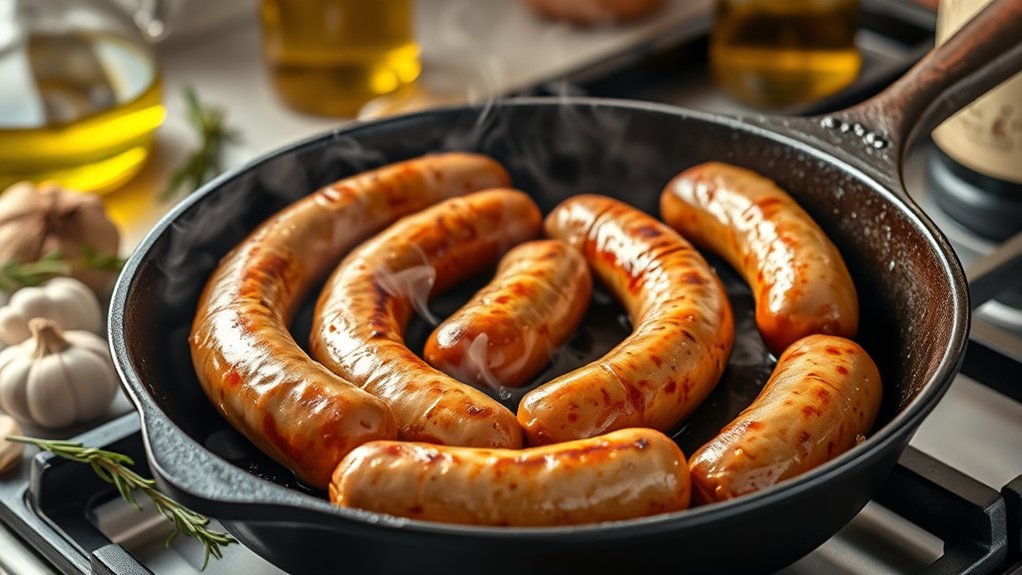
How to Pan Fry Italian Sausage in 7 Easy Steps
Choose fresh Italian sausages with natural casings, perfect for pan frying Italian sausage to achieve that delicious, crispy exterior. Let them warm to room temperature before cooking to ensure even heat distribution.
Preheat a heavy skillet over medium heat and lightly prick the sausages to prevent bursting during cooking.
Place the sausages spaced apart in the pan and cook evenly, turning regularly to build a golden crust without piercing.
Use a thermometer to check for a 160°F internal temperature to ensure they are fully cooked.
Once done, rest them covered briefly before serving to lock in the juices.
Follow these simple steps to enjoy juicy, perfectly pan-fried Italian sausages. Explore additional tips for flawless results and elevate your meal with this easy cooking method.
Key Takeaways
- Preheat a heavy skillet on medium-high heat for 2-3 minutes before adding sausages with space between them.
- Lightly prick sausage casings to prevent bursting and help fat render during cooking.
- Cook sausages on medium heat, turning regularly with tongs for even browning and avoid piercing.
- Use a meat thermometer to ensure sausages reach an internal temperature of 160°F (71°C).
- Rest cooked sausages covered loosely with foil for 5 minutes before slicing or serving.
Choose the Right Italian Sausage
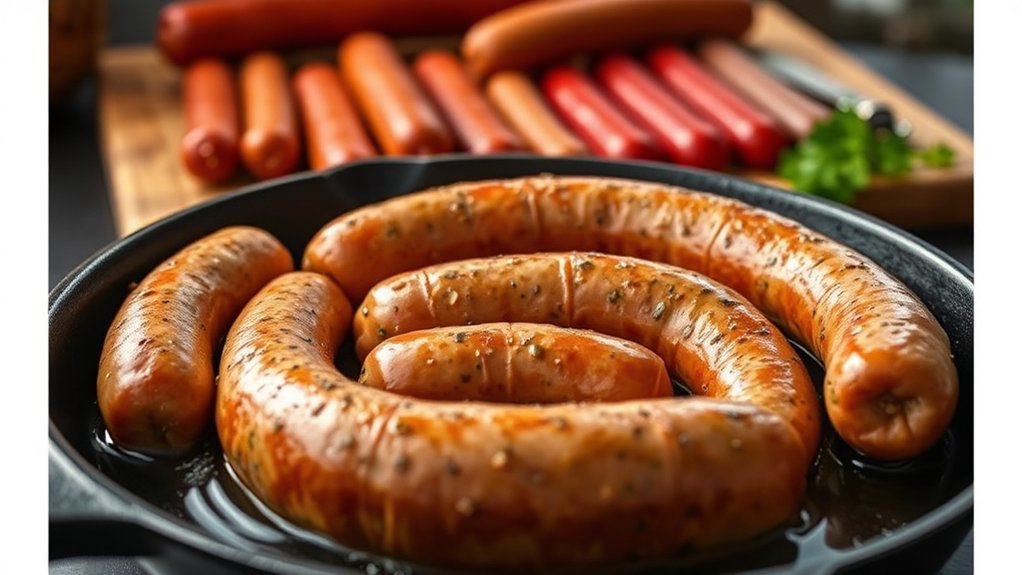
Choosing the right Italian sausage is essential for a delicious pan-fried result. You want to pick sausages that match the flavor and texture you enjoy. Fresh Italian sausages come in sweet, mild, and hot varieties—each offering a unique taste experience.
If you prefer a spicier kick, go for hot Italian sausage. For a more subtle flavor, mild or sweet varieties work best. Also, check if the sausage is made with natural casings, as they tend to crisp better when pan-fried.
Avoid pre-cooked or smoked sausages since they won’t give you that ideal sear or juicy interior. Fresh, raw sausages with good fat content guarantee your pan-frying turns out juicy on the inside and perfectly browned outside every time.
Prepare Sausages for Even Cooking
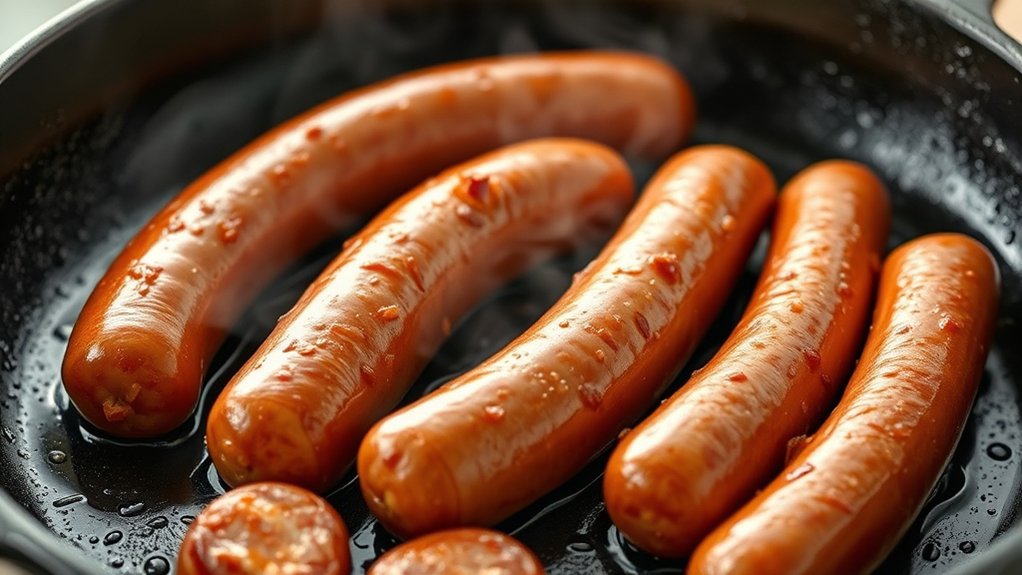
Before you start cooking, let your sausages come to room temperature for even heat distribution. Prick the casings lightly to prevent them from bursting while frying.
Also, check that each sausage has a consistent thickness to guarantee they cook at the same rate.
Room Temperature Sausage
Although it might be tempting to cook sausages straight from the fridge, letting them reach room temperature first makes certain they cook evenly. Cold sausages can cook unevenly, resulting in burnt outsides and undercooked centers.
Take them out 20-30 minutes before cooking. This simple step helps you control the cooking process and achieve delicious results.
| Benefit | Explanation |
|---|---|
| Even Cooking | Sausages cook uniformly throughout |
| Reduced Cooking Time | Warmer sausages heat faster |
| Better Texture | Avoids tough, rubbery casing |
| Enhanced Flavor | Juices distribute evenly |
| Safer Cooking | Minimizes risk of undercooked meat |
Prick Sausage Casings
Once your sausages have warmed to room temperature, it’s time to prepare their casings for cooking. Take a fork or a toothpick and gently prick the sausage casings a few times. This step helps release trapped air and prevents the sausages from bursting while frying.
Don’t overdo it; just a few small holes evenly spaced along each sausage will do. These tiny punctures allow steam to escape, ensuring your sausages cook evenly without splitting. Be careful not to damage the casing too much, or the sausage might dry out.
Pricking the casings also helps render the fat inside, giving you a juicier and tastier result. Now your sausages are ready for the next step in pan frying.
Even Sausage Thickness
To guarantee your Italian sausages cook evenly, you’ll want to check their thickness and make adjustments if needed. Uneven thickness causes some parts to cook faster, risking burnt edges or undercooked centers.
Here’s how to prepare your sausages for consistent cooking:
- Inspect each sausage: Look for any bulges or thin spots along the casing.
- Gently roll or press: Use your fingers or a rolling pin to even out thick areas, avoiding breaks in the casing.
- Trim if necessary: If a sausage has extreme thickness variations, carefully trim the thicker parts to match the thinner sections.
Heat Pan to the Right Temperature
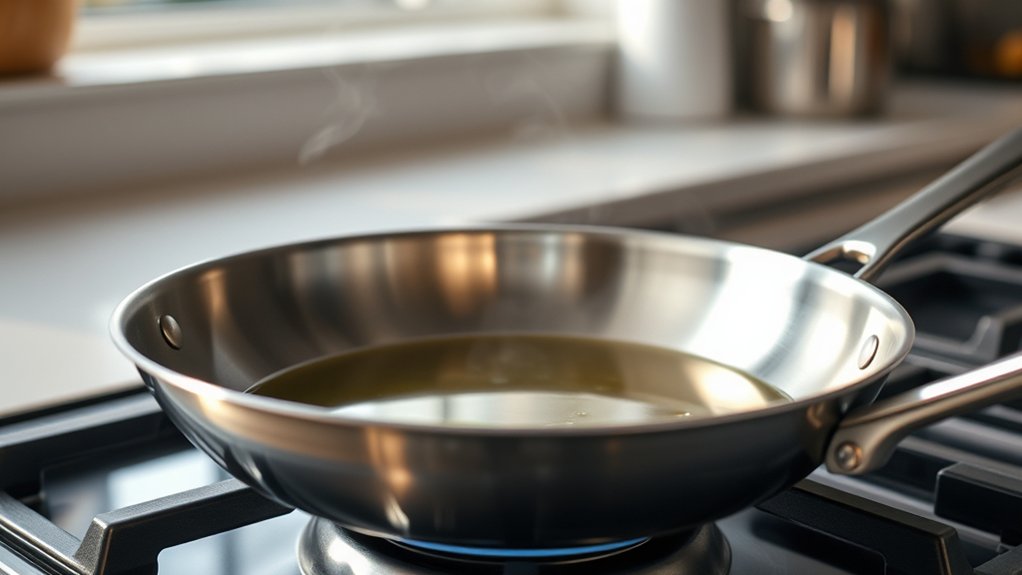
Before you add the Italian sausage to the pan, make sure it’s heated to the right temperature. Preheating guarantees the sausages sear properly, locking in juices and developing that delicious crust. Turn your burner to medium-high heat and let the pan warm up for about 2 to 3 minutes.
You can test the temperature by flicking a few drops of water onto the surface—if they sizzle and evaporate quickly, the pan is ready. Avoid overheating; a pan that’s too hot can burn the sausage’s exterior before the inside cooks through. Conversely, a cold pan will cause the sausages to stick and cook unevenly.
Getting the temperature right sets the stage for perfectly cooked Italian sausage with great texture and flavor.
Cook Italian Sausage Over Medium Heat
You’ll want to cook your Italian sausage over medium heat to guarantee even cooking without burning the outside. Keep the heat steady to distribute warmth evenly across the pan. This approach helps you avoid overcooking while achieving a juicy, flavorful result.
Ideal Temperature Setting
Although it might be tempting to crank up the heat for a faster cook, maintaining a medium temperature is essential when pan frying Italian sausage. Cooking at medium heat ensures the sausage cooks evenly without burning the outside while leaving the inside raw.
Here’s why you should stick to this ideal temperature:
- Prevents Burning: Medium heat allows the casing to brown nicely without charring.
- Even Cooking: It gives the heat time to penetrate through the sausage, cooking it thoroughly.
- Retains Juices: Cooking too hot can dry out the sausage, but medium heat keeps it juicy and flavorful.
Heat Distribution Tips
Maintaining medium heat sets the stage for even cooking, but distributing that heat properly in your pan makes all the difference. Start by choosing a heavy-bottomed skillet; it holds heat evenly, preventing hot spots that can burn your sausage.
Before adding the sausage, let the pan warm up completely on medium heat. When you place the sausage in, arrange them with some space between each piece to allow air and heat circulation. Don’t overcrowd the pan, or heat will drop, causing uneven cooking.
As the sausages cook, occasionally tilt the pan or gently move the sausages around to ensure all sides get equal exposure to heat. This technique helps you achieve consistent browning and juicy results every time.
Avoiding Overcooking
When cooking Italian sausage, keeping the heat at medium is essential to prevent overcooking and drying out the meat. High heat might brown the outside quickly but leaves the inside undercooked or tough.
Here’s how you prevent overcooking:
- Maintain steady medium heat: This allows the sausage to cook evenly without burning the casing.
- Turn regularly: Flip the sausages every few minutes to ensure all sides cook uniformly.
- Use a meat thermometer: Check that the internal temperature reaches 160°F (71°C) to guarantee doneness without overcooking.
Turn Italian Sausages Regularly for a Golden Crust
To achieve a golden crust on your Italian sausages, you need to turn them regularly while frying. Don’t just flip them once; rotating every few minutes ensures even browning on all sides. This helps develop a crisp exterior without burning any spots.
Use tongs to gently roll the sausages, allowing the heat to distribute evenly. This method seals in juices, keeping the sausage moist inside while giving you that desirable golden texture outside. Avoid stabbing the sausages with a fork, as piercing releases flavorful juices.
Keep an eye on the color and adjust the heat if necessary to prevent charring. By turning your sausages consistently, you’ll get that perfect crust that enhances both taste and appearance every time.
How to Tell When Your Sausages Are Perfectly Cooked
Once your sausages have a beautiful golden crust from regular turning, the next step is knowing exactly when they’re cooked through. Here’s how you can tell:
Achieving a golden crust is just the start—knowing when sausages are perfectly cooked is key.
- Internal Temperature – Use a meat thermometer. The ideal internal temp for Italian sausage is 160°F (71°C). This ensures safety and juiciness.
- Firmness – Gently press the sausage with tongs. Cooked sausage feels firm but still gives slightly under pressure, not mushy or overly hard.
- Juices Run Clear – Pierce the sausage with a fork or knife. If the juices are clear, not pink or bloody, it’s done.
Trust these signs, and you’ll enjoy perfectly cooked Italian sausages every time without guesswork.
Rest Italian Sausage Before Serving
Although your Italian sausages are cooked perfectly, you’ll want to let them rest for a few minutes before serving. Resting allows the juices to redistribute, ensuring every bite is juicy and flavorful rather than dry.
Simply transfer the sausages to a plate and cover them loosely with foil for about 5 minutes. This short pause enhances texture and taste considerably.
Here’s a quick guide to resting your sausages:
| Step | Details |
|---|---|
| Remove from pan | Place on a warm plate |
| Cover | Use foil, loosely tented |
| Rest time | 5 minutes |
| Serve | Slice or serve whole |
Give your sausages this simple step—it makes a big difference in enjoyment!
Frequently Asked Questions
Can I Freeze Italian Sausage Before Pan Frying?
Yes, you can freeze Italian sausage before pan frying. Just make sure to thaw it completely in the fridge before cooking. This helps it cook evenly and prevents any food safety issues.
Don’t cook it frozen!
What Side Dishes Pair Well With Pan-Fried Italian Sausage?
You know what they say: variety is the spice of life. Pair your pan-fried Italian sausage with sautéed peppers, creamy polenta, or a fresh arugula salad.
Don’t forget crusty bread to soak up those tasty juices!
Is It Safe to Eat Sausage Without Piercing the Casing?
Yes, it’s safe to eat sausage without piercing the casing. Keeping the casing intact helps retain juices and flavor while cooking.
Just be sure to cook the sausage thoroughly to an internal temperature of 160°F for safety.
How Long Can Cooked Italian Sausage Be Stored in the Fridge?
You’ve got a little window of opportunity—cook Italian sausage lasts about 3 to 4 days in the fridge.
Be sure to tuck it in airtight, so it stays fresh and safe for your next meal.
Can I Use a Non-Stick Pan Instead of Cast Iron?
Yes, you can definitely use a non-stick pan instead of cast iron. It heats quickly and prevents sticking, making cooking easier. Just cook sausages over medium heat to guarantee they brown evenly without burning.
Conclusion
Now that you’ve mastered these steps, imagine the sizzle of golden Italian sausages in your pan, their savory aroma filling your kitchen. With each turn, you’re creating a crispy, flavorful crust that promises a juicy bite inside.
When they’re perfectly cooked and rested, slice into them to reveal tender, steaming goodness. Serve them up and enjoy the satisfying taste of your homemade, pan-fried Italian sausages—comfort food at its finest, made by your own hands.
Pan frying Italian sausage is a simple and delicious way to enjoy authentic Italian flavors. By following these easy steps, you ensure your sausages are cooked evenly with a delightful crisp exterior and juicy interior.
Savor every bite of your pan-fried Italian sausages, a classic dish that’s perfect for any meal and sure to impress your family and friends.