How to Pan Fry Fish With Flour in 7 Easy Steps
Choose firm fish like cod or tilapia for the best results when pan frying fish with flour.
Pat the fillets dry and season them with salt and pepper to enhance their natural flavor.
Lightly drizzle oil over the fish, then coat evenly with all-purpose flour, shaking off any excess.
Heat a cast iron or stainless steel pan with a high smoke point oil until it starts shimmering.
Gently place the fillets in the pan without overcrowding to ensure even cooking.
Cook each side for 3-4 minutes until the fish is golden and flaky.
Serve the fish immediately for the best taste and texture.
Alternatively, let it cool completely before storing to preserve its crispiness.
Keep going to uncover tips for perfect texture and reheating.
Key Takeaways
- Pat fish fillets dry, season with salt and pepper, and lightly drizzle with oil for better flour adherence.
- Evenly coat each fillet with all-purpose or rice flour, shaking off excess to avoid clumps.
- Heat a cast iron or stainless steel pan with high smoke point oil until shimmering, but not smoking.
- Cook fish gently in the hot oil for 3-4 minutes per side until golden, crispy, and opaque inside.
- Serve immediately or cool completely before storing on a wire rack to maintain crispiness for reheating.
Choose the Best Fish for Pan Frying
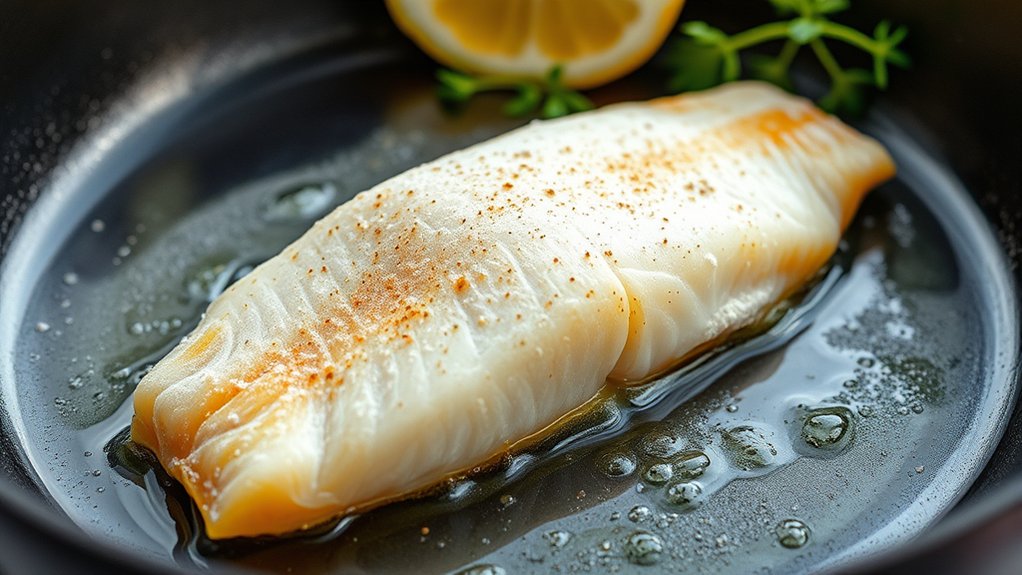
Although many types of fish can be pan fried, you’ll get the best results with firm, mild-flavored varieties like cod, tilapia, or haddock. These fish hold together well in the pan and won’t fall apart when you flip them. Avoid delicate fish like sole or flounder, which can break easily.
You might also consider thicker cuts like salmon or halibut if you want a richer flavor and a meatier texture. When choosing your fish, always look for fresh fillets with a clean smell and firm flesh. Freshness impacts how well the fish cooks and tastes.
Picking the right fish sets you up for success before you even start cooking, so take your time selecting the best fillets for your pan frying adventure.
Prepare and Season Fish Fillets for Pan Frying
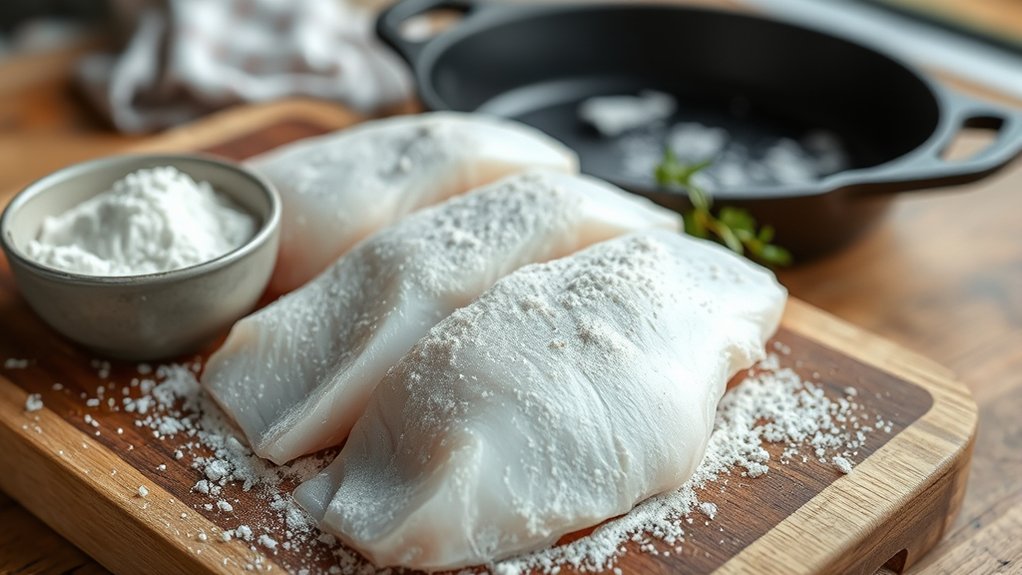
Once you’ve selected the right fish, the next step is to prepare and season your fillets properly to enhance their flavor and guarantee even cooking. Begin by patting the fillets dry with paper towels; removing excess moisture helps achieve a better sear. Trim any uneven edges for uniform thickness, so the fillets cook evenly.
Next, lightly drizzle the fillets with oil—this helps the seasoning stick and prevents sticking in the pan. Season both sides generously with salt and freshly ground black pepper. You can also add a pinch of garlic powder, paprika, or your favorite herbs for extra flavor.
Let the fillets rest a few minutes to absorb the seasoning before moving on. Proper preparation sets the foundation for a delicious pan-fried fish.
Coat Fish Evenly With Flour for Crispy Texture
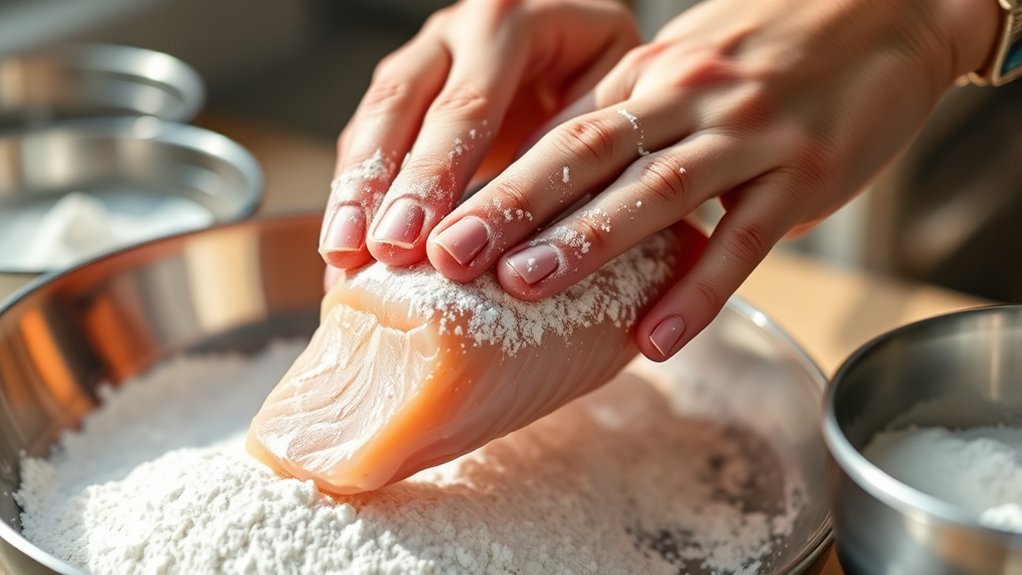
To get that perfect crispy texture, you’ll want to choose the right flour—usually all-purpose or rice flour works best. Make sure to coat your fish evenly by gently pressing the flour onto each fillet, avoiding clumps.
This even coverage helps create a golden, crunchy crust when you pan fry.
Choosing The Right Flour
Choosing the right flour can make all the difference in achieving a perfectly crispy crust on your pan-fried fish. All-purpose flour is a reliable, versatile choice, providing a light, even coating that crisps nicely without overpowering the fish’s natural flavor.
If you want extra crunch, try using rice flour or a blend of rice and all-purpose flour—they create a delicate, crisp texture that holds up well during frying. For a gluten-free option, chickpea or cornflour work great and add subtle flavor while maintaining crispiness.
Avoid heavy or coarse flours like whole wheat, as they can result in a denser, less appealing crust. Selecting the right flour sets the foundation for your fish’s texture, so choose one that complements your desired crispness and flavor balance.
Proper Coating Techniques
Although selecting the right flour is crucial, how you coat your fish with it makes all the difference in achieving a crispy texture. Start by patting your fish dry to remove excess moisture—this helps the flour stick better. Lightly dredge each piece in flour, shaking off the excess so you don’t end up with a thick, doughy crust.
You want a thin, even layer that crisps up nicely without overpowering the fish’s delicate flavor. For best results, hold the fish over the bowl or tray and gently press the flour onto the surface to ensure it adheres evenly. Avoid pressing too hard or using too much flour; subtle, consistent coverage is key to that perfect golden crust you’re aiming for.
Ensuring Even Coverage
When you coat fish evenly with flour, you create a consistent barrier that crisps up beautifully during pan frying. To guarantee even coverage, pat the fish dry first—moisture causes clumps. Lightly dust the fish, then gently shake off excess flour to avoid a thick, gummy crust.
Use your hands or a shallow dish for uniform coating. Here’s a simple guide:
| Step | Action | Tip |
|---|---|---|
| Dry | Pat fish with paper towel | Removes moisture |
| Coat | Lightly dust fish | Use a shallow dish |
| Shake off excess | Gently tap fish | Prevents clumpy crust |
Following these steps guarantees a crispy texture and golden finish every time you pan fry fish.
Select the Right Pan and Oil for Frying Fish
You’ll want to choose a pan that heats evenly and holds temperature well, like a stainless steel or cast iron skillet. For oil, pick one with a high smoke point, such as canola or vegetable oil, to guarantee crispy, golden fish without burning.
Getting these basics right sets you up for perfect pan-fried fish every time.
Best Pan Types
Choosing the right pan and oil plays a crucial role in achieving a perfectly pan-fried fish with a crispy, golden crust. When it comes to the best pan types, you want something that heats evenly and prevents sticking.
Here are the top three pans to contemplate:
- Cast Iron Skillet – It retains heat exceptionally well, giving your fish a consistent sear and crispy edges.
- Stainless Steel Pan – Offers even heating and durability but requires proper preheating and oiling to avoid sticking.
- Nonstick Pan – Ideal if you want an easy release and less cleanup, though it may not brown as deeply as cast iron.
Choose the one that fits your cooking style and maintenance preferences to make your pan-fried fish truly stand out.
Ideal Oils for Frying
Picking the right oil complements your pan choice and makes all the difference in frying fish to crispy perfection. You’ll want an oil with a high smoke point to avoid burning and off-flavors. Oils like canola, vegetable, peanut, or grapeseed are excellent because they tolerate high heat and have neutral flavors that let your fish shine.
Avoid olive oil since its lower smoke point can cause burning. Heat the oil until it shimmers but doesn’t smoke before adding your flour-coated fish. This ensures a crispy crust without sogginess.
Using the right oil also helps the coating brown evenly and prevents sticking. By selecting a suitable oil, you’ll get that golden, crunchy texture every time, making your pan-fried fish a true delight.
Heat the Pan to the Perfect Temperature
Before adding your fish, make sure the pan is hot enough to create a crisp, golden crust. Heating the pan properly guarantees your flour coating sears immediately, locking in moisture and flavor.
Here’s how to check:
- Water Test: Flick a few drops of water onto the pan. If they dance and evaporate quickly, the pan’s ready.
- Oil Shimmer: Add your chosen oil. When it starts to shimmer and moves fluidly, that’s the perfect heat.
- Smoke Point: Watch closely; oil shouldn’t smoke. If it does, reduce the heat slightly to prevent burning.
Heating the pan to just the right temperature sets the stage for perfectly pan-fried fish without sticking or sogginess.
Cook Fish Fillets to Golden, Crispy Perfection
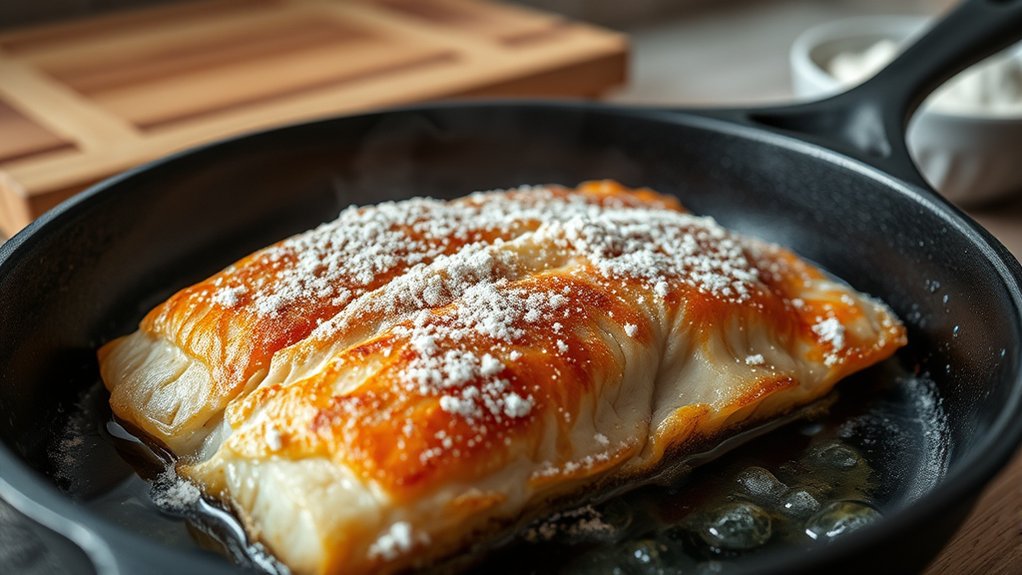
Once your pan is properly heated and oiled, gently place the flour-coated fish fillets into the pan, making sure not to overcrowd them. Cook each side for about 3-4 minutes until the coating turns golden brown and crispy. Avoid flipping too early to prevent sticking.
Use a spatula to carefully turn the fillets and cook the other side evenly. The fish is done when it flakes easily with a fork and has an opaque center.
| Step | Time | Indicator |
|---|---|---|
| Place fillets | Immediately | Sizzle starts |
| Cook side one | 3-4 minutes | Golden brown color |
| Flip fillets | After 3-4 min | Crispy edges |
| Cook side two | 3-4 minutes | Opaque and flaky fish |
| Remove & rest | 1-2 minutes | Firm texture, no raw spots |
Serving and Storing Your Crispy Pan-Fried Fish
Although the fish tastes best fresh from the pan, you can serve it immediately with a squeeze of lemon or your favorite sauce to enhance its crispy texture. To keep the crust crunchy, place the fish on a wire rack instead of a plate, preventing sogginess from trapped steam.
If you have leftovers, store them properly to maintain flavor and texture. Follow these steps:
- Let the fish cool completely to avoid condensation.
- Wrap each piece loosely in parchment paper or paper towels.
- Place the wrapped fish in an airtight container and refrigerate for up to 2 days.
When reheating, use a skillet over medium heat to restore crispiness rather than a microwave. Enjoy your perfectly pan-fried fish anytime!
Frequently Asked Questions
Can I Use Gluten-Free Flour for Pan Frying Fish?
Yes, you can use gluten-free flour for pan frying fish. It creates a crispy coating just like regular flour. Just make sure to choose a gluten-free blend that fries well, and enjoy your tasty, safe meal!
How Do I Prevent Fish From Sticking to the Pan?
You prevent fish from sticking by heating the pan well before adding oil, ensuring the oil’s hot, and gently placing the fish away from you.
Don’t move it too soon—let a crust form first.
What Side Dishes Pair Well With Pan-Fried Fish?
You’ll love pairing pan-fried fish with crispy roasted potatoes, a fresh green salad, or steamed veggies. Tangy coleslaw and lemon rice also complement it perfectly, adding brightness and texture to your meal.
Can I Reheat Pan-Fried Fish Without Losing Crispiness?
When Alex reheated his leftover pan-fried fish, he used an oven at 375°F for 10 minutes, keeping the crispiness intact.
You can do the same by avoiding microwaves, which make fish soggy and chewy.
Is It Necessary to Rest Fish Before Serving?
You don’t have to rest fish before serving, but letting it sit for a minute helps juices redistribute and keeps it moist.
If you’re enthusiastic, serve immediately to enjoy maximum crispiness and fresh texture.
Conclusion
Now that you’ve mastered pan-frying fish with flour, you’re equipped to create a dish worthy of a seaside bistro. Like a sailor steering toward the perfect catch, you’ve chosen the best fish, seasoned it just right, and achieved that golden, crispy finish.
Keep these steps close, and every meal will feel like a culinary adventure. So, plunge in boldly—your kitchen is your ocean, and delicious success awaits! Remember, pan-frying fish with flour is a simple technique that brings out the best flavors and textures in your seafood dishes.