What Is Non-Stick Cookware and How to Use It Properly
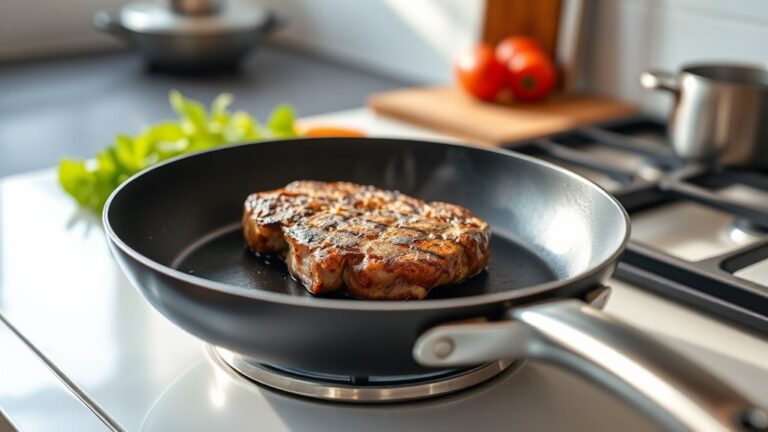
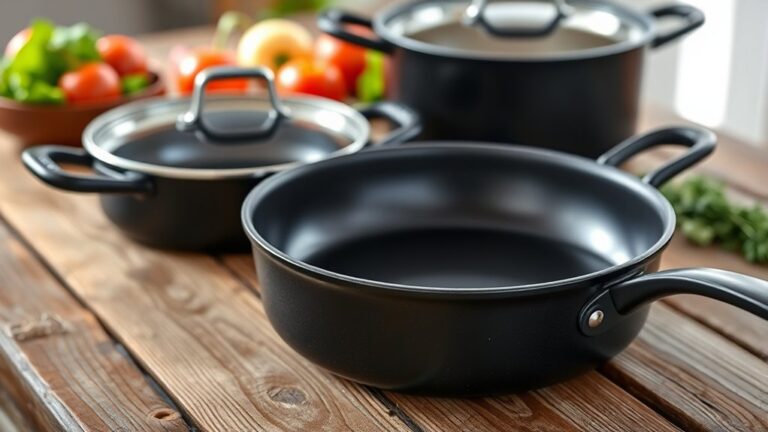
Non-stick cookware is designed with special coatings such as PTFE (Teflon), ceramic, or anodized aluminum that prevent food from sticking, making cooking and cleaning much easier. These coatings are popular in kitchens worldwide for their convenience and efficiency.
Understanding how to use and care for non-stick cookware properly can extend its lifespan and maintain its performance.
To keep your pans working well, use wooden or silicone utensils, avoid overheating, and hand wash gently. Preheat on medium heat and season occasionally with oil to protect the surface.
Watch for scratches or peeling, which mean it’s time to replace your pan.
Keep exploring to discover the best care and cooking techniques for your non-stick cookware. Proper maintenance ensures safe and enjoyable cooking every time.
Key Takeaways
- Non-stick cookware features coatings like PTFE or ceramic that prevent food from sticking and simplify cooking and cleaning.
- Use wooden, silicone, or plastic utensils and avoid metal tools to protect the non-stick surface from scratches.
- Cook on low to medium heat and avoid overheating to prevent coating damage and harmful fumes.
- Hand wash with warm soapy water and avoid dishwashers to maintain the coating’s durability and effectiveness.
- Replace cookware if you notice scratches, peeling, or food sticking despite proper use to ensure safety and performance.
What Is Non-Stick Cookware Made Of?
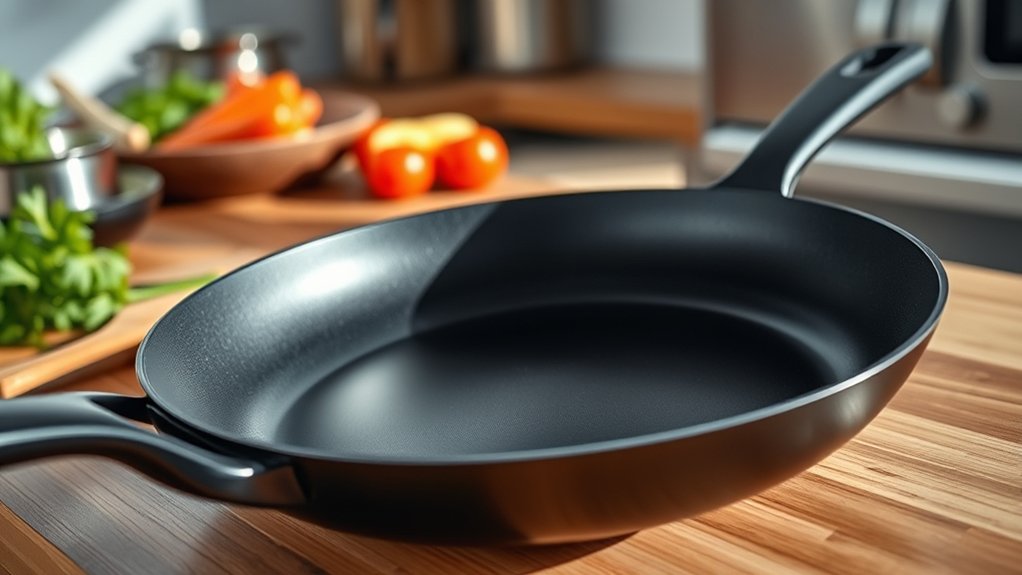
Although non-stick cookware comes in various types, they all share a common feature: a smooth coating that prevents food from sticking. Most non-stick pans use a material called polytetrafluoroethylene, or PTFE, which you might know as Teflon. This synthetic polymer creates a slick surface that makes cooking and cleaning easier.
Some newer pans use ceramic coatings, which are made from inorganic minerals and offer a different non-stick experience without chemicals like PTFE. You’ll also find cookware with anodized aluminum bases, providing durability and even heat distribution beneath the non-stick layer. When you choose non-stick cookware, understanding these materials helps you pick the right one for your cooking style and maintenance preferences.
Each type has pros and cons, so knowing what they’re made of guides your decision.
How Does Non-Stick Coating Work?
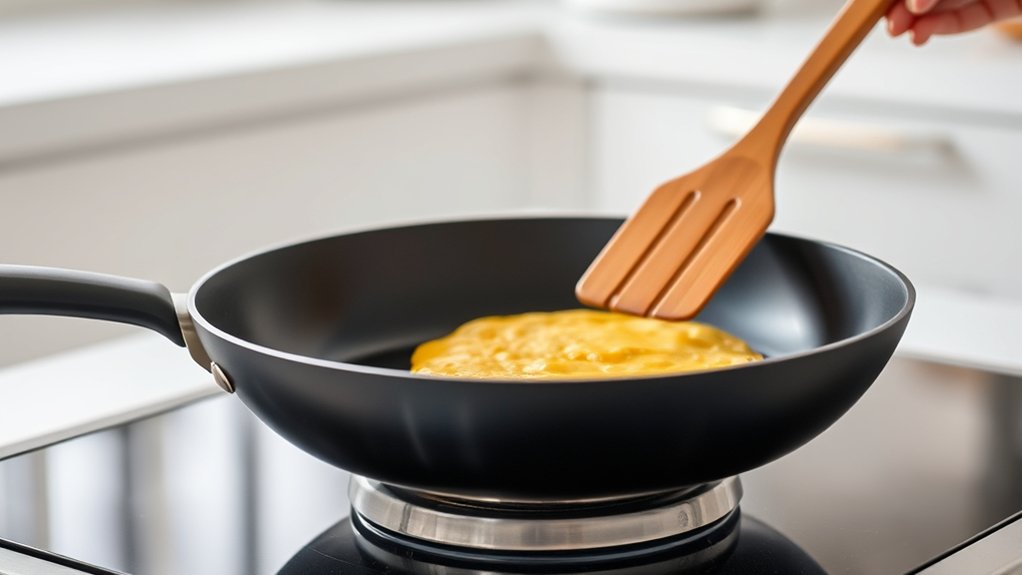
You’ll notice non-stick coatings create a slick surface that keeps food from sticking by reducing friction. Most commonly, these coatings use materials like PTFE or ceramic to achieve that effect.
Let’s explore how these materials work to make your cooking easier.
Non-Stick Surface Mechanism
How does a non-stick coating keep your food from sticking? The secret lies in its smooth, low-friction surface, which reduces the bond between food and pan. When you cook, food releases moisture and proteins that usually cling to rough surfaces.
But with a non-stick layer, these substances can’t grip the pan, making it much easier to flip or stir without residue left behind. Plus, the coating resists buildup from oils and fats, so your cooking surface stays slick. This means you can use less oil or butter, promoting healthier meals.
Just remember to avoid metal utensils or abrasive cleaning tools, as they can damage the delicate surface that creates this non-stick magic. With proper care, your cookware keeps performing smoothly.
Common Coating Materials
The smooth, low-friction surface that keeps food from sticking comes from specific materials applied as coatings to cookware. These materials create a barrier between your food and the pan, reducing friction and preventing sticking.
Here are the most common coating materials you’ll encounter:
- PTFE (Polytetrafluoroethylene): Often known by the brand name Teflon, it provides excellent non-stick properties and easy cleanup.
- Ceramic: Made from inorganic minerals, ceramic coatings are free from PTFE and PFOA, offering a natural non-stick surface.
- Anodized Aluminum: This treatment hardens the aluminum surface, making it more resistant to sticking and scratching while improving durability.
Each material has unique benefits, so choosing the right one depends on your cooking needs and care preferences.
Types of Non-Stick Cookware Coatings
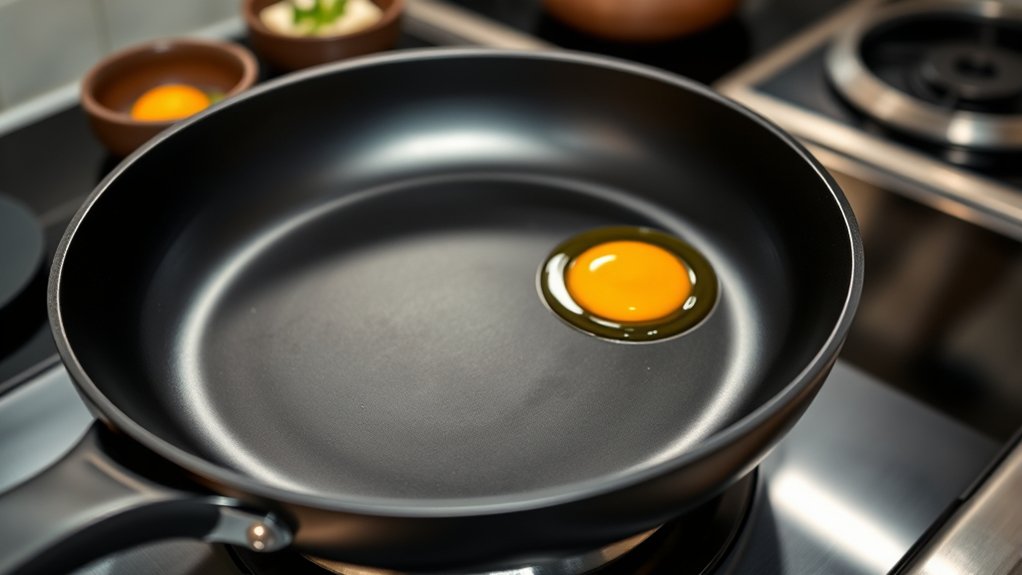
You’ll find several common materials used for non-stick coatings, each with different durability and safety features. Knowing how to maintain and care for your cookware can extend its lifespan and keep it safe to use.
Let’s explore these coating types and what you need to keep in mind.
Common Coating Materials
Several common coating materials give non-stick cookware its signature slick surface, making cooking and cleanup much easier for you. Each type offers unique benefits, so choosing the right one depends on your cooking style and preferences.
- PTFE (Teflon): Known for its excellent non-stick properties, PTFE is perfect for low to medium heat cooking and easy food release.
- Ceramic: This coating uses a silica-based gel, providing a chemical-free, smooth surface that’s great for quick, high-heat cooking.
- Anodized Aluminum: Treated aluminum creates a hard, non-reactive surface with moderate non-stick qualities, ideal if you want durability alongside easy cleanup.
Understanding these materials helps you pick cookware that fits your kitchen needs and cooking habits perfectly.
Durability and Safety
Choosing the right coating material is just the start; understanding how durable and safe these coatings are will help you make a smarter investment. Some coatings, like traditional PTFE (Teflon), offer excellent non-stick performance but may degrade if overheated above 500°F, releasing fumes that can be harmful.
Ceramic coatings, on the other hand, resist higher temperatures and avoid toxic fumes, making them a safer choice for many cooks. However, ceramic coatings tend to wear down faster, reducing durability. You’ll also find newer coatings combining durability and safety, like diamond-infused or titanium-reinforced surfaces, which last longer and handle heat better.
When selecting cookware, consider how often you’ll cook and at what temperatures, ensuring your coating matches your cooking habits without compromising safety or longevity.
Maintenance and Care
Although non-stick coatings make cooking and cleanup easier, they still require proper maintenance to extend their lifespan. You should avoid using metal utensils, as they can scratch and damage the surface. Always hand wash your cookware with a soft sponge and mild detergent instead of relying on a dishwasher, which can degrade the coating over time.
Also, avoid overheating your non-stick pans; excessive heat breaks down the coating and releases harmful fumes.
Here are three essential tips for maintaining your non-stick cookware:
- Use wooden, silicone, or plastic utensils to prevent scratches.
- Clean with warm, soapy water and avoid abrasive scrubbers.
- Store carefully, placing a soft cloth between pans to protect the coating.
Following these simple steps will keep your non-stick cookware in great condition for years.
Why Use Non-Stick Cookware?
When you cook with non-stick cookware, you’ll spend less time scrubbing and more time enjoying your meals. Non-stick surfaces prevent food from sticking, making cooking and cleanup easier. You can use less oil or butter, which helps you prepare healthier dishes without sacrificing flavor.
Non-stick pans heat evenly, so your food cooks consistently without burning. They’re perfect for delicate foods like eggs and fish, which often stick to traditional cookware. Plus, their lightweight design makes handling and pouring simpler.
Using non-stick cookware also reduces the risk of food waste since your meals come off the pan cleanly. Overall, non-stick pans save you time, effort, and calories, making your cooking experience smoother and more enjoyable every day.
How to Choose the Right Non-Stick Pan
What makes a non-stick pan the right fit for your kitchen? It’s all about matching your cooking style and needs with the pan’s features. First, consider the coating type—PTFE offers excellent non-stick properties, while ceramic coatings are eco-friendly and free of chemicals.
Next, check the pan’s material; aluminum heats evenly and is lightweight, but stainless steel offers durability. Size matters too—choose a pan that fits your typical meal portions without overcrowding.
- Opt for a pan with a sturdy, heat-resistant handle for safe, comfortable use.
- Look for scratch-resistant coatings to extend your pan’s lifespan.
- Confirm the pan is compatible with your stovetop, especially if you use induction.
Choosing wisely means better cooking and longer-lasting cookware.
How to Season Your Non-Stick Cookware
Choosing the right non-stick pan sets the foundation for great cooking, but maintaining its performance requires a bit of care. Seasoning your non-stick cookware helps extend its lifespan and improve its non-stick properties. Start by washing the pan with warm, soapy water and drying it thoroughly.
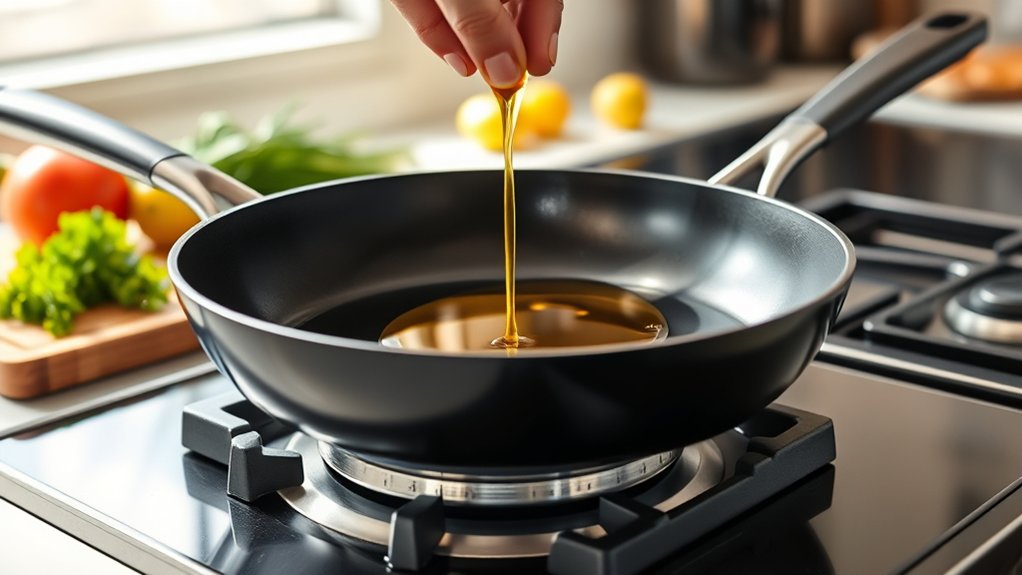
Then, heat the pan on low for a couple of minutes. Add a small amount of oil with a high smoke point, like vegetable or canola oil, and spread it evenly using a paper towel. Let the pan cool completely, then wipe off any excess oil.
This process creates a thin protective layer that enhances the pan’s coating and prevents food from sticking. Repeat seasoning occasionally, especially after deep cleaning, to keep your cookware in top shape.
Best Cooking Techniques for Non-Stick Pans
Although non-stick pans make cooking easier, mastering the right techniques guarantees you get the best results without damaging the surface. Start by preheating your pan on low to medium heat; high temperatures can wear down the coating quickly. Use gentle stirring or flipping motions to avoid scratching or peeling the surface.
Finally, avoid overcrowding your pan to ensure even cooking and prevent food from sticking.
- Cook at moderate temperatures to safeguard the non-stick layer
- Use soft tools or utensils to prevent surface damage
- Allow the pan to cool before washing to maintain coating integrity
What Oils and Utensils Are Safe With Non-Stick Cookware?
Since non-stick coatings can be sensitive to certain oils and utensils, you’ll want to pick options that protect their surface while enhancing your cooking. Use oils with high smoke points like avocado, grapeseed, or refined olive oil to avoid burning and damaging the coating. Avoid aerosol cooking sprays, as they can leave residue that’s tough to remove.
When it comes to utensils, steer clear of metal tools that can scratch the surface. Instead, choose wooden, silicone, or plastic utensils to keep your cookware in top shape. These materials are gentle yet effective for stirring, flipping, and serving.
How to Clean Non-Stick Cookware Without Damage
To keep your non-stick cookware in great shape, you need to use gentle cleaning techniques. Avoid abrasive materials like steel wool or harsh scrubbing pads that can damage the surface.
Instead, stick to soft sponges and mild detergents for the best results.
Gentle Cleaning Techniques
When you clean non-stick cookware, handling it gently is key to preserving its coating and performance. Start by letting the pan cool before washing to avoid warping. Use warm, soapy water and a soft sponge or cloth to remove food residue without scratching the surface.
Rinse thoroughly and dry immediately to prevent water spots and damage.
Here are some gentle cleaning tips:
- Soak stubborn food in warm water for a few minutes before wiping
- Use a nylon or silicone scrubber for tougher spots
- Avoid soaking cookware for long periods to protect the coating
Avoiding Abrasive Materials
Although it might be tempting to scrub stubborn stains with steel wool or harsh brushes, you should avoid abrasive materials to keep your non-stick cookware intact. These aggressive tools can scratch or damage the coating, reducing its effectiveness and lifespan.
Instead, opt for soft sponges or cloths to gently clean your pans.
Here’s a quick guide on what to use and avoid:
| Use | Avoid |
|---|---|
| Soft sponges | Steel wool |
| Nylon or silicone brushes | Metal scouring pads |
| Mild dish soap | Harsh chemical cleaners |
How to Store Non-Stick Cookware Properly
Since non-stick cookware has delicate surfaces, you’ll want to store it carefully to prevent scratches and damage. Proper storage keeps your pans in great shape and extends their lifespan. Avoid stacking pans directly on top of each other without protection, as this can cause abrasions.
Instead, try these tips:
- Place a soft cloth or paper towel between stacked pans to cushion the surfaces.
- Hang your pans using hooks or a pot rack to keep them separate and easy to access.
- Store lids separately or inverted with a protective layer to avoid pressure on the cookware’s surface.
When to Say Goodbye to Your Non-Stick Pan
Taking good care of your non-stick cookware can extend its life, but even the best maintenance can’t prevent wear over time. You should say goodbye to your non-stick pan once you notice scratches, peeling, or flaking on the surface. These signs not only reduce the pan’s effectiveness but can also pose health risks if particles mix with your food.
If food starts sticking despite proper use, it’s another clear indicator that your pan’s coating has degraded. Warping or discoloration are also red flags that your pan’s structural integrity is compromised. When any of these issues appear, it’s time to replace your non-stick pan to guarantee safe, efficient cooking and avoid potential contamination or uneven heat distribution.
Tips to Extend the Life of Your Non-Stick Cookware
To keep your non-stick cookware performing well, you need to handle it with care and follow a few simple habits. Treat your pans gently to preserve their coating and avoid damage.
Here are three essential tips to extend their life:
- Use wooden, silicone, or plastic utensils instead of metal to prevent scratches.
- Clean your cookware with a soft sponge and mild detergent; never use abrasive scrubbers.
- Avoid overheating your pans—stick to medium or low heat to protect the non-stick surface.
Frequently Asked Questions
Can Non-Stick Cookware Be Used in the Oven?
Yes, you can use some non-stick cookware in the oven, but you need to check the manufacturer’s temperature limit. Avoid overheating it, and never use damaged or scratched non-stick pans in the oven to keep them safe and effective.
Is Non-Stick Cookware Safe for Cooking Acidic Foods?
You know what they say, “Don’t put all your eggs in one basket.” You shouldn’t cook acidic foods in non-stick cookware often, as they can degrade the coating.
Use stainless steel or cast iron instead for acidic dishes.
How Does Altitude Affect Cooking With Non-Stick Pans?
At high altitudes, you’ll need to adjust cooking times and temperatures since water boils lower. Non-stick pans won’t change much, but you’ll want to cook slower to avoid uneven heating or burning your food.
Can Non-Stick Pans Be Recycled or Disposed of Safely?
You generally can’t recycle non-stick pans through regular curbside programs, but you can check specialty recycling centers. When disposing, avoid burning them to prevent toxic fumes—opt for safe drop-off points or reuse creatively instead.
Are Non-Stick Coatings Safe for Use Around Children and Pets?
Yes, non-stick coatings are generally safe around children and pets if you avoid overheating the pans. Make sure you use them properly, don’t scratch the surface, and keep them well-ventilated to prevent harmful fumes.
Conclusion
Now that you know what non-stick cookware is made of, how it works, and how to choose the right one, you can cook with ease, clean without stress, and store with care.
Remember to avoid overheating, never use metal utensils, and replace your pan when the coating wears off. By following these simple tips, you’ll enjoy hassle-free cooking, longer-lasting pans, and delicious meals every time you step into the kitchen.
Proper use of non-stick cookware ensures safety, durability, and optimal cooking results. Embrace these guidelines to make the most out of your non-stick pots and pans for effortless and enjoyable cooking experiences.