How to Clean Aluminum Cookware in 7 Easy Steps
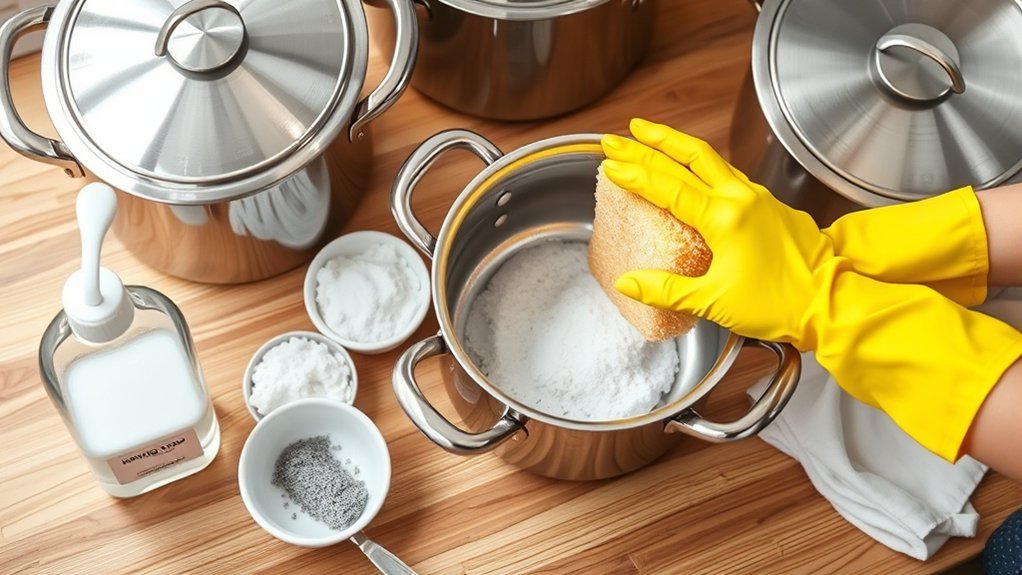
To clean your aluminum cookware effectively, start by gathering essential supplies such as mild soap, a soft sponge, baking soda, vinegar, and warm water. Proper cleaning of aluminum cookware not only maintains its appearance but also extends its lifespan and ensures safe cooking.
Rinse your cookware gently with warm water. Then apply a baking soda paste to stubborn stains. Soak it in vinegar to brighten the surface. Scrub carefully without scratching, and rinse thoroughly.
Dry with a soft towel to prevent spots and buff with olive oil for shine. Keep following for tips that guarantee lasting cookware beauty.
Key Takeaways
- Rinse aluminum cookware with warm water and soak briefly to loosen grime without causing warping.
- Use mild dish soap and a soft sponge or cloth to gently clean the surface without scratching.
- Avoid abrasive tools like steel wool; scrub stubborn stains with a baking soda paste and soft sponge.
- Soak cookware in a vinegar or lemon juice solution to remove discoloration and brighten the metal.
- Thoroughly rinse, dry immediately, and buff with olive oil to maintain shine and prevent oxidation.
Gather Cleaning Supplies for Aluminum Cookware
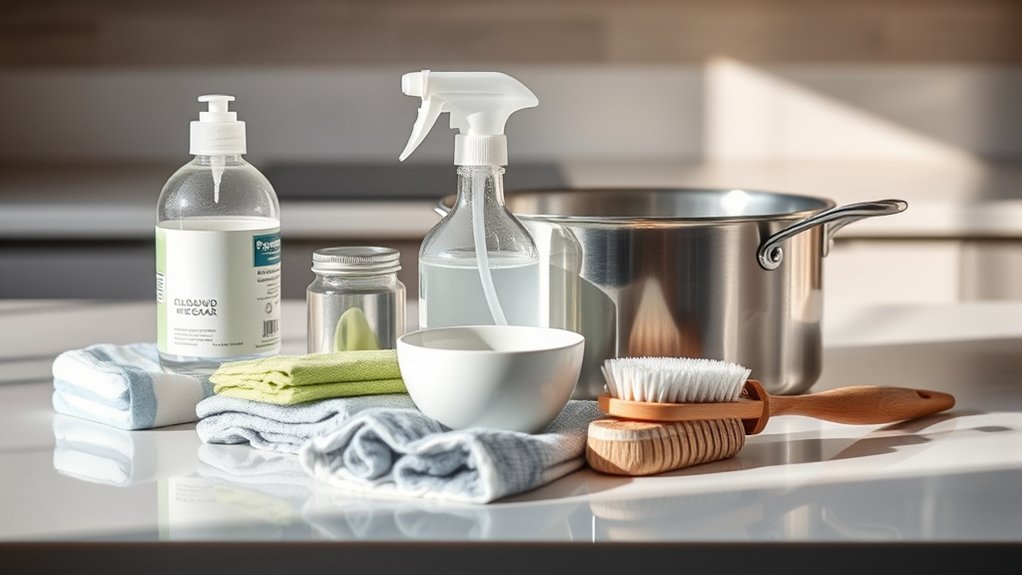
Before you begin cleaning your aluminum cookware, gather the right supplies to make the process easier and more effective. You’ll need a soft sponge or cloth to avoid scratching the surface. Avoid abrasive scrubbers that can damage aluminum.
Have mild dish soap on hand, as harsh detergents can discolor the metal. Prepare a bowl of warm water to help loosen grime. Keep white vinegar or lemon juice nearby for tackling stubborn stains or discoloration without harming the cookware.
Baking soda is also useful for gentle scrubbing when mixed with water into a paste. Finally, have a microfiber towel ready to dry your cookware after washing, preventing water spots. With these supplies ready, you’ll be set for a smooth, safe cleaning experience.
Gently Remove Loose Dirt and Food Residue
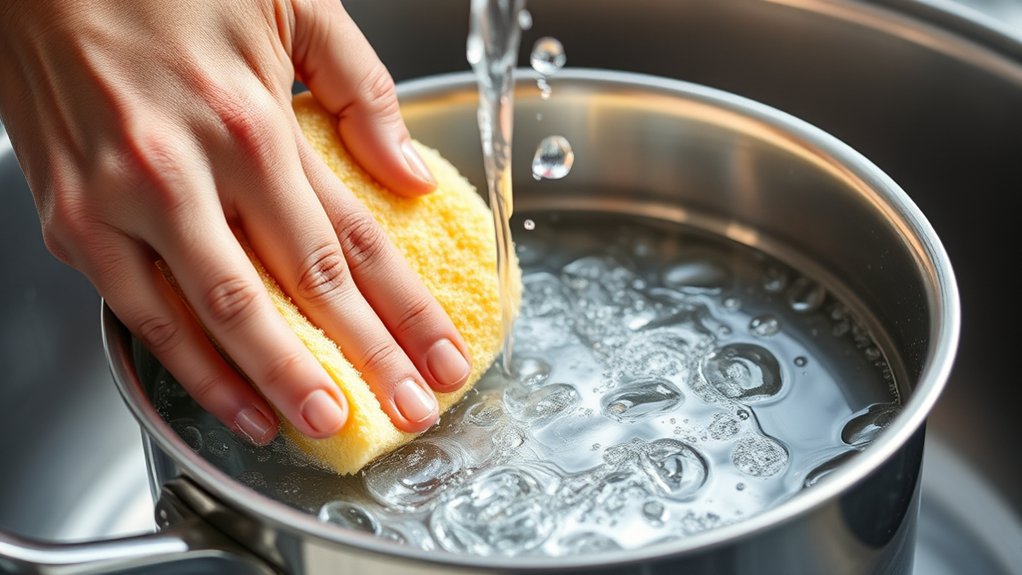
Start by rinsing your aluminum cookware with warm water to loosen any dirt or food residue. Use soft sponges or cloths to avoid scratching the surface while cleaning. This gentle approach helps keep your cookware in great shape.
Pre-Rinse With Warm Water
Although it might seem simple, pre-rinsing your aluminum cookware with warm water plays an essential role in loosening dirt and food residue. Before you apply any cleaning agents, running warm water over the surface softens stuck-on bits and prevents scratching during washing. It also helps reduce the effort needed later, making your cleaning routine quicker and more effective.
Use just enough water to cover the cookware’s surface and gently let it soak for a minute or two. Avoid using hot water, as extreme temperatures can warp aluminum. This step prepares your cookware for a thorough clean without causing damage.
Taking this small extra time guarantees your aluminum pans stay in great condition and ready for cooking again.
Use Soft Cleaning Tools
When you clean your aluminum cookware, choosing soft cleaning tools helps protect its surface while effectively removing loose dirt and food residue. Hard brushes or abrasive pads can scratch aluminum, dulling its finish. Instead, opt for gentle tools that lift grime without damage.
Here are three soft cleaning tools to use:
- Non-abrasive sponges – These provide gentle scrubbing power without scratching the cookware.
- Microfiber cloths – Perfect for wiping away residue and polishing the surface afterward.
- Soft nylon brushes – These reach crevices and loosen stuck particles without harming the aluminum.
Using these tools guarantees your cookware stays clean and in great condition, extending its lifespan and maintaining its appearance.
Use Baking Soda Paste to Remove Stubborn Stains
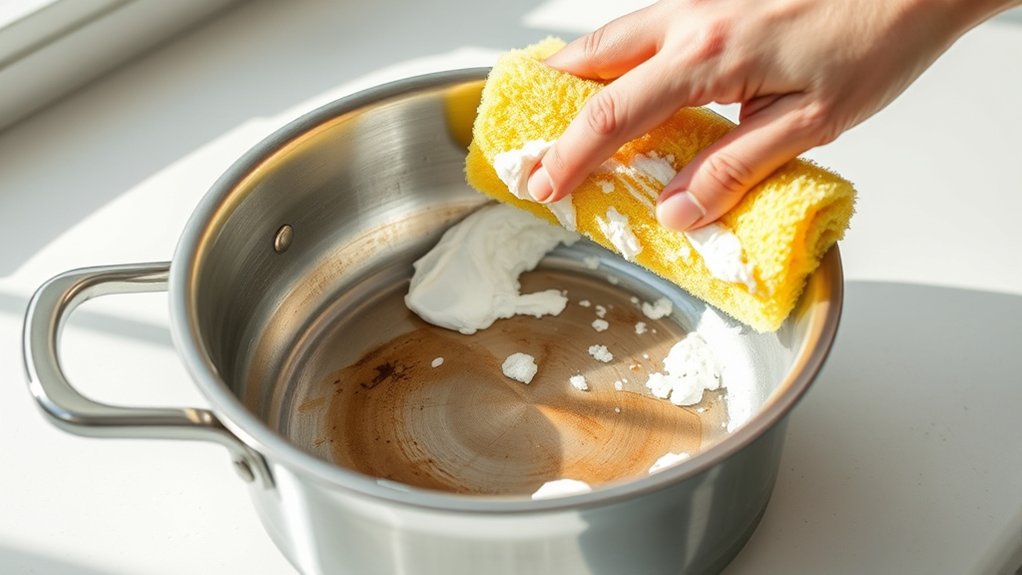
If stubborn stains refuse to come off with regular washing, you can rely on a baking soda paste to tackle them effectively. Mix baking soda with a small amount of water until you get a thick paste. Apply this paste directly onto the stained areas of your aluminum cookware.
Let it sit for about 15 minutes to allow the baking soda to break down the grime and discoloration. Afterward, gently scrub the stains with a soft sponge or cloth, avoiding anything abrasive to protect the surface. Rinse thoroughly with warm water and dry your cookware immediately to prevent water spots.
This method is gentle yet powerful, helping you restore your aluminum cookware’s appearance without damaging its finish. Repeat if necessary for tough stains.
Brighten Aluminum Cookware With a Vinegar Soak
Since vinegar naturally cuts through oxidation and dullness, soaking your aluminum cookware in it can quickly restore its shine. This simple method is effective and safe, making your pots and pans look almost new again. Here’s how to do it:
Vinegar effortlessly removes oxidation, restoring the shine of aluminum cookware for a nearly new look.
- Fill your sink or a large basin with equal parts white vinegar and warm water.
- Submerge the aluminum cookware completely and let it soak for 30 minutes to an hour.
- After soaking, rinse thoroughly with warm water and dry with a soft cloth.
Avoid soaking for too long, as vinegar is acidic and prolonged exposure might damage the surface. This quick soak is a great way to brighten your aluminum cookware before moving on to other cleaning steps.
Scrub Aluminum Cookware Safely Without Scratches
To keep your aluminum cookware scratch-free, choose non-abrasive scrubbers like soft sponges or cloths. Use gentle cleaning techniques to avoid damaging the surface while still removing grime.
This approach will help maintain your cookware’s finish and performance.
Choosing Non-Abrasive Tools
How can you keep your aluminum cookware looking pristine without risking scratches? The key is choosing non-abrasive tools that clean effectively yet gently. Avoid steel wool or harsh scouring pads—they’ll damage the surface.
Instead, pick tools that protect your cookware’s finish while removing grime.
Here are three reliable options:
- Soft sponges – Use sponges with a smooth side for everyday cleaning to avoid scratches.
- Nylon scrubbers – These are tougher on stuck-on food but still safe for aluminum.
- Microfiber cloths – Perfect for wiping and polishing without abrasiveness.
Gentle Cleaning Techniques
Choosing the right tools is just the start; applying gentle cleaning methods helps protect your aluminum cookware from scratches. When you clean, avoid harsh scrubbing or abrasive pads. Instead, use soft sponges or microfiber cloths.
Warm, soapy water loosens grime without damaging the surface. For stubborn spots, let the cookware soak briefly before wiping gently. Dry immediately to prevent water marks or oxidation.
| Technique | Recommended Tools | Tips |
|---|---|---|
| Light scrubbing | Soft sponge, cloth | Use circular motions gently |
| Soaking | Warm soapy water | Soak for 10-15 minutes |
| Drying | Soft towel | Dry promptly to avoid stains |
These gentle cleaning techniques keep your aluminum cookware looking great longer.
Rinse and Dry Aluminum Cookware to Avoid Water Spots
Although rinsing aluminum cookware might seem straightforward, skipping this step can leave unsightly water spots that dull its finish. To keep your cookware looking great, you need to rinse and dry it carefully right after washing.
Rinsing and drying aluminum cookware promptly prevents water spots and keeps its finish shining.
Follow these simple steps:
- Rinse thoroughly with warm water to remove all soap residue, which can cause spotting. Shake off excess water immediately to prevent standing droplets.
- Dry your cookware promptly with a soft, clean towel to avoid mineral deposits from forming.
Maintain Your Aluminum Cookware’s Shine Between Cleanings
To keep your aluminum cookware looking bright and new, you’ll want to regularly polish it between deep cleanings. Use a soft cloth with a bit of lemon juice or white vinegar to gently wipe the surface. These natural acids help break down minor stains and restore shine without harsh chemicals.
After wiping, rinse with warm water and dry thoroughly to prevent water spots. Avoid abrasive scrubbers that can scratch the metal. You can also apply a small amount of olive oil, buffing it with a clean cloth to create a protective layer that enhances shine and resists tarnishing.
Frequently Asked Questions
Can Aluminum Cookware Be Used on Induction Cooktops?
Aluminum cookware won’t work directly on induction cooktops because it’s not magnetic. You’ll need a special induction interface disk to use it, which acts as a magnetic bridge between your aluminum pan and the cooktop.
Is It Safe to Cook Acidic Foods in Aluminum Pots?
Cooking acidic foods in aluminum pots isn’t the best idea because they can react like oil and water, causing a metallic taste and pitting. You’ll want to use non-reactive cookware to keep flavors intact and your pots safe.
How Do I Prevent Aluminum Cookware From Warping?
You can prevent aluminum cookware from warping by heating it gradually, avoiding high heat, and using even heat sources.
Also, never pour cold water into a hot pan, and store it properly to maintain its shape.
Can I Use Metal Utensils With Aluminum Cookware?
Sure, go ahead and scratch your aluminum cookware with metal utensils—because who doesn’t love a pan that looks like a haunted maze?
But seriously, use wooden or silicone tools to keep it smooth and long-lasting.
Does Aluminum Cookware Affect Food Taste or Health?
Aluminum cookware might slightly affect food taste if it’s uncoated and acidic. However, it’s generally safe for your health, especially when anodized or coated, preventing aluminum from leaching into your meals during cooking.
Conclusion
Now that you know the secret steps to clean your aluminum cookware, you might be wondering—can you really bring back that gleaming shine without harsh chemicals? The answer is yes, and it’s simpler than you think.
By following these easy tips, your pots and pans will look almost brand new, ready to impress every time you cook. Don’t wait—start cleaning smarter and see the transformation for yourself!
With the right aluminum cookware cleaning methods, you can maintain their beauty and functionality for years to come. Embrace these simple cleaning steps and enjoy cookware that shines like new every time.