Does Ceramic Cookware Have PFAS?
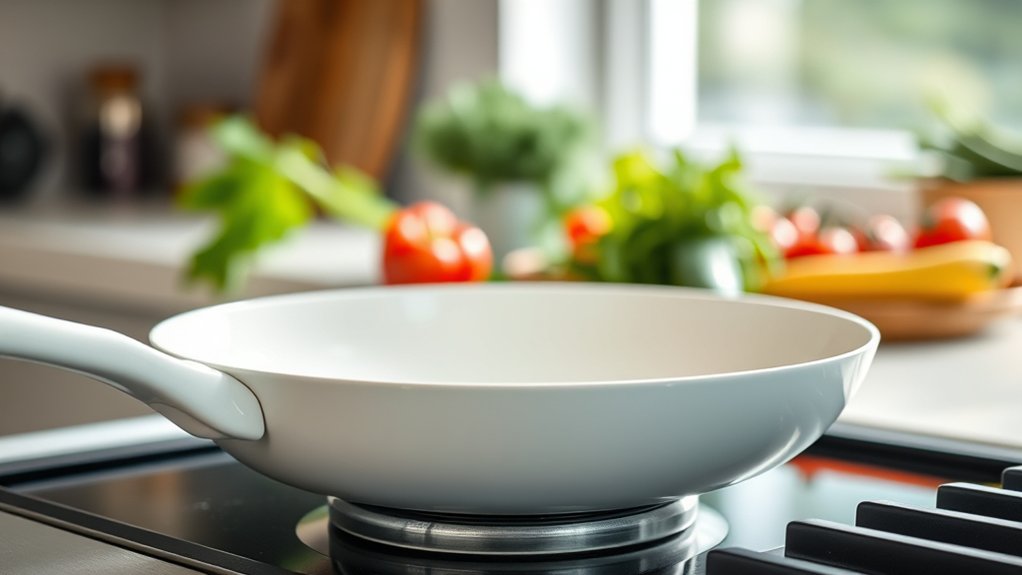
You don’t have to worry about PFAS with traditional ceramic cookware since it’s made from natural materials like clay and minerals without synthetic chemicals. Ceramic cookware has gained popularity as a safe and eco-friendly option because its inorganic ceramic coating is PFAS-free and safe for cooking.
This means it doesn’t break down or leach harmful substances into your food, making it a healthier choice compared to some non-stick alternatives.
Unlike many conventional non-stick pans that may contain PFAS, ceramic cookware offers a chemical-free, healthier alternative.
If you want to understand more about its benefits and how it compares to other cookware, there’s plenty to explore ahead.
Key Takeaways
- Traditional ceramic cookware is typically made from natural materials and does not contain PFAS chemicals.
- Ceramic coatings are inorganic minerals and generally free from synthetic PFAS compounds.
- PFAS are more commonly found in synthetic non-stick coatings like Teflon, not in ceramic cookware.
- Properly maintained ceramic cookware reduces exposure risks linked to PFAS ingestion.
- Trusted health agencies confirm that ceramic cookware is a safer, PFAS-free alternative to some non-stick options.
What Are PFAS: And Why Should You Care?
Although you might not have heard of PFAS before, these chemicals impact your daily life more than you realize. PFAS, or per- and polyfluoroalkyl substances, are a group of man-made chemicals used for their water- and grease-resistant properties. You’ll find them in many everyday items like non-stick cookware, food packaging, and stain-resistant fabrics.
These chemicals don’t break down easily, so they accumulate in the environment and even your body over time. That buildup can lead to health issues, including hormone disruption and increased cancer risk. Being aware of PFAS helps you make safer choices for your health and the environment.
How Is Ceramic Cookware Made And What Materials Does It Use?
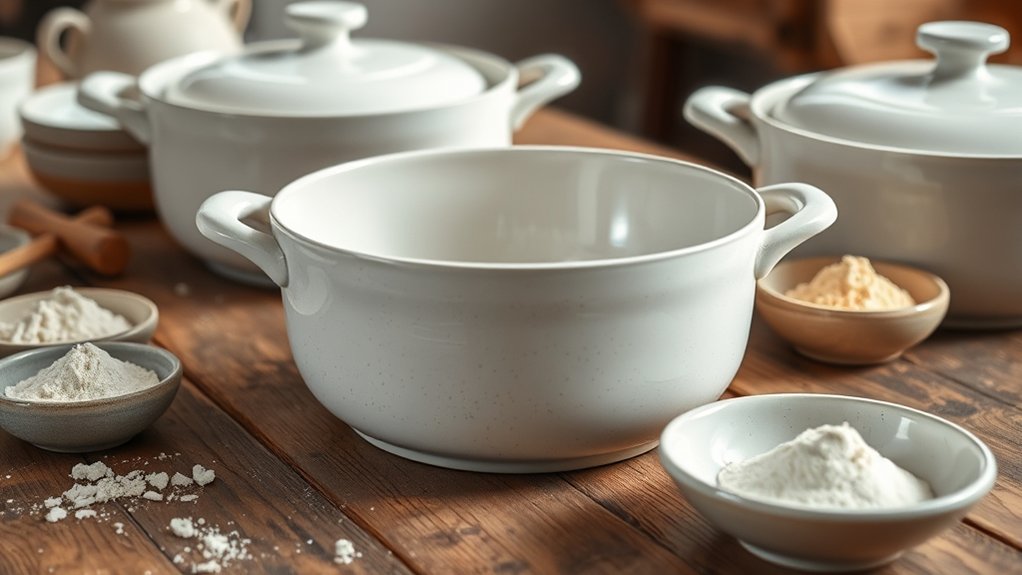
Understanding the materials and manufacturing process behind ceramic cookware can help you decide if it’s a safer alternative to traditional non-stick options that may contain PFAS. Ceramic cookware starts with natural materials like clay, sand, and water, which are shaped and then fired at high temperatures. This firing process hardens the material, creating a durable and heat-resistant surface.
Afterward, manufacturers often apply a ceramic coating made from silica-based compounds, which provides a smooth, non-stick finish without synthetic chemicals. Unlike traditional non-stick coatings that rely on chemicals like PTFE or PFOA, ceramic coatings come from inorganic minerals. This means you’re primarily dealing with natural, inert substances designed to resist sticking and withstand cooking temperatures without breaking down easily.
Does Traditional Ceramic Cookware Contain PFAS?
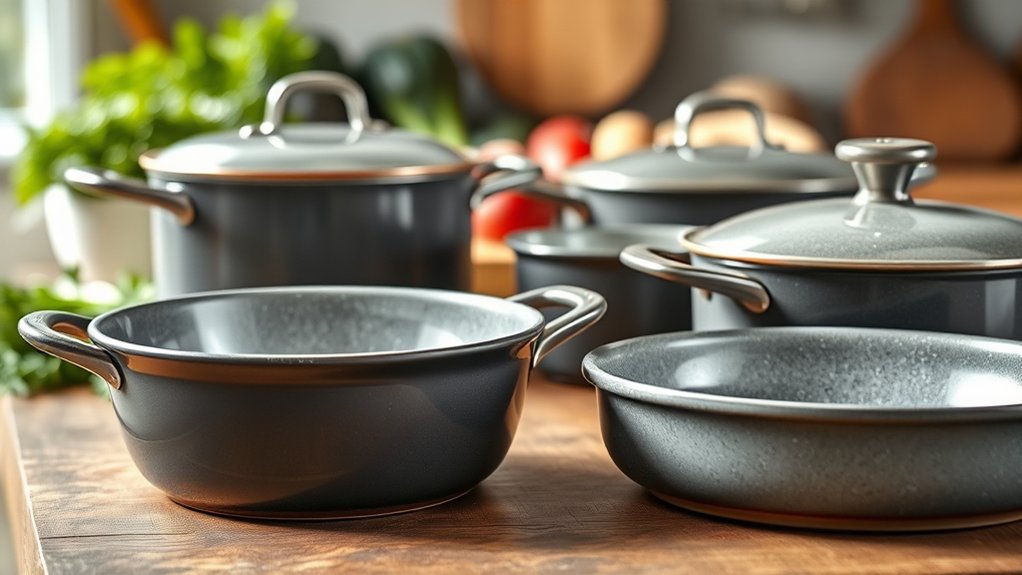
While many people assume all ceramic cookware is free of harmful chemicals, it’s important to know that traditional ceramic cookware typically does not contain PFAS. This type of cookware is made from natural clay and minerals, fired at high temperatures to create a hard, non-toxic surface. You won’t find PFAS in its basic composition, as these chemicals are usually part of synthetic non-stick coatings.
Here’s a quick look:
| Feature | Traditional Ceramic Cookware |
|---|---|
| Base Material | Natural clay and minerals |
| Coating | Glazed ceramic, no PFAS |
| Heat Resistance | High, due to firing process |
| Chemical Additives | None, PFAS-free |
What Health Risks Come From PFAS In Ceramic Cookware?
Because PFAS chemicals can persist in the environment and your body, they pose significant health risks when present in ceramic cookware. When PFAS leach from cookware into your food, you may unknowingly ingest these harmful substances. Over time, PFAS exposure has been linked to issues like weakened immune response, hormonal imbalances, and increased risk of certain cancers.
You might also experience liver damage or developmental problems if exposed to high levels. Since PFAS accumulate in your system, even small daily exposures can add up, raising your long-term health risks. Being aware of these dangers helps you make smarter choices about the cookware you use every day, reducing your chances of unnecessary chemical exposure and protecting your overall well-being.
How Does Ceramic Cookware Compare To Teflon And Other Non-Stick Options?
Knowing the health risks associated with PFAS in ceramic cookware makes it important to compare it with other non-stick options like Teflon. Ceramic coatings typically don’t contain PFAS, making them a popular choice if you want to avoid these chemicals. However, ceramic cookware can lose its non-stick properties faster than Teflon, which often lasts longer due to its durable PTFE-based coating.
Teflon offers excellent non-stick performance but may release harmful fumes if overheated. Other non-stick alternatives, like seasoned cast iron or anodized aluminum, don’t involve PFAS but require more maintenance. When choosing, consider your cooking habits and prioritize safety.
If you want a chemical-free surface and don’t mind re-coating over time, ceramic is a solid option. For durability and ease, Teflon remains a strong contender despite its PFAS concerns.
How Can You Identify PFAS In Your Ceramic Cookware?
If you want to spot PFAS in your ceramic cookware, you’ll need to check product labels and manufacturer information carefully. Look for terms like “PTFE,” “PFOA,” or “perfluorinated compounds,” as these indicate the presence of PFAS chemicals. Many brands now advertise “PFAS-free” or “PFOA-free” on their packaging, so keep an eye out for those claims.
You can also visit the manufacturer’s website or contact customer service to ask directly about their use of PFAS in coatings. Avoid cookware with vague descriptions or unexplained “non-stick” labels, as these might still contain PFAS. Finally, check independent reviews and third-party lab test results if available, since some brands voluntarily submit products for testing to verify they’re PFAS-free.
Are PFAS-Free Ceramic Cookware Brands Safe For Your Health?
While PFAS-free ceramic cookware brands promise a safer cooking experience, you might wonder whether they truly protect your health. The good news is that these brands avoid harmful per- and polyfluoroalkyl substances, which have been linked to health risks. Instead, they use alternative coatings free from toxic chemicals, reducing your exposure to potentially dangerous compounds.
However, it’s important to remember that “PFAS-free” doesn’t automatically mean completely risk-free. You should still check for certifications from trusted third parties and review product ingredients. Also, proper use and care help maintain the cookware’s safety.
How Durable And Non-Stick Is PFAS-Free Ceramic Cookware?
Choosing PFAS-free ceramic cookware helps minimize your exposure to harmful chemicals, but you’ll also want to think about how well it performs in your kitchen. PFAS-free ceramic coatings generally offer good non-stick properties, making cooking and cleanup easier. However, they might not be as slick or long-lasting as traditional non-stick surfaces containing PFAS.
With proper use and care—such as avoiding metal utensils and high heat—you can extend the lifespan of your ceramic cookware. Keep in mind that ceramic coatings can chip or wear down over time, especially with heavy use.
Tips For Choosing Ceramic Cookware Without PFAS
When you shop for ceramic cookware without PFAS, it’s important to carefully check product labels and manufacturer information to confirm the absence of these chemicals. Look for certifications or statements explicitly mentioning “PFAS-free” or “PFOA-free.” Choose reputable brands known for transparency and safer materials.
Consider cookware made with natural ceramic coatings rather than hybrid blends that might contain hidden chemicals. Pay attention to reviews and user feedback regarding safety and performance. Also, avoid products with vague ingredient lists or those marketed with generic “non-stick” claims, as these may still contain PFAS.
Finally, prioritize cookware that meets recognized safety standards from trusted regulatory bodies to ensure you’re making a healthy, informed choice for your kitchen.
How To Care For Ceramic Cookware Coatings
Because ceramic cookware coatings can be delicate, you’ll want to handle and clean them with care to maintain their non-stick properties and extend their lifespan. Avoid using metal utensils; instead, opt for wooden, silicone, or plastic tools to prevent scratching the surface. When cooking, use low to medium heat since high temperatures can damage the coating.
After cooking, let the pan cool before washing to prevent thermal shock that could crack the coating. Clean your cookware with a soft sponge and mild dish soap—abrasive pads or harsh cleaners can wear down the finish. If food sticks, soak the pan in warm water before gently scrubbing.
Proper care guarantees your ceramic cookware stays safe, effective, and long-lasting without compromising its coating.
PFAS-Free Cookware Alternatives To Ceramic
If you’re looking to avoid PFAS, there are several popular non-toxic cookware options you can try, like stainless steel, cast iron, and glass. These alternatives offer durability and even heat distribution without harmful chemicals. Choosing the right material can improve your cooking experience while keeping your kitchen safer.
Popular Non-Toxic Options
Looking for safe, PFAS-free cookware options that don’t compromise performance? You might want to opt for stainless steel, cast iron, and glass cookware. Stainless steel is durable, resists corrosion, and won’t leach harmful chemicals into your food.
Cast iron offers excellent heat retention and can last generations with proper care. Plus, when seasoned well, it provides a natural non-stick surface. Glass cookware is non-reactive and perfect for baking or slow cooking, ensuring no chemical exposure.
Another great choice is 100% ceramic cookware made without synthetic coatings, which offers a non-toxic cooking surface. These options give you peace of mind while cooking healthy meals, all without worrying about PFAS or other harmful substances commonly found in some non-stick cookware.
Benefits Of Alternative Materials
Choosing cookware made from alternative PFAS-free materials can offer distinct advantages beyond just avoiding harmful chemicals. When you opt for options like stainless steel, cast iron, or glass, you get durability and safety combined. These materials don’t release toxic substances even under high heat, keeping your meals healthier.
Plus, many alternatives provide excellent heat retention and distribution, improving your cooking results.
Here are some benefits you’ll enjoy with PFAS-free cookware alternatives:
- Durability: Long-lasting and resistant to wear.
- Non-reactive surfaces: Preserve food flavor without chemical leaching.
- Easy maintenance: Simple cleaning without special care.
- Versatility: Suitable for various cooking methods and heat sources.
Switching to these materials helps you cook safely and efficiently without compromising quality.
Where To Find Reliable Information On PFAS In Cookware
You’ll want to check trusted health organizations for accurate information on PFAS in cookware. Scientific studies and official reports offer clear insights backed by research. Relying on these sources helps you make informed choices about your cookware.
Trusted Health Organization Resources
Although it can be overwhelming to navigate the complex information about PFAS in ceramic cookware, trusted health organizations provide clear, science-based guidance to help you make informed decisions. These sources offer up-to-date facts, safety recommendations, and explain potential risks without hype.
You can rely on these reputable resources to better understand PFAS and cookware safety:
- U.S. Environmental Protection Agency (EPA): Offers detailed PFAS information and regulatory updates.
- Centers for Disease Control and Prevention (CDC): Provides health effects and exposure data.
- Food and Drug Administration (FDA): Shares guidelines on cookware materials and food safety.
- World Health Organization (WHO): Presents global perspectives on chemical safety and public health.
Checking these organizations ensures you get accurate, trustworthy insights on PFAS in ceramic cookware.
Scientific Studies And Reports
Where can you find trustworthy scientific studies on PFAS in ceramic cookware? Start by exploring peer-reviewed journals accessible through platforms like PubMed or Google Scholar. These sources provide detailed research conducted by experts, ensuring reliable data.
Government agencies such as the Environmental Protection Agency (EPA) and the Food and Drug Administration (FDA) also publish reports on PFAS presence in consumer products, including cookware. Additionally, academic institutions often release studies on chemical safety that you can trust.
When reviewing these reports, focus on studies that specify testing methods and PFAS concentrations in ceramic coatings. Avoid sources lacking transparency or scientific backing. By relying on these credible scientific studies and reports, you’ll get accurate insights into whether your ceramic cookware contains PFAS and understand potential health implications.
Frequently Asked Questions
Can PFAS Be Found in Other Kitchen Utensils Besides Cookware?
Yes, you can find PFAS in other kitchen utensils like non-stick pans, spatulas, and food storage containers.
It’s smart to check labels and choose PFAS-free options to keep your kitchen safer and healthier.
How Does PFAS Contamination Affect the Environment?
PFAS contamination harms the environment by polluting water, soil, and air. You’ll find these chemicals persist for years, affecting wildlife and ecosystems. They build up in animals, disrupting food chains and causing long-term ecological damage.
Are There Regulations Limiting PFAS Use in Cookware?
Oh, sure, regulations love to keep up with PFAS in cookware—if you enjoy waiting centuries. You’ll find some rules, but they’re patchy and weak, so you’d better stay informed and choose your pots wisely.
What Are Common Sources of PFAS Exposure Outside the Kitchen?
You commonly get exposed to PFAS through contaminated water, nonstick cookware, stain-resistant fabrics, food packaging, and some firefighting foams. Avoiding these can help reduce your overall PFAS exposure in daily life.
How Long Does PFAS Stay in the Human Body?
You might be shocked to learn PFAS can linger for years—sometimes up to a decade or more—in your body. Your liver and kidneys struggle to break them down, so exposure effects can quietly build over time.
Conclusion
When it comes to choosing ceramic cookware, you want to avoid hidden PFAS like the plague. Luckily, traditional ceramic usually steers clear of these harmful chemicals, but it’s smart to double-check labels and brands.
By knowing what to look for and caring for your cookware properly, you’ll cook safely without sweating the small stuff. In the end, it’s all about making informed choices that keep your kitchen—and health—in tip-top shape.
Understanding whether ceramic cookware has PFAS is key to maintaining a safe cooking environment. Always prioritize cookware that is PFAS-free to protect your health and enjoy peace of mind while cooking.