How to Cook Pasta in a Frying Pan in 7 Simple Steps
You can easily cook pasta in a frying pan by choosing short pasta and using a wide, heavy pan with a lid. This method is perfect for a quick and simple meal that requires minimal cleanup.
Measure the pasta and cover it with 1.5 to 2 cups of water per 100 grams to ensure even cooking.
Heat the pan gently, stirring often to prevent the pasta from sticking to the bottom. Cook until the pasta reaches an al dente texture, which usually takes just a few minutes.
Once done, drain the pasta or save some of the cooking water to add to your sauce.
To enhance the flavor, sauté garlic and mushrooms in the same pan. Then, combine everything with your favorite toppings for a delicious and satisfying one-pan meal.
Keep experimenting to discover tips that elevate this quick pasta dish even further.
Key Takeaways
- Choose short pasta shapes and a wide, heavy-bottomed frying pan with a lid for even cooking and easy handling.
- Add measured pasta and enough water (1.5–2 cups per 100g pasta) directly to the pan to cover the pasta.
- Bring water to a gentle boil over medium heat, stirring frequently to prevent sticking and ensure even cooking.
- Monitor water levels, adding more if needed, and cook pasta until al dente, then drain excess water if necessary.
- Sauté garlic and mushrooms separately, combine with cooked pasta, add spices and toasted pine nuts, then serve immediately.
Why Cook Pasta in a Frying Pan?
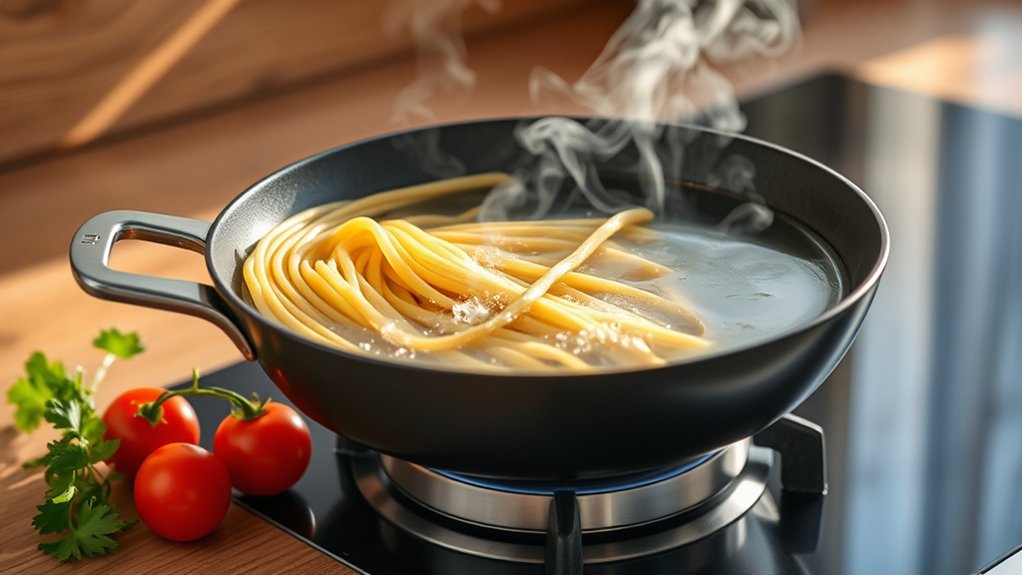
Although boiling pasta in a pot is traditional, cooking it in a frying pan saves time and reduces cleanup. You don’t have to wait for a large pot of water to boil, which speeds up the process. Plus, the frying pan lets you cook the pasta and sauce together, so the flavors blend better.
It’s a one-pan meal that cuts down on dishes. You also use less water, which means less wasted energy and a more concentrated sauce. This method is especially handy when you’re short on time or kitchen space.
Choose the Best Pasta and Pan for Frying Pan Cooking
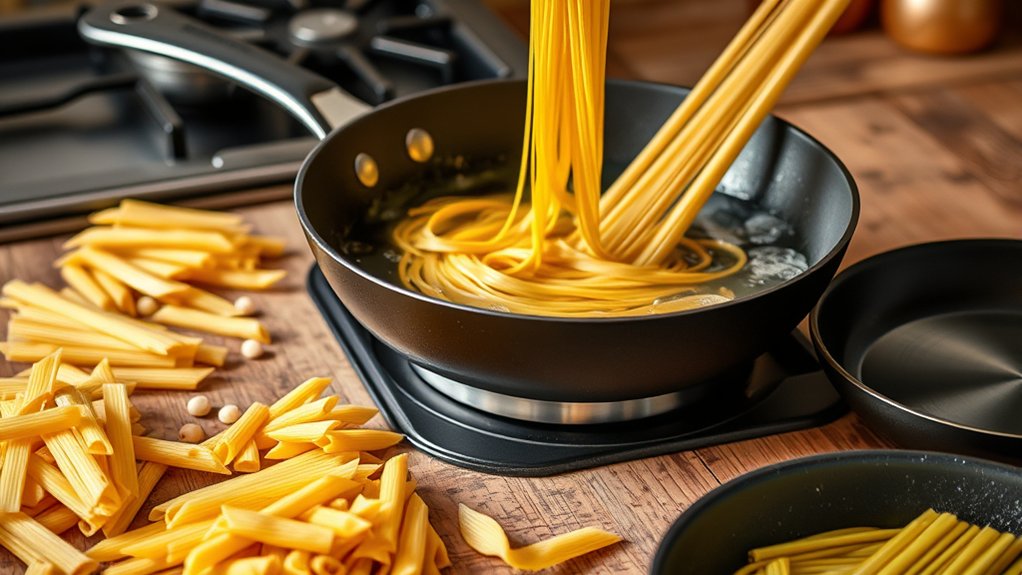
When cooking pasta in a frying pan, choosing the right type of pasta and pan can make all the difference in your final dish. Opt for short pasta shapes like penne, fusilli, or farfalle—they cook evenly and fit better in a pan. Avoid long strands like spaghetti, which can be tricky to manage in a shallow pan.
Select a wide, heavy-bottomed frying pan with a lid. A nonstick or stainless steel pan works well to prevent sticking and allows for even heat distribution. Make sure the pan is large enough to hold both the pasta and enough liquid for cooking.
Having a lid helps trap steam, speeding up the cooking process and ensuring the pasta cooks thoroughly. Choosing the right tools sets you up for success.
Measure Water and Pasta for Perfect Results
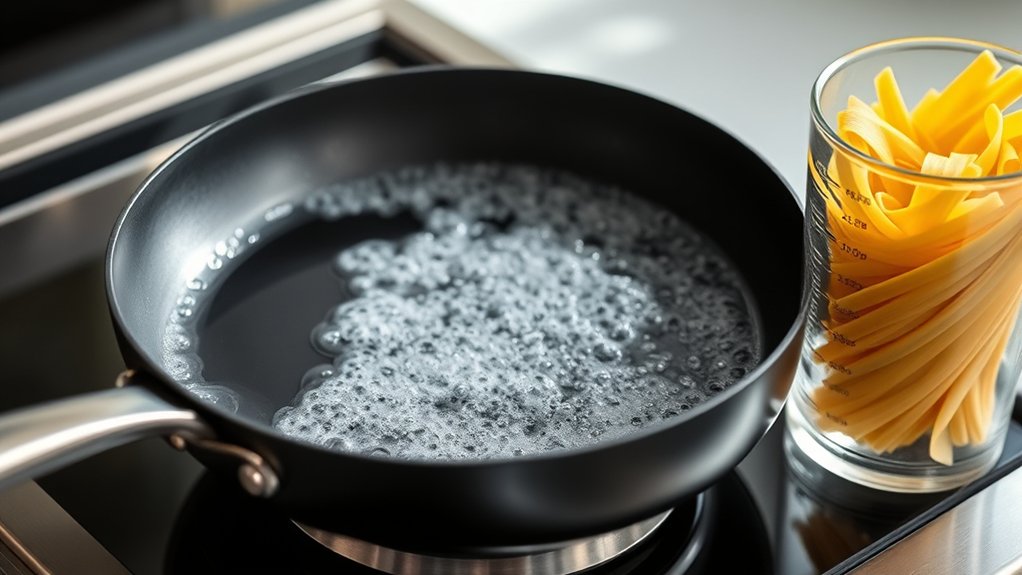
You’ll want to use the right water-to-pasta ratio to avoid mushy or dry results. Start by measuring your pasta quantity based on servings, then match it with enough water to cook evenly in your frying pan.
Using simple measuring tools makes this process quick and accurate.
Ideal Water-to-Pasta Ratio
Since frying pan pasta cooking differs from the traditional boiling method, you need to adjust the water-to-pasta ratio carefully to avoid soggy or undercooked results. Unlike a big pot, the frying pan holds less water, so use just enough to let the pasta absorb moisture and cook evenly. A good rule is about 1.5 to 2 cups of water per 100 grams (3.5 oz) of pasta.
This balance helps the pasta cook through without swimming in excess water. Keep an eye on the liquid and add more if it evaporates too quickly.
Imagine this:
- Pasta strands gently simmering
- Water bubbling just below the rim
- Sauce thickening as water reduces
- Steaming, tender noodles absorbing flavor
- A nearly dry pan ready to serve
This way, your pasta stays perfect every time.
Choosing Pasta Quantity
Although it might seem simple, choosing the right pasta quantity is essential for balancing water and pasta in your frying pan. Start by deciding how many servings you want—typically, 2 ounces (about 56 grams) of dry pasta per person works well. Avoid overcrowding the pan; too much pasta won’t cook evenly and may stick together.
Remember, pasta expands as it cooks, so leave enough space for it to move freely. When you measure your pasta, keep in mind the pan size and water amount discussed earlier. Using the right quantity ensures your pasta cooks perfectly, absorbs the sauce better, and prevents sogginess.
Measuring Tools Tips
When measuring pasta and water, having the right tools on hand makes the process straightforward and accurate. You want to guarantee your pasta cooks evenly without sticking or drying out. Using precise measurements helps you avoid watery or undercooked results.
Keep these tools nearby for the best outcome:
- A clear measuring cup for water, so you pour just enough to cover the pasta.
- A kitchen scale to weigh pasta for portion control.
- A pasta measurer or a simple handful guide to estimate servings.
- A ladle or spoon to stir and check water levels mid-cook.
- A timer to track cooking time precisely.
With these tools, you’ll confidently cook pasta perfectly in your frying pan every time.
Heat Pasta and Water Together in the Pan
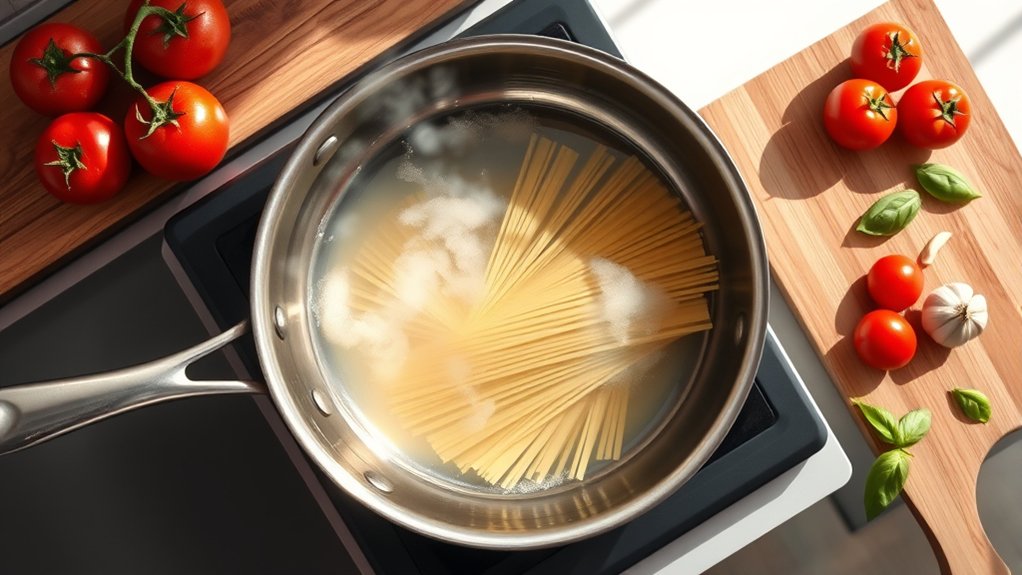
Before the water reaches a boil, place your pasta directly into the frying pan and pour enough water to cover it. This method lets the pasta heat evenly as the water warms, allowing it to soften gradually. Use medium heat to bring the water and pasta to a gentle boil, which helps the pasta absorb water without sticking to the pan.
Keep the heat steady; too high, and the water might evaporate too quickly, leaving the pasta undercooked or burnt. As the water warms, the pasta will start to become tender, absorbing moisture directly in the pan. This approach saves time and reduces cleanup since you’re cooking everything together.
Just keep an eye on the water level to ensure the pasta stays submerged throughout heating.
Stir Often to Prevent Sticking and Clumps
Since pasta tends to stick together as it softens, you should stir it frequently to keep the strands separate and prevent clumps. Stirring breaks up sticky patches, allowing each piece to cook evenly. Use a wooden spoon or spatula to gently toss the pasta, scraping the pan’s bottom to avoid any burnt bits.
Keep an eye on the texture; the pasta should glide smoothly in the water, never clumping.
Picture yourself:
- Swirling long spaghetti strands apart with a flick of the wrist
- Nudging penne pieces loose from the pan’s surface
- Hearing the gentle splash as you stir
- Watching steam rise while separating tangled pasta
- Feeling the pasta’s texture change under your spoon
Regular stirring keeps your pasta perfectly tender and clump-free.
Drain or Use Pasta Water to Make a Simple Sauce
When your pasta is almost done, decide if you want to save some pasta water—it’s packed with starch that helps create a silky sauce. If you do, scoop out a bit before draining the rest.
Using that water can transform a simple dish by binding your sauce and pasta perfectly.
Benefits of Using Pasta Water
Why should you save some pasta water instead of just draining it away? Pasta water is a secret weapon for elevating your dish. It contains starch released from the pasta, which helps thicken sauces and bind them to the noodles, creating a silky texture.
Using pasta water also helps adjust the sauce’s consistency without diluting flavor. Plus, it adds a subtle saltiness that enhances the overall taste. When you toss your pasta in the pan with sauce, a splash of pasta water makes everything come together beautifully.
Here’s what pasta water can do for you:
- Create a glossy, smooth sauce that clings perfectly
- Improve sauce texture without extra fat or cream
- Help ingredients emulsify for a balanced finish
- Boost flavor subtly with its mild saltiness
- Rescue a too-thick sauce with a gentle thinning effect
When to Drain Pasta
Although draining pasta is a common step, you don’t always have to toss out all the cooking water. When your pasta reaches al dente, decide if you want to create a simple sauce. If so, reserve a cup of the starchy water before draining.
This liquid helps bind your sauce and pasta, adding flavor and silkiness. Drain the pasta quickly to prevent overcooking but keep it slightly wet if you plan to toss it in the pan with your sauce.
If you’re serving pasta with a separate sauce or dressing, draining fully and rinsing briefly (only for cold dishes) works best. Use your judgment based on the final dish—sometimes you want just the pasta, other times the pasta water is your secret ingredient.
Add Your Favorite Sauce or Toppings and Serve
Once your pasta is perfectly cooked and drained, you can add your favorite sauce or toppings to bring the dish to life.
Pour your chosen sauce over the pasta while it’s still warm, allowing the flavors to meld beautifully.
Toss everything gently to coat each strand or piece evenly. Don’t be shy—add toppings that excite your taste buds and add texture.
Here are some ideas to inspire you:
- Freshly grated Parmesan cheese for a salty kick
- Chopped basil or parsley for a burst of freshness
- Crushed red pepper flakes to add heat
- Sautéed garlic and mushrooms for earthiness
- Toasted pine nuts for a crunchy finish
Serve immediately, and enjoy your simple, flavorful pasta straight from the pan!
Frequently Asked Questions
Can I Use Frozen Pasta for Frying Pan Cooking?
Yes, you can use frozen pasta for frying pan cooking. Just thaw it slightly or add it directly with a bit of extra liquid to prevent sticking. Stir often to heat it evenly and avoid clumps.
Is Frying Pan Pasta Healthier Than Boiling Pasta?
You won’t suddenly become a health guru by frying pasta instead of boiling it. Both methods are similar nutritionally, but frying adds oil and calories, so you’ll want to watch your portions if you’re health-conscious.
How Long Can Cooked Pasta Be Stored After Frying Pan Cooking?
You can store cooked pasta for 3 to 5 days in the fridge. Make sure you cool it quickly, keep it in an airtight container, and reheat it thoroughly before eating to stay safe and tasty.
Can I Cook Gluten-Free Pasta in a Frying Pan?
Yes, you can cook gluten-free pasta in a frying pan, but beware—it cooks faster and can stick easily.
You’ll want to watch it closely, stir often, and add enough water to keep it from drying out.
What Type of Oil Is Best for Frying Pan Pasta?
You’ll want to use olive oil or avocado oil for frying pan pasta because they have a high smoke point and add great flavor.
Avoid butter or low smoke point oils to prevent burning and bitterness in your dish.
Conclusion
Cooking pasta in a frying pan is like dancing with your dinner—simple, quick, and full of flavor. You’ve learned to pick the right pasta, measure just right, and stir with care to keep everything smooth. Whether you drain or turn pasta water into sauce, you’re in control.
So go ahead, add your favorite toppings and enjoy a meal that’s as easy as a twirl in the kitchen. Your perfect pasta awaits! With these easy steps, cooking pasta in a frying pan becomes a convenient and delicious way to prepare your favorite dish.
Mastering how to cook pasta in a frying pan means you can enjoy flavorful pasta anytime without the hassle. Give it a try and savor the taste of perfectly cooked pasta right from your stovetop.