How Long to Pan Fry Salmon Without Skin in 10 Essential Steps
To pan fry salmon without skin perfectly, start by heating a heavy pan with a high smoke point oil until it shimmers. This method ensures a crispy, golden crust while keeping the salmon tender and flavorful.
Using evenly thick, skinless fillets is key to cooking them evenly and achieving the best texture.
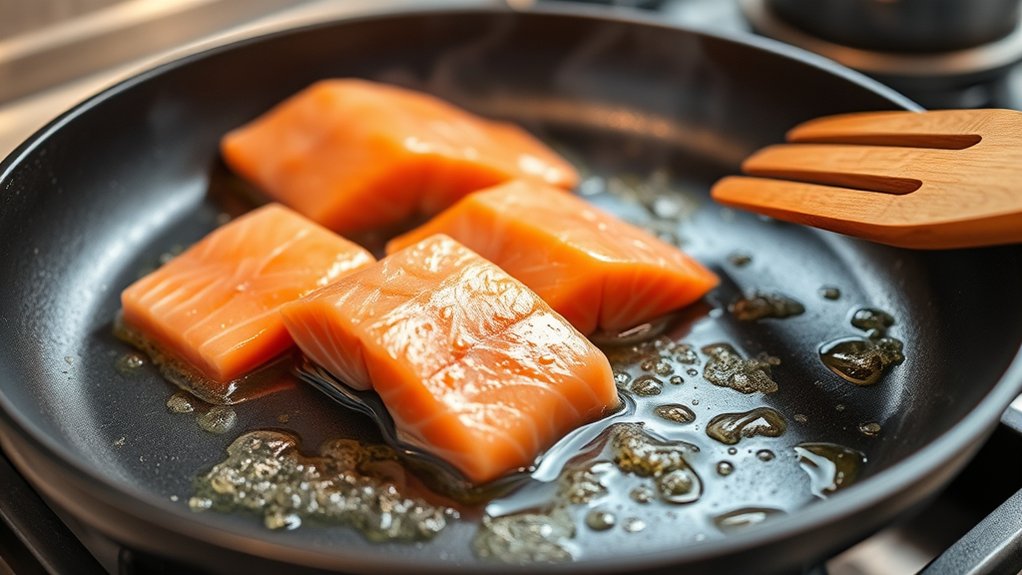
Place the seasoned salmon fillets in the hot pan and cook for 3-4 minutes without moving them. This helps develop a beautiful crust.
Once the edges turn opaque and the fish releases easily, flip the fillets confidently.
Cook for another 2-4 minutes depending on the thickness of the fillets. Look for opaque, flaky flesh and white albumin as signs the salmon is done.
Let it rest briefly before serving. Keep following for more tips to master every detail of pan frying salmon without skin.
Key Takeaways
- Heat a heavy-bottomed pan over medium-high until oil shimmers before adding skinless salmon fillets.
- Cook salmon for 3-4 minutes on the first side without moving to develop a golden sear.
- Flip confidently using a thin spatula when edges are opaque and salmon releases easily from the pan.
- Cook the second side for an additional 2-4 minutes, depending on fillet thickness and desired doneness.
- Check doneness by opaque flesh, easy flaking, or internal temperature of 125°F (medium-rare) to 145°F (well-done).
How to Choose the Best Salmon Cut for Skinless Pan Frying
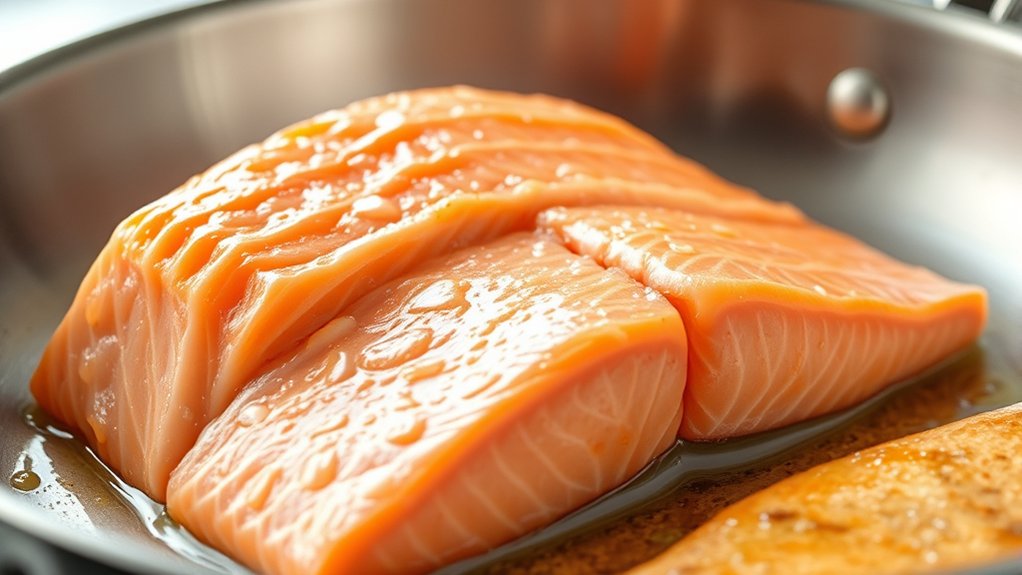
When choosing salmon for skinless pan frying, look for cuts that hold their shape well, like center-cut fillets or steaks. These options resist falling apart, making your cooking process smoother and your presentation cleaner. Avoid very thin pieces or those with ragged edges, as they tend to overcook quickly or break apart when flipped.
Freshness matters too—opt for salmon with a bright, vibrant color and firm texture to guarantee the best flavor and consistency. Wild-caught salmon often offers a richer taste and firmer flesh compared to farmed varieties, which can be softer. Ultimately, picking the right cut helps you achieve evenly cooked, delicious salmon without worrying about it disintegrating during pan frying.
How to Prep Skinless Salmon for Even Cooking
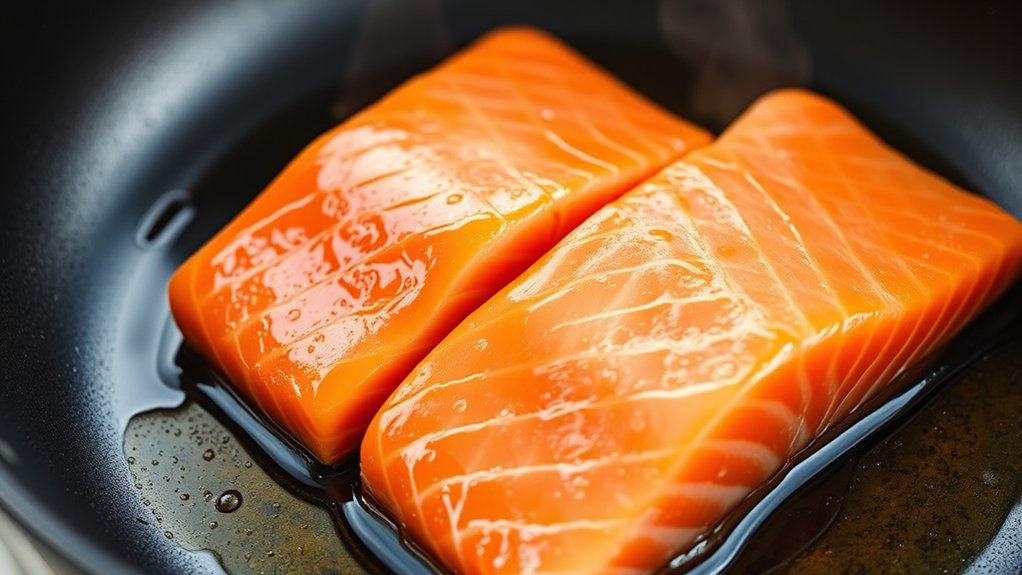
Although skinless salmon cooks quickly, you need to prepare it carefully to guarantee even cooking and prevent it from sticking or falling apart. Start by patting the fillets dry with paper towels to remove excess moisture. This helps achieve a nice sear.
Next, season both sides evenly with salt and pepper or your favorite spices. If your fillets are unevenly thick, consider pounding them gently to create uniform thickness for consistent cooking.
| Step | Tip |
|---|---|
| Dry the fillet | Use paper towels to absorb moisture |
| Season thoroughly | Salt, pepper, or preferred spices |
| Even thickness | Gently pound thicker parts |
These prep steps ensure your skinless salmon cooks evenly and stays intact during pan frying.
Best Pans and Oils for Pan Frying Skinless Salmon
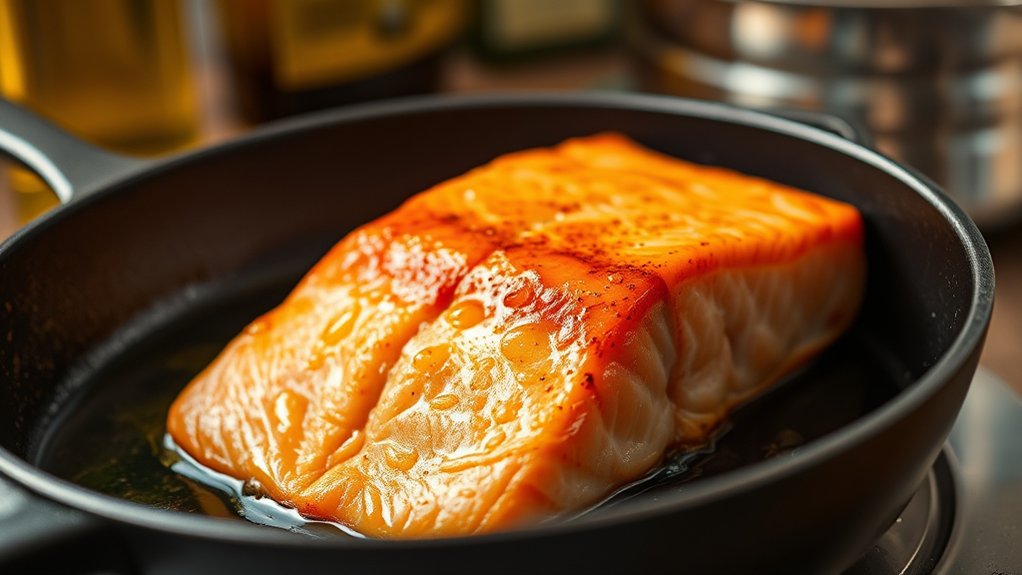
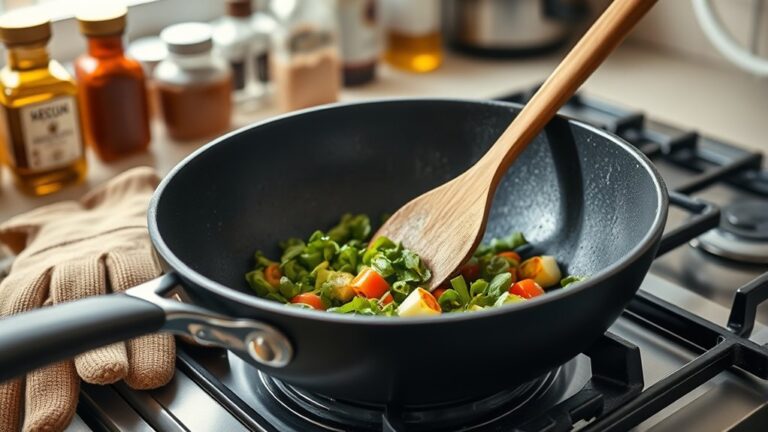
Choosing the right pan and oil can make a big difference in how your skinless salmon turns out. Opt for a heavy-bottomed skillet like stainless steel or cast iron to guarantee even heat distribution and a nice sear. Nonstick pans work too, especially if you want easier cleanup and less sticking, but you might sacrifice some crust.
When it comes to oil, pick one with a high smoke point. Avocado oil, grapeseed oil, or refined olive oil are excellent choices. They handle heat well and won’t impart unwanted flavors.
Avoid butter or unrefined oils at this stage, since they can burn quickly. Using the right pan and oil helps you get that perfect golden crust while keeping the salmon tender inside.
How Hot to Heat the Pan Before Adding Salmon
To achieve a perfect sear, you need to heat the pan until it’s hot but not smoking before adding your salmon. A properly heated pan guarantees the fish cooks evenly and develops a golden crust without sticking. Heat your pan over medium-high heat and give it a couple of minutes to warm up.
You can test the temperature by flicking a few drops of water onto the surface—if they sizzle and evaporate immediately, the pan is ready. Avoid overheating; if the pan starts to smoke, lower the heat slightly to prevent burning the oil or fish. Getting the temperature right is essential for a tender, flavorful salmon without skin.
Once hot, add your oil, let it shimmer, then place the salmon in the pan.
How Long to Cook Skinless Salmon on the First Side
Once your pan is hot and the salmon is carefully placed, cook the skinless fillet for about 3 to 4 minutes on the first side. This timeframe allows the salmon to develop a golden crust while sealing in moisture. Avoid moving the fillet during this period so it can cook evenly and form a nice sear.
The edges will start to turn opaque, signaling that the cooking process is underway. Keep the heat at medium to medium-high to prevent burning. If your fillet is thicker, lean toward the longer end of the range to ensure thorough cooking.
When and How to Flip Your Salmon for Perfect Doneness
Although it can be tempting to flip your salmon too soon, waiting until the edges are fully opaque and the fillet releases easily from the pan guarantees a clean flip and even cooking. Use a thin spatula to gently lift the fillet; if it sticks, give it more time. When flipping, do so confidently to keep the salmon intact.
| Indicator | Action | Result |
|---|---|---|
| Edges opaque | Ready to flip | Even cooking |
| Fillet releases | Use spatula to flip gently | Salmon stays whole |
| Flip confidently | Avoid multiple flips | Perfect doneness |
This technique ensures your salmon cooks evenly without breaking apart.
How Long to Cook Salmon After Flipping Without Skin
After flipping your salmon, you’ll want to cook it just long enough to reach the perfect doneness without drying it out. Keep an eye on visual cues like the flesh turning opaque and flaky, and use a thermometer to aim for about 125°F for medium-rare.
Timing can vary, but usually, 2 to 4 minutes on the second side does the trick.
Optimal Cooking Time
When you flip salmon fillets without skin, you’ll want to cook them for about 2 to 4 minutes on the second side, depending on thickness. Thinner fillets cook faster, while thicker ones need extra time to become tender without drying out. Use medium heat to guarantee even cooking and prevent burning.
Here’s a quick guide to help you time it right:
| Thickness (inches) | Cooking Time (minutes) |
|---|---|
| ½ | 2 |
| 1 | 3 |
| 1½ | 4 |
Stick to these times and adjust slightly based on your stove’s heat. With practice, you’ll nail that perfect, juicy salmon every time.
Visual Doneness Indicators
To know exactly when your salmon is done after flipping it without skin, watch for clear visual cues. The flesh will turn from translucent to opaque, especially along the edges. Look for a uniform pink color that deepens slightly but remains moist.
Small white lines, called albumin, may appear on the surface, indicating the fish is cooking through. You’ll also notice the salmon starts to flake easily when you gently press it with a spatula or fork. Avoid overcooking by removing the salmon once it flakes without resistance but still feels slightly firm.
These visual signs help you cook salmon perfectly without relying on a timer alone, ensuring juicy, tender fish every time you pan fry it.
Temperature Guidelines
Although visual cues are helpful, monitoring temperature guarantees your salmon is cooked perfectly after flipping without skin. Use an instant-read thermometer to check the internal temperature. Aim for 125°F (52°C) if you prefer medium-rare and 145°F (63°C) for well-done salmon.
Insert the thermometer into the thickest part to get an accurate reading. After flipping, it typically takes 2 to 4 minutes to reach these temperatures, depending on thickness and heat level. Avoid overcooking, as salmon dries out quickly without skin.
Consistently checking temperature ensures juicy, tender results every time. By focusing on precise temperature guidelines, you’ll master pan-frying salmon without skin and enjoy delicious, perfectly cooked fillets without any guesswork.
How to Check If Skinless Salmon Is Cooked Just Right
To know if your skinless salmon is cooked just right, look for changes in color and opacity. You can also gently press the flesh to check its firmness—it should flake easily but still feel moist.
For the most accuracy, use a thermometer to confirm the internal temperature reaches 125°F to 130°F.
Visual Doneness Indicators
When you pan fry skinless salmon, knowing exactly when it’s perfectly cooked can be tricky without the skin as a reference. Look for a color change from translucent to opaque; the flesh should shift from shiny pink to a matte, light pink. Check the edges—they’ll start to look slightly crisp and opaque before the center is done.
Also, watch for the salmon to release easily from the pan; if it sticks, it might need more time. Tiny beads of white protein, called albumin, may appear on the surface—that’s a sign it’s cooking through, but too much means it’s overcooked. Keep an eye on these visual cues to pull your salmon off the heat at just the right moment.
Texture And Firmness
Since salmon texture changes as it cooks, you can tell it’s done by gently pressing the flesh with your finger or a fork. Raw salmon feels soft and slightly squishy, while fully cooked salmon becomes firmer and flakes easily. When you press the fish, it should spring back slightly but not feel mushy or overly soft.
If it feels very firm and resists flaking, it may be overcooked. Look for a gentle separation of the flesh along the natural lines—this indicates the salmon is tender and moist inside. Checking texture allows you to avoid undercooking or drying out your salmon, ensuring a perfect balance of firmness and juiciness every time you pan fry without skin.
Internal Temperature Check
Although texture offers valuable clues, using a food thermometer is the most reliable way to check if your skinless salmon is cooked just right. It takes the guesswork out and guarantees safety without overcooking. Here’s how to do it:
- Insert the thermometer into the thickest part of the fillet, avoiding bones.
- Look for a temperature reading of 125°F (52°C) for medium-rare or 145°F (63°C) for fully cooked salmon.
- Remove the salmon from heat as soon as it hits your target temperature to prevent dryness.
- Let it rest for a few minutes; the internal temperature will rise slightly, finishing the cooking process.
How to Get a Crispy, Golden Crust on Skinless Salmon
To achieve a crispy, golden crust on skinless salmon, you’ll need to focus on proper heat control and preparation. Start by patting the salmon dry to remove excess moisture, then season it well. Use a non-stick or well-seasoned pan and preheat it over medium-high heat.
Add a high smoke point oil like avocado or grapeseed oil. Place the salmon in the pan and avoid moving it to let a crust form. Flip once the edges turn opaque and the crust is golden.
| Step | Tip | Reason |
|---|---|---|
| Dry salmon | Use paper towels | Removes moisture for crispiness |
| Preheat pan | Medium-high heat | Ensures even, golden crust |
| Oil choice | Avocado or grapeseed oil | High smoke point prevents burning |
| Cook undisturbed | Flip once crust forms | Develops perfect texture |
How to Rest and Serve Pan Fried Salmon Without Skin
After pan frying your salmon without skin, let it rest for a few minutes to lock in the juices and enhance flavor.
You’ll want to serve it with complementary sides like fresh vegetables or a light salad for a balanced meal.
Finally, add simple garnishes like lemon wedges or herbs to elevate the presentation and taste.
Resting Time Importance
When you finish pan frying salmon without skin, letting it rest briefly allows the juices to redistribute for a moister, more flavorful bite. Skipping this step means the juices escape when you cut in, leaving your salmon dry.
To rest your salmon properly:
- Remove the salmon from the pan and place it on a warm plate.
- Tent it loosely with foil to retain heat without steaming.
- Let it rest for about 3 to 5 minutes.
- Avoid covering it tightly, which can cause sogginess.
This short pause locks in flavor and improves texture, making every bite tender and juicy. So, take a moment before serving—you’ll notice the difference immediately.
Ideal Serving Suggestions
Although resting your pan-fried salmon without skin enhances its juiciness, how you serve it can elevate the entire meal experience. Once rested for about 3-5 minutes, transfer the salmon gently to a warm plate to maintain its temperature.
Serve it alongside simple, fresh sides like steamed vegetables or a light salad to complement its delicate flavor. You can drizzle a touch of lemon juice or a light sauce, such as a dill yogurt or mustard vinaigrette, to add brightness without overpowering the fish.
Use a sharp knife to cut clean portions, ensuring each piece holds together well. Serving immediately after resting guarantees the salmon stays moist and tender, making each bite flavorful and satisfying.
Garnishing And Presentation
To enhance your pan-fried salmon without skin, focus on simple yet elegant garnishing and presentation techniques that highlight its natural flavor and texture. After cooking, let the salmon rest for a few minutes to lock in juices.
When plating, consider these tips:
- Add fresh herbs like dill or parsley for color and aroma.
- Use citrus slices or zest to brighten the dish visually and taste-wise.
- Drizzle a light sauce such as lemon butter or a soy glaze around the salmon.
- Serve on a clean, white plate to make the salmon’s pink hue stand out.
Frequently Asked Questions
Can I Pan Fry Frozen Salmon Without Skin?
Yes, you can pan fry frozen salmon without skin. Just thaw it slightly first, then cook over medium heat for about 4-5 minutes per side. This guarantees even cooking without drying out the fish.
Is It Necessary to Marinate Skinless Salmon Before Frying?
Marinating skinless salmon isn’t necessary; you can cook it like a blank canvas, ready for flavors. But if you want extra tenderness and zest, a quick marinade can transform it beautifully, like a painter’s final stroke.
How Do I Prevent Salmon From Sticking to the Pan?
You can prevent salmon from sticking by heating the pan well before adding oil, using a non-stick or well-seasoned pan, and letting the fish cook undisturbed until it naturally releases before flipping.
Can I Use Non-Stick Spray Instead of Oil for Frying Salmon?
You can use non-stick spray, but it might not give the same sear or flavor as oil. For better results, stick with oils like olive or avocado—they handle heat well and enhance your salmon’s taste.
These oils help achieve a crispy exterior and add richness to the dish. Non-stick spray is convenient, but it may cause uneven cooking.
If you prefer a light option, use a small amount of oil instead of relying solely on spray. This approach ensures better texture and flavor in your fried salmon.
What Are Healthy Oil Alternatives for Pan Frying Salmon?
Healthy oil alternatives for pan frying salmon include avocado, olive, and coconut oils. They’re like trusted friends, offering good fats and high smoke points, so you’ll cook delicious, nutritious salmon without worrying about harmful compounds.
Conclusion
Pan frying skinless salmon is like painting a masterpiece—each step adds a brushstroke of flavor and texture. You start with the perfect canvas, prep with care, and heat your tools just right.
As you cook, patience lets the colors blend beautifully, revealing a golden crust. When you rest your creation, the flavors settle like a quiet sunset.
Follow these steps, and you’ll serve a dish that’s art on a plate, every time. Mastering how long to pan fry salmon without skin ensures a perfectly cooked, flavorful meal that impresses with every bite.