7 Essential Tips for Caring for Stainless Steel Cookware
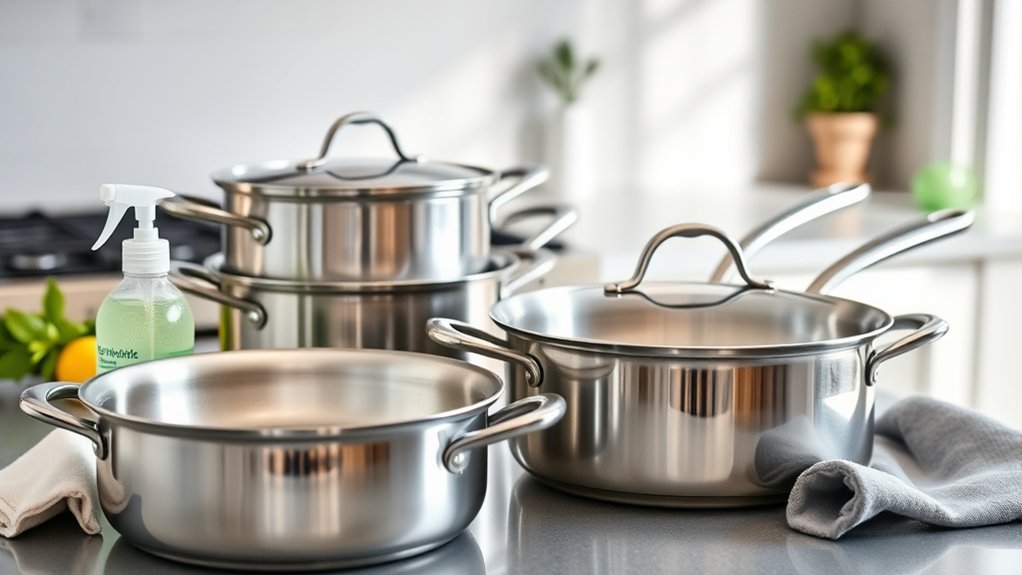
You can keep your stainless steel cookware in top shape by cleaning it gently with soft sponges and mild soap, avoiding harsh chemicals and abrasive tools like steel wool. Proper care for stainless steel cookware ensures its longevity and maintains its attractive shine.
Following simple cleaning and handling tips can prevent damage and enhance performance. Soak burnt food in warm, soapy water and use baking soda paste for stubborn stains.
Use silicone or wooden utensils to prevent scratches and handle your cookware carefully. Dry immediately after washing to avoid water spots.
Follow these tips, and you’ll maintain your cookware’s shine and durability while discovering even more helpful care advice. Consistent care will keep your stainless steel cookware looking and performing like new for years to come.
Key Takeaways
- Clean stainless steel cookware with soft sponges and mild detergents to avoid scratches and maintain its finish. Soak cookware in warm, soapy water to loosen food residue before gentle scrubbing.
- Use baking soda paste or a water-vinegar boil to remove stubborn stains and burnt food safely. Avoid abrasive materials, harsh chemicals, and chlorine bleach to prevent surface damage and discoloration.
- Use silicone, wooden, or plastic utensils and store with soft liners to prevent scratches and dents.
Why Proper Care Matters for Stainless Steel Cookware
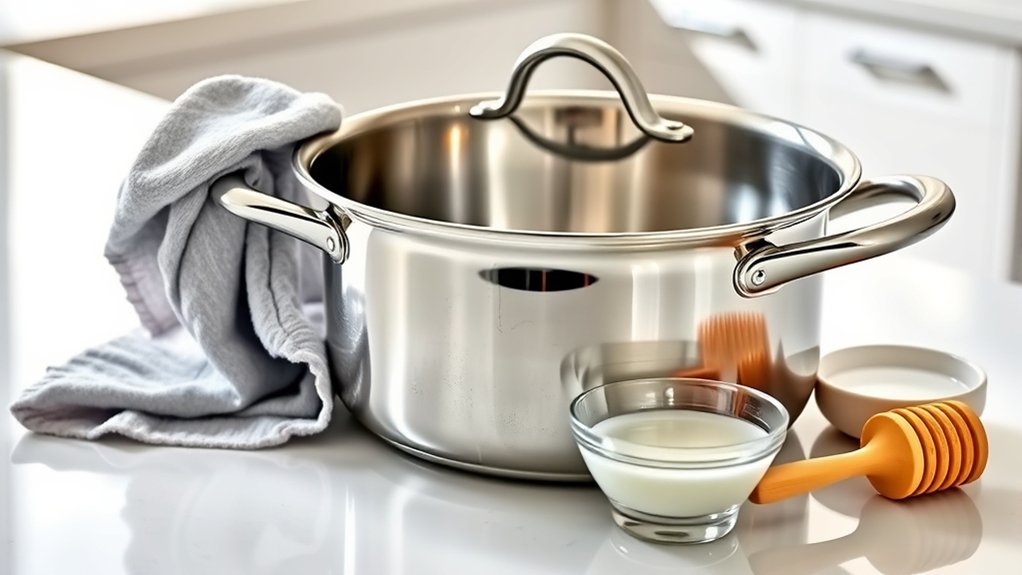
Although stainless steel cookware is known for its durability, you still need to care for it properly to keep it performing well. If you neglect it, you risk warping, discoloration, and even food sticking to the surface, which can make cooking frustrating. Proper care helps maintain the cookware’s smooth surface, ensuring even heat distribution and consistent cooking results.
When you handle your stainless steel pots and pans with care, you also extend their lifespan, saving money in the long run. Plus, well-maintained cookware looks better, keeping your kitchen stylish. By understanding why proper care matters, you can avoid common issues and enjoy cooking with your stainless steel pieces every day without hassle or damage.
How to Clean Stainless Steel Cookware Without Damaging It
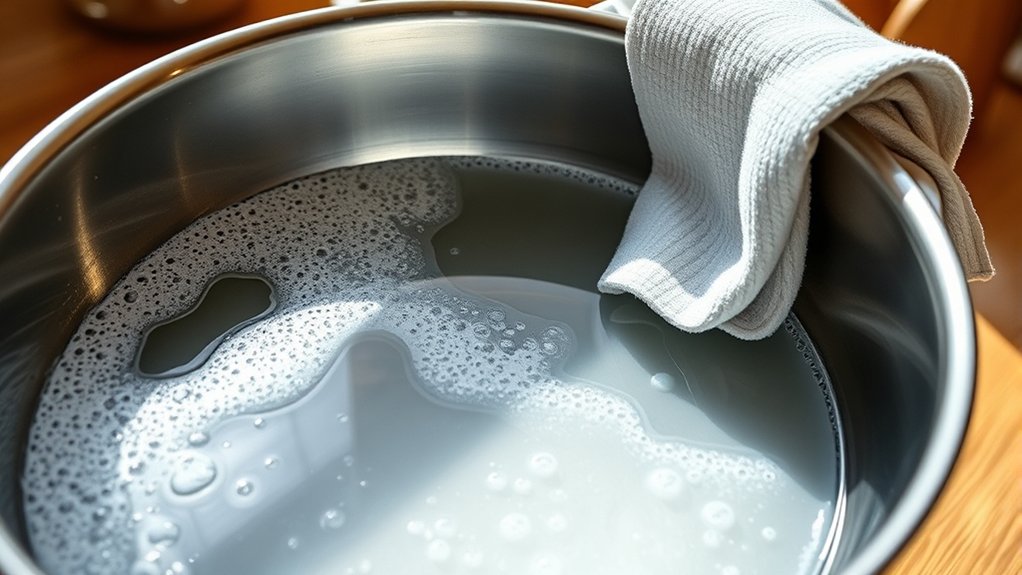
You’ll want to use gentle cleaning methods to keep your stainless steel cookware looking great. Avoid abrasive materials like steel wool that can scratch the surface.
Instead, stick to soft sponges and mild detergents for the best results.
Gentle Cleaning Methods
When you clean stainless steel cookware gently, you preserve its shine and prevent scratches. Start by soaking the pan in warm, soapy water to loosen stuck-on food. Use a soft sponge or cloth to wipe away residues.
For tougher spots, try a paste of baking soda and water—apply it gently, then rinse thoroughly. Avoid vigorous scrubbing or harsh chemicals, which can dull the surface. After washing, dry your cookware immediately with a soft towel to prevent water spots.
If you notice cloudiness, a splash of vinegar diluted in water can restore its shine—just rinse well afterward. By handling your stainless steel cookware with care during cleaning, you’ll extend its life and keep it looking great without damage.
Avoiding Abrasive Materials
Since stainless steel is prone to scratches and dulling, you should avoid using abrasive materials like steel wool or rough scrubbers. These can leave permanent marks and damage the cookware’s smooth finish. Instead, opt for soft sponges or microfiber cloths when cleaning.
If you face stubborn stains or burnt-on food, soak the cookware in warm, soapy water to loosen residue before gently scrubbing. Avoid harsh scouring pads or metal brushes, which can strip the protective layer. Using mild detergents and non-abrasive cleaning tools preserves the shine and extends your cookware’s life.
Cleaning Products to Avoid With Stainless Steel Cookware
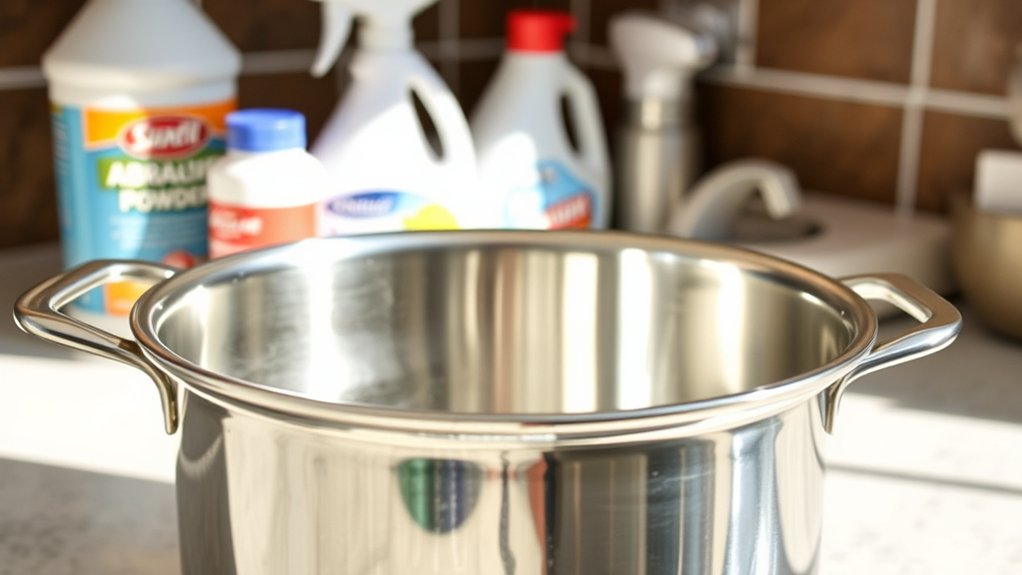
Although stainless steel is durable, certain cleaning products can damage its surface and reduce its lifespan. To keep your cookware looking great and performing well, avoid harsh chemicals that can cause discoloration or pitting.
Here are three cleaning products you should steer clear of:
- Chlorine bleach: It can corrode the metal and create permanent stains.
- Oven cleaners: These contain strong alkalis that may dull the finish.
- Steel wool or metal scouring pads: Though abrasive, they scratch the surface, leading to damage over time.
Instead, use gentle dish soap and soft cloths or non-abrasive sponges. This approach helps maintain the shine and integrity of your stainless steel cookware for years to come.
How to Remove Burnt Food and Discoloration From Stainless Steel
If you’ve ever dealt with burnt food or discoloration on your stainless steel cookware, you know it can be frustrating to restore its original shine. Start by soaking the pan in warm, soapy water for 15-30 minutes to loosen burnt bits. Then, use a non-abrasive scrubber or sponge to gently lift the residue.
For tougher stains, sprinkle baking soda over the affected area and add a small amount of water to form a paste. Let it sit for 10-15 minutes, then scrub gently. To remove discoloration, fill the pan with equal parts water and white vinegar, bring it to a boil, and let it cool before washing.
Avoid harsh scrubbing tools to protect the surface while effectively restoring your cookware’s gleam.
How to Avoid Scratches and Stains on Stainless Steel Cookware
To keep your stainless steel cookware looking its best, you need to handle it carefully and choose the right cleaning tools. Avoid using abrasive scrubbers or harsh chemicals that can scratch the surface. Instead, opt for soft sponges and gentle cleaners.
Be mindful of how you cook—avoid metal utensils that can leave marks or dents.
Here are three key tips to prevent scratches and stains:
- Use silicone, wooden, or plastic utensils to protect the surface.
- Clean cookware promptly after use to prevent food residue from staining.
- Avoid stacking pots and pans directly; place a soft cloth or paper towel between them.
How to Store Stainless Steel Cookware Safely
To keep your stainless steel cookware in top shape, you need to stack it properly to prevent scratches and dents. Make sure each piece is dry before storing to avoid moisture damage and rust.
With the right storage habits, your cookware will stay durable and ready for use.
Proper Stack Techniques
Although stainless steel cookware is durable, improper stacking can cause scratches and dents that affect its appearance and performance. To protect your pots and pans, always stack them thoughtfully. Use protective layers between pieces to avoid direct metal-on-metal contact.
Arrange cookware by size, placing larger, heavier items at the bottom and lighter ones on top to prevent warping.
Here are some tips to help you stack correctly:
- Use soft cloths or paper towels as padding between pieces
- Nest lids separately or store them upright to save space
- Avoid piling too many items to reduce pressure and damage
Avoiding Moisture Damage
Where should you store your stainless steel cookware to keep it in top condition? Always choose a dry, well-ventilated area to prevent moisture buildup, which can cause water spots and corrosion over time. Avoid stacking pots and pans in damp cabinets or near the sink, where humidity is higher.
After washing, make sure your cookware is completely dry before storing it. You can speed this up by wiping with a clean, dry cloth. If you want extra protection, place paper towels or cloth liners between stacked items to absorb any residual moisture.
How to Keep Your Stainless Steel Cookware Shiny Over Time
Keeping your stainless steel cookware shiny over time requires regular care and attention. You can maintain that brilliant finish by adopting simple habits that prevent dullness and stains. After each use, clean your cookware promptly to avoid residue buildup, which can cause discoloration.
Regular care and prompt cleaning prevent dullness and discoloration, keeping your stainless steel cookware brilliantly shiny.
Use non-abrasive cleaners and soft cloths to protect the surface from scratches. If water spots or stains appear, a vinegar and water solution can restore the shine effectively.
To keep your cookware gleaming, remember to:
- Avoid harsh scrubbing pads that can scratch the surface.
- Dry thoroughly after washing to prevent water spots and mineral buildup.
- Polish occasionally with a stainless steel cleaner to revive the original luster.
These steps will guarantee your cookware stays as radiant as the day you bought it.
Frequently Asked Questions
Can Stainless Steel Cookware Be Used on Induction Cooktops?
Yes, you can use stainless steel cookware on induction cooktops as long as the base is magnetic.
To check, just hold a magnet to the bottom—if it sticks, your cookware will work perfectly with induction heat.
Is Stainless Steel Cookware Dishwasher Safe?
You might think your stainless steel cookware is a loyal knight, battle-ready for the dishwasher. But don’t trust the quest blindly—hand washing preserves its shine and strength much longer than the dishwasher’s harsh siege.
How Does Stainless Steel Compare to Non-Stick Cookware?
Stainless steel is more durable and can handle higher heat than non-stick. You won’t have to worry about coatings peeling, but you’ll need oil to prevent sticking since it’s less naturally non-stick.
Can Stainless Steel Cookware Go in the Oven?
You can toss your stainless steel cookware into the oven like a fearless chef battling dragons! Just check the handles—if they’re metal, you’re good to go.
Avoid plastic parts to keep your cookware safe and sizzling!
What Is the Lifespan of Stainless Steel Cookware?
Stainless steel cookware can last decades if you take care of it properly. You’ll want to avoid harsh cleaners and overheating, but with regular cleaning and proper use, your pans can stay in great shape for 20 years or more.
Conclusion
Caring for your stainless steel cookware is like tending a garden—you nurture it with gentle hands, avoid harsh treatments, and patiently remove weeds before they take root. If you treat your pots and pans with care, they’ll reward you with years of reliable service and a brilliant shine.
Remember, just as a garden flourishes with consistent attention, your cookware will thrive when you clean, store, and handle it thoughtfully. Keep tending, and enjoy the lasting beauty of your stainless steel cookware. Following these essential tips ensures your cookware remains durable, shiny, and efficient for all your cooking needs.