Best Wood For Cutting Boards: Unlock Perfect Durability!
When selecting materials for culinary tools, the hardness, grain structure, and moisture resistance play crucial roles in durability and food safety. In particular, the best wood for cutting boards must balance density and resilience to withstand repeated knife impact without dulling blades or harboring bacteria.
Species with tight, closed grains and natural antimicrobial properties often outperform others in longevity and hygiene. Furthermore, the wood’s ability to resist warping and cracking under varying kitchen conditions is a key consideration. Understanding these technical characteristics is essential in identifying which wood types elevate both functionality and aesthetics in cutting board design.
Delving deeper into these factors reveals surprising insights about the woods that truly excel in culinary environments.
Discover the Top Timber Choices That Combine Durability and Safety for Your Kitchen Essentials
| Image | Product | Price |
|---|---|---|
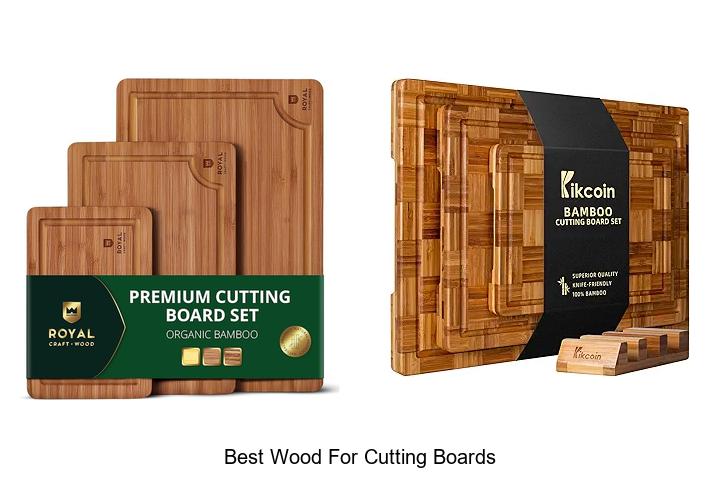
Our Top Picks 1  | ROYAL CRAFT WOOD Premium Cutting Board Set – Carbonized Bamboo | Check Price |
Our Top Picks 2 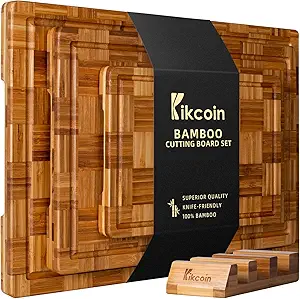 | Kikcoin Extra Large Bamboo Cutting Boards, (Set of 3) Chopping | Check Price |
Our Top Picks 3  | ROYAL CRAFT WOOD Acacia Wood Cutting Boards Set of 3 | Check Price |
1. ROYAL CRAFT WOOD Premium Cutting Board Set – Carbonized Bamboo
Upgrade your kitchen essentials with the ROYAL CRAFT WOOD Premium Cutting Board Set, crafted from sustainable carbonized bamboo. Designed to meet diverse food prep needs, this set features three versatile sizes that blend style, durability, and functionality for everyday cooking and entertaining.
Each cutting board boasts a smooth, non-porous surface that’s gentle on knives yet resilient against wear, enhanced by deep juice grooves to keep your workspace clean. Built-in side handles simplify transport, while eco-friendly carbonized bamboo provides natural resistance to moisture, cracking, and warping for long-lasting use.
Pros
- Three sizes included (15×10″, 12×8″, 9×6″) ideal for all kitchen tasks, from chopping fruits to carving meats.
- Durable carbonized bamboo construction ensures resistance to warping, water absorption, and odor retention.
- Convenient side handles and deep juice grooves combine practicality with elegant serving capabilities.
Cons
- Requires hand washing and regular maintenance to preserve its natural finish and longevity.
Combining eco-conscious materials with functional design, this cutting board set stands out against plastic alternatives and many hardwood options. Its balance of style, performance, and ease of care makes it a smart addition to any kitchen, whether for daily meal prep or hosting guests.
2. Kikcoin Extra Large Bamboo Cutting Boards, (Set of 3) Chopping
Upgrade your kitchen with the Kikcoin Extra Large Bamboo Cutting Boards set—expertly crafted for durability and versatility. This three-piece collection offers varied sizes suited to all your chopping needs, combining eco-friendly bamboo with innovative design elements that enhance both function and style.
Featuring four-layer thickened construction, these bamboo boards resist cracking and provide long-lasting use. The set includes XL, L, and M sizes tailored for meat, vegetables, and fruit, respectively. Deep juice grooves prevent messes, while rounded corners and hidden handles maximize safety and storage efficiency.
A sturdy rack is included for neat organization.
Pros
- Durable four-layer bamboo design built to withstand heavy use without cracking
- Deep juice grooves capture liquids, keeping countertops clean during food prep
- Multiple sizes accommodate different ingredients and double as elegant serving trays
Cons
- Requires hand washing and regular oiling to maintain optimal condition
The Kikcoin Bamboo Cutting Board set offers an exceptional balance of quality, functionality, and eco-conscious materials—making it a standout choice among cutting boards. For those seeking long-lasting performance and thoughtful design, this set proves to be a valuable kitchen companion.
3. ROYAL CRAFT WOOD Acacia Wood Cutting Boards Set of 3
Enhance your kitchen experience with the ROYAL CRAFT WOOD Acacia Wood Cutting Boards Set of 3, combining durability, style, and functionality. Crafted from premium acacia wood, this versatile set offers the perfect size boards for every culinary task, promising a reliable and elegant foundation for your meal prep and serving needs.
Featuring three different sizes—large (15×10), medium (12×8”), and small (9”x6”)—each board is equipped with built-in handles and deep juice grooves to ensure mess-free, efficient prep. The naturally oil-rich acacia wood surface is gentle on knives, resistant to moisture and odors, and sustainably sourced for eco-conscious kitchens.
Pros
- Durable and dense acacia wood offers a smooth cutting surface that resists moisture and odors.
- Set includes three versatile sizes with built-in handles for easy transport and serving.
- Deep juice grooves help contain liquids, keeping countertops clean during prep.
Cons
- Requires hand washing to maintain wood quality; not dishwasher safe.
For those seeking the best wood for cutting boards, this acacia set stands out through its combination of resilience, aesthetic appeal, and sustainable craftsmanship. Whether prepping meals or presenting dishes, it delivers exceptional performance that rivals other premium wooden cutting boards on the market.
4. WALDWERK Cutting Board Set (15.75 x 12/13 x 9.5/10 x

Discover the exceptional durability and elegance of the WALDWERK Cutting Board Set, crafted from solid acacia wood. Designed for everyday kitchen use, this set combines strength with natural beauty, providing a reliable surface for chopping fruits, vegetables, and meats while enhancing your countertop’s look.
The set includes three sturdy wooden boards in varying sizes, each featuring a milled juice groove to catch liquids and prevent messes. An ultra-stable holder with anti-slip knobs offers convenient and secure storage, allowing the boards to dry efficiently while remaining easily accessible for meal prep.
Pros
- Constructed from solid acacia wood known for its hardness and long-lasting performance.
- Included board stand with nonslip feet ensures stable, organized storage and quick drying.
- Milled juice grooves keep countertops clean by collecting juices from fruits and vegetables.
Cons
- Hand wash only; not dishwasher safe, requiring a bit more care for maintenance.
The WALDWERK Cutting Board Set offers an ideal balance between functionality and style, standing out as one of the best wood options for cutting boards with its durability and practical design. A great investment for both casual cooks and culinary enthusiasts seeking quality and convenience.
5. 3 Pack Teak Wood Cutting Board Set for Kitchen Charcuterie
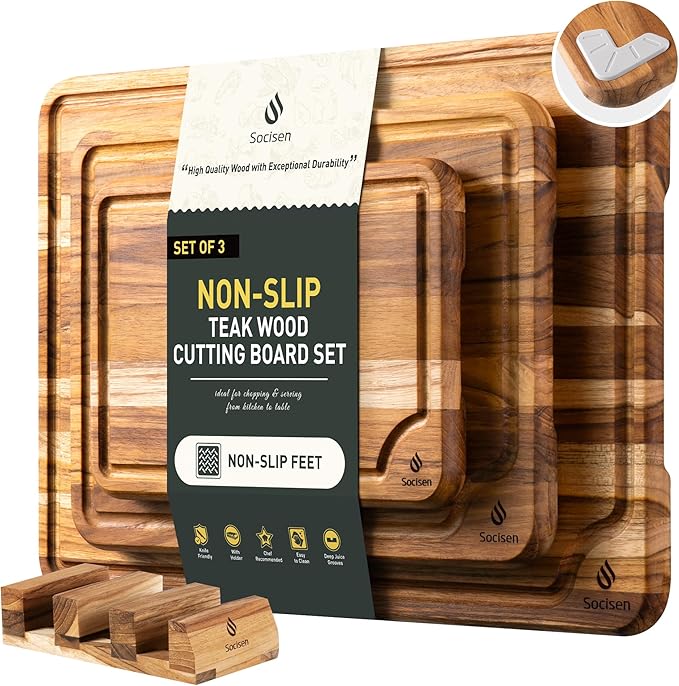
Experience the perfect blend of elegance and functionality with the 3 Pack Teak Wood Cutting Board Set for Kitchen Charcuterie. Crafted from FSC-certificated teak wood, these boards offer exceptional durability and a non-slip design, making them an indispensable addition to any kitchen setup.
Featuring three versatile sizes (10, 13, and 17), this set accommodates all your cutting, slicing, and serving needs. The natural teak wood construction ensures superior moisture resistance and a smooth cutting surface that is gentle on knives.
Pros
- Non-slip base with rubber grips ensures secure placement on any countertop.
- Durable, moisture-resistant teak wood preserves shape and prevents warping over time.
- Multi-sized set supports a variety of kitchen tasks from meat slicing to charcuterie serving.
- Eco-conscious choice sourced from responsibly managed FSC-certified forests.
- Easy maintenance with simple hand washing and occasional oiling prolongs lifespan.
- Hidden handles and thick design enhance ease of use and longevity.
Cons
- Not dishwasher safe; requires hand washing and regular oiling for upkeep.
This teak cutting board set stands out among wooden boards for its durability, aesthetic appeal, and user-friendly features. Compared to plastic boards, it offers a natural, knife-friendly surface that resists moisture and cracking. Ideal for everyday kitchen use or entertaining, it delivers reliable performance while supporting sustainable materials.
An excellent investment for anyone seeking the best wood for cutting boards.
6. Ironwood Gourmet 28218 Square Charleston End Grain Chef’s Board ,

Elevate your kitchen experience with the Ironwood Gourmet 28218 Square Charleston End Grain Chef’s Board, a versatile and durable cutting surface designed for both professional chefs and home cooks. Crafted from rich, sustainably harvested acacia wood, this board offers exceptional strength and stunning natural patterns that enhance any cooking space.
Featuring premium end grain construction, this 14-inch square board minimizes wear on knives while providing a robust, long-lasting preparation area. Its multifaceted design serves as an ideal station for chopping, slicing, dicing, and even presenting charcuterie, bread, cheese, and meats, blending function with elegant aesthetics.
Pros
- End grain acacia wood offers superior durability and knife protection for extended use.
- Multi-functional design doubles as a prep station and an attractive serving board.
- Eco-friendly craftsmanship from sustainably sourced materials ensures responsible use.
Cons
- Requires regular hand washing and oiling to maintain optimal condition.
The Ironwood Gourmet Chef’s Board stands out among cutting boards by combining durability, eco-conscious design, and multifunctionality, making it an excellent investment for anyone seeking quality and longevity in their kitchen tools. Its elegant construction and user-friendly features truly justify its premium price point.
7. Walnut Wood Cutting Boards for Kitchen, Large Chopping Board Double

Experience the perfect blend of elegance and functionality with the Walnut Wood Cutting Boards for Kitchen by THETCHRY. Crafted from premium end grain walnut, this durable and stunning board elevates your food preparation while preserving your knives’ sharpness gracefully.
Designed with a deep juice groove and multi-functional compartments, it prevents messy spills and streamlines ingredient sorting. The natural beeswax finish ensures waterproof, stain-resistant durability without chemicals, making it both a reliable kitchen tool and attractive serving board for any occasion.
Pros
- End grain construction offers self-healing properties and enhanced durability
- Deep juice groove prevents spills, keeping countertops clean and tidy
- Includes non-slip rubber feet for safe, stable chopping
- Natural beeswax coating is eco-friendly, waterproof, and stain-resistant
- Multi-purpose design suitable for cutting, chopping, and stylish charcuterie displays
- Generous 17″ x 13″ size provides ample workspace
Cons
- Requires hand washing only, which may require more maintenance compared to dishwasher safe boards
Offering robust performance and aesthetic appeal, this walnut cutting board is an excellent investment for both casual cooks and culinary enthusiasts. Compared to other wooden boards, THETCHRY’s end grain walnut model balances durability, knife protection, and versatility, making it one of the best wood cutting boards available.
8. SHUMARU Mahogany End-Grain Wood Cutting Board – 20×13×1.6″ Butcher Block
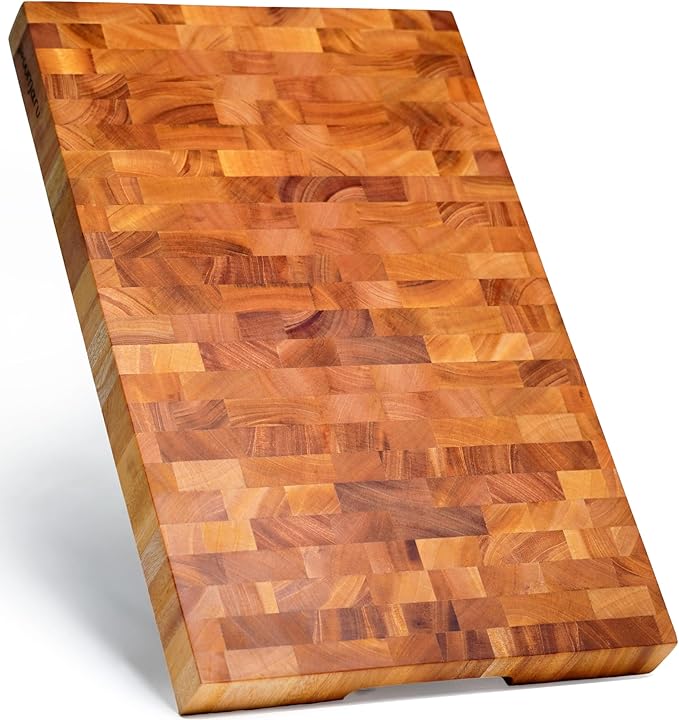
Discover unparalleled durability and elegance with the SHUMARU Mahogany End-Grain Wood Cutting Board. Handcrafted from sustainably sourced mahogany, this butcher block is designed to combine premium craftsmanship with functionality, making it an essential kitchen companion for home cooks and professional chefs alike.
Featuring a silky-smooth end-grain surface, the board is gentle on knives and resists cuts, stains, and warping thanks to its natural self-healing properties. Its spacious 20×13 inch work area, ergonomic handles, and non-slip rubber feet provide convenience and safety during food preparation.
Pros
- Handmade from premium, sustainably sourced mahogany for unique aesthetics and durability
- End-grain construction protects knives while offering a self-healing, stain-resistant surface
- Ergonomic built-in handles and non-slip rubber feet ensure easy handling and stability
Cons
- Requires regular maintenance with food-grade mineral oil to preserve wood quality
Offering exceptional craftsmanship and thoughtful design, the SHUMARU Mahogany Cutting Board stands out among other cutting boards by combining beauty, durability, and user-friendly features—making it a wise investment for those seeking the best wood for cutting boards with long-lasting value.
9. Bamboo Cutting Board, Durable Wood Cutting Boards for Kitchen with
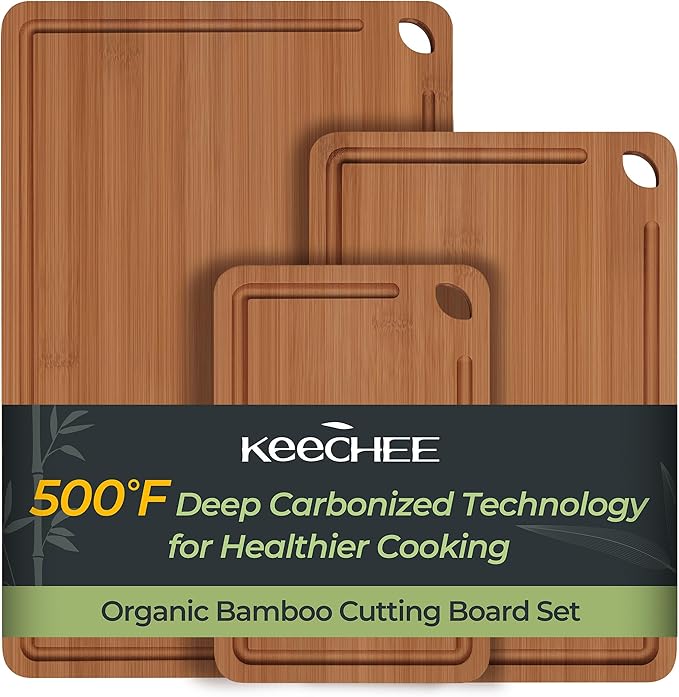
Discover the perfect blend of durability, eco-friendliness, and functionality with the Keechee Bamboo Cutting Board set. Designed to meet diverse kitchen needs, this trio combines sustainable craftsmanship with thoughtful features, making meal preparation safer, cleaner, and more efficient.
Crafted from carbonized bamboo, these cutting boards resist warping, cracking, and odor absorption while maintaining a rich, dark finish. The set includes three versatile sizes ideal for all tasks, from meat and vegetable prep to bread slicing, featuring reversible surfaces with juice grooves and built-in handles for easy use and storage.
Pros
- Sustainable and sturdy carbonized bamboo construction enhances longevity and reduces moisture absorption.
- Three varying sizes provide tailored solutions for chopping, slicing, and serving tasks.
- Reversible boards with juice grooves and built-in handles offer versatility and easy handling.
Cons
- Requires regular maintenance with natural mineral oil to sustain optimal condition.
Combining practical design with sustainable materials, the Keechee Bamboo Cutting Board set stands out as an excellent investment for home cooks seeking reliable, eco-conscious kitchen tools. Its robust build and thoughtful features comfortably outpace many traditional wood boards in durability and care convenience.
10. Non Toxic Wood Cutting Board – Conditioned with Natural Beeswax

Discover the perfect blend of durability, safety, and sustainability with the Non Toxic Wood Cutting Board, expertly conditioned with natural beeswax and oils. Crafted from premium acacia wood, it offers a knife-friendly surface that stands up to daily kitchen demands while promoting eco-conscious living.
Finished with unbleached beeswax, flaxseed oil, and lemon oil, this board avoids harmful mineral oils and synthetic coatings. The solid acacia hardwood is naturally resistant to bacteria and moisture, ensuring a hygienic prep area.
A built-in handle and groove add convenience, while its 1-inch thickness guarantees long-lasting stability.
Pros
- Natural, non-toxic finish with beeswax and organic oils ensures food safety and nourishes the wood.
- Durable FSC-certified acacia wood resists bacteria and moisture better than plastic or bamboo alternatives.
- Knife-friendly surface helps maintain blade sharpness, extending the life of your cutlery.
- Thick 1-inch construction provides solid stability and long-lasting use without warping or cracking.
- Includes handy built-in groove and handle for easy handling and juice collection.
Cons
- Requires hand washing to maintain finish and longevity, which may not suit users preferring dishwasher-safe options.
Combining ethical sourcing, natural conditioning, and superior durability, this acacia cutting board is a smart choice for those seeking the best wood for cutting boards. It outperforms many plastic and bamboo boards in both hygiene and blade care, making it a trusted kitchen essential that balances performance with eco-friendly values.
Top Wood Types for Cutting Boards: A Buying Guide
Environmental and ethical factors
When considering the best wood for cutting boards, it is important to keep in mind sustainable sourcing and certifications, as these ensure that the wood comes from responsibly managed forests. This not only helps protect biodiversity but also promotes the long-term availability of quality wood.
Understanding the impact of harvesting on ecosystems is crucial, as unsustainable logging can lead to deforestation, habitat loss, and soil erosion, all of which negatively affect the environment. Choosing ecofriendly and responsibly sourced wood means opting for products certified by organizations known for their strict environmental standards, offering consumers confidence that their purchase supports sustainable forest management. By prioritizing these factors, you can select a wooden cutting board that not only performs well but also aligns with environmental responsibility.
Safety and food grade considerations
When choosing the best wood for cutting boards, it is essential to consider safety and food grade aspects to ensure a healthy cooking environment. Opting for nontoxic and foodsafe wood types such as maple, walnut, or cherry is a wise choice because these woods do not release harmful substances and are gentle on knives. Many hardwoods used in cutting boards also offer natural antimicrobial properties, which help reduce the growth of bacteria and keep the board hygienic between cleanings.
Many hardwoods used in cutting boards also offer natural antimicrobial properties, which help reduce the growth of bacteria and keep the board hygienic between cleanings. It is equally important to avoid woods that may cause allergies or contain toxins, as these could compromise food safety or cause adverse reactions. Taking the time to research and select a wood that meets these safety criteria will result in a cutting board that is both durable and safe for everyday use in the kitchen.
Wood hardness and durability
When choosing the ideal material for your cutting board, it’s important to consider how hard and durable the wood is, as this directly affects both the board’s lifespan and the maintenance of your knives. The Janka hardness scale is a useful tool that measures the resistance of wood to wear and denting by calculating the force needed to embed a steel ball into the wood’s surface.
Woods with higher scores on this scale tend to be more resilient against dents and scratches, making them suitable for heavy kitchen use. However, extremely hard woods can sometimes be harsh on knife blades, leading to faster dulling. Striking a balance between hardness and gentleness on knives is key; selecting a wood that offers enough toughness to withstand daily use while preserving the sharpness of your knives will ensure your cutting board remains both functional and long-lasting.
Grain and texture
When selecting the best wood for cutting boards, understanding the grain and texture is essential since it directly impacts the board’s performance and longevity. Woods with a closed grain tend to offer a smoother surface that is not only pleasant to the touch but also provides an excellent cutting experience by allowing knives to glide effortlessly without dulling quickly.
On the other hand, open grain woods, while sometimes visually appealing due to their distinct patterns, absorb liquids more readily and may require more frequent oiling to maintain hygiene and prevent warping. Prioritizing a fine, tight grain can ensure a durable, smooth cutting surface that balances cleanliness with functionality, making it an ideal choice for those new to investing in quality cutting boards.
Maintenance and care requirements
Understanding the importance of proper maintenance and care requirements can greatly extend the life of your wooden cutting board. Different types of wood absorb oil at varying rates, which means conditioning frequency should be adjusted accordingly to keep the board hydrated and prevent cracking.
Regularly oiling your cutting board not only enhances its appearance but also creates a protective barrier against moisture. When it comes to cleaning methods, softer woods may require gentler care, such as wiping with a damp cloth and mild soap, while harder woods can often handle more thorough scrubbing without damage. It’s important to avoid soaking cutting boards in water regardless of the wood type to maintain their structural integrity.
Over time, the longevity and wear patterns of your cutting board will depend on how well you adhere to these maintenance routines, with well-cared-for boards showing less warping, cracking, and deep grooves, ultimately ensuring safe and effective use for years to come.
Cost and availability
When considering the price range of common cutting board woods, it is important to note that some options, like maple and walnut, generally sit at a moderate price point, offering a good balance between affordability and longevity. Other hardwoods, such as cherry or teak, might be a bit more expensive but provide added durability and aesthetic appeal.
Balancing cost with quality and durability means looking beyond the initial price and considering how well the wood will hold up against daily use, resisting knife marks and moisture over time. Investing in a high-quality hardwood that is readily available around you often results in a cutting board that not only performs well but also offers long-term value, making it a practical and rewarding kitchen addition.
People Also Asked
What Types Of Wood Are Most Durable For Cutting Boards?
The most durable woods for cutting boards are hardwoods like maple, walnut, and cherry, as they resist knife marks and bacteria. These woods are dense, have tight grains, and are less likely to warp or split over time.
How Should You Maintain Wooden Cutting Boards To Ensure Longevity?
To maintain wooden cutting boards and ensure longevity, regularly clean them with mild soap and warm water, then dry thoroughly to prevent moisture damage. Additionally, periodically oil the board with food-grade mineral oil to keep the wood hydrated and prevent cracking.
Which Wood Is The Safest And Most Hygienic For Cutting Boards?
Maple wood is considered the safest and most hygienic for cutting boards due to its tight grain, which resists bacteria absorption. Additionally, it is durable and easy to clean, making it ideal for kitchen use.
What Are The Pros And Cons Of Bamboo Versus Traditional Wood Cutting Boards?
Bamboo cutting boards are eco-friendly, lightweight, and resistant to knife scarring, but they can be harder and may dull knives faster compared to traditional wood boards. Traditional wood cutting boards are durable, gentle on knives, and have natural antimicrobial properties, but they require more maintenance and can be heavier and more expensive.
How Does Hardwood Compare To Softwood For Cutting Board Use?
Hardwood is generally preferred for cutting boards because it is denser and more durable, which helps resist knife marks and bacterial growth. Softwood, being less dense and more prone to damage, is less ideal for long-term cutting board use.
Conclusion
When choosing the best wood for cutting boards, hardwoods like maple, walnut, and cherry stand out for their durability, knife-friendliness, and natural antimicrobial properties. These woods resist deep grooves and warping, ensuring longevity and food safety. Selecting quality hardwood not only protects your knives but also enhances your kitchen’s aesthetics with timeless, natural beauty.